


You're probably here because a camisole seems like it should be simple. Then real life gets involved.
It's hot outside, your shirt is a little sheer, your blazer needs a smooth layer underneath, and suddenly the wrong cami can ruin the whole outfit. One turns clingy by lunchtime. Another goes slightly see-through in daylight. A third comes out of the wash shorter, twistier, or tighter than it looked in the package.
That's why 100 cotton camisoles deserve a closer look. They're often treated like the easiest basic in a wardrobe, but they're doing two jobs at once. They need to act like a comfort-first base layer against your skin, and sometimes they also need to look polished enough to be seen.
Cotton can absolutely do that. It feels familiar, soft, and easy in a way many people trust right away. It also sits on a massive global supply chain, which is one reason cotton clothing stays widely available at everyday scale. The USDA projects world cotton production at 119.34 million 480-pound bales for 2024/25 and 121.87 million bales for 2025/26, with the latter forecast about 2% higher year over year in the same dataset on global cotton production and harvested area.
But comfort isn't the same as perfection. Cotton breathes well. It doesn't behave like a performance gym fabric. A thin cotton camisole can feel airy in the morning and show sweat by the afternoon. A soft knit can drape beautifully under a cardigan and still wrinkle faster than you hoped.
Those tradeoffs don't make cotton a bad choice. They just mean you'll shop smarter when you know what to look for.
Table of Contents
- Introduction to 100 Cotton Camisoles and Everyday Comfort
- What Makes 100 Cotton Feel So Breathable
- When to Choose 100 Cotton and When to Consider Alternatives
- How to Layer and Style Cotton Camisoles Without Clinging
- Keeping Your Camisoles True to Size and Color
- Smart Shopping Checklist for Your Perfect Cotton Camisole
- Your Next Steps to Confident Cotton Layering
Introduction to 100 Cotton Camisoles and Everyday Comfort
A warm morning usually reveals the truth about a camisole faster than any product description. You pull one on under a button-down before work, and within an hour you know whether it was the right choice. If it feels cool, stays smooth, and doesn't bunch under your clothes, you barely think about it again. If it traps heat, rides up, or turns semi-sheer in sunlight, you think about it all day.
That's the role of 100 cotton camisoles. They're not just filler pieces sitting in a drawer. They're the layer that sits closest to your skin, absorbs the first bit of body heat, and often decides whether the rest of your outfit feels relaxed or irritating.
Why cotton camisoles stay relevant
Cotton has a long history as a mainstream clothing fiber rather than a niche one. Modern global cotton production is described at roughly 25 to 27 million metric tons per year, or about 110 to 120 million bales annually, and projections in the OECD-FAO outlook point to about 28 million tons by 2030 and about 29 million tons by 2033, with expected annual growth around 1.3% to 1.5% over the coming decade in the overview summarized on cotton's historical rise and production scale.
That big-picture scale matters in a very practical way. It helps explain why cotton camisoles show up everywhere from basics assortments to outfit-building staples. Cotton isn't a rare fiber with limited seasonal use. It's a familiar wardrobe material people return to because it feels approachable, washable, and easy to wear.
The confusion most shoppers run into
The tricky part is that “100% cotton” sounds like it answers every question by itself. It doesn't.
Two camisoles can both be pure cotton and still behave very differently. One may feel crisp and opaque. Another may feel feather-light, softer, and more revealing. One may stay stable after washing. Another may shift shape because of how the knit was built and finished.
A cotton camisole isn't one thing. Fiber content tells you the ingredient. Construction tells you how it behaves.
That's where people usually get stuck. They expect one label to predict comfort, opacity, sweat visibility, polish, and wash performance all at once.
It can't. But once you know how to read the signs, cotton becomes much easier to choose with confidence.
What Makes 100 Cotton Feel So Breathable
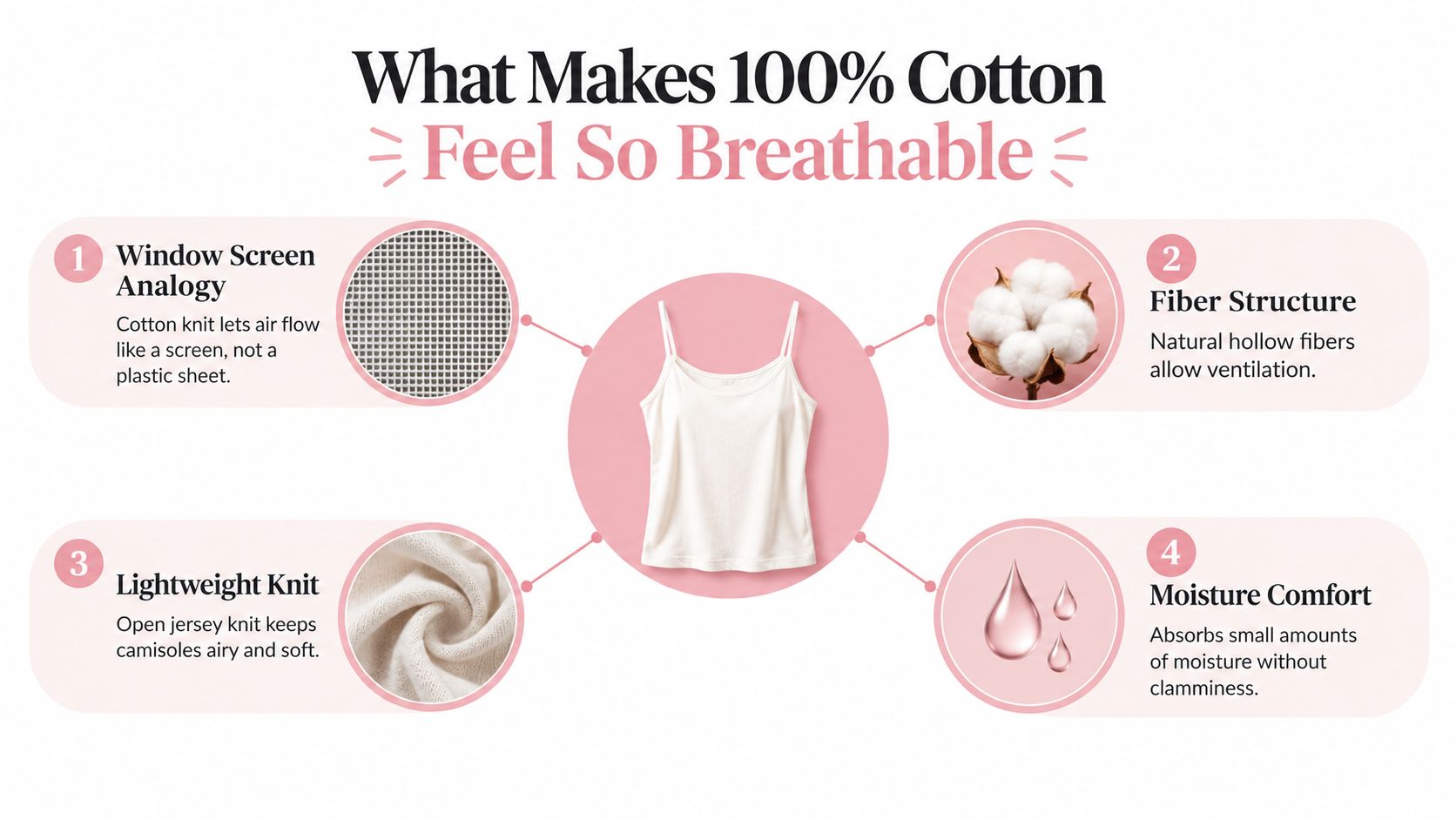
Cotton often feels breathable for the same reason a window screen feels airy. Air can move through it. That's the first piece.
The second piece is more confusing. Cotton also acts a bit like a sponge. It can absorb moisture instead of pushing it away quickly. Both things can be true at the same time, which is why cotton can feel fresh at rest and then feel clingy once you're sweating.
Air flow and skin feel
When people say a cotton camisole “breathes,” they usually mean it doesn't feel sealed against the body. Lightweight cotton knits allow air movement, so body heat can escape more easily than it does in denser, less airy fabrics.
That's why a cotton cami can feel pleasant while you're sitting at a desk, reading on a porch, or layering under a shirt in mild warmth. It has a dry, familiar softness many people experience as calm rather than slick.
Why breathability and wicking aren't the same
The language gets muddy. Breathable and moisture-wicking sound similar, but they describe different jobs.
Core concept: Breathability means air can move. Moisture wicking means sweat moves away from your skin and dries quickly.
Independent apparel guidance on cotton and sweat behavior notes that cotton is highly breathable in lightweight constructions, but it absorbs and holds liquid sweat instead of moving it away efficiently. That means a cotton camisole can feel cool before you sweat heavily, yet slower to dry once it gets saturated.
A simple way to predict comfort
If you want to judge whether cotton will feel good in a given moment, ask two questions.
- How much will you sweat? Light perspiration is a very different experience from a long walk in humid heat.
- Will the camisole be hidden or visible? Moisture marks matter more when the cami is part of the outfit.
Here's a plain-language breakdown:
- Low movement, mild warmth Cotton usually feels easy here. Air can circulate, and the fabric may stay comfortable because it isn't handling a flood of sweat.
- Warm commute, crowded transit, outdoor errands Cotton may still start well, but the fabric can begin to hold moisture. That's when cling and visible dampness may show up.
- High-sweat conditions Cotton is less ideal. The issue isn't softness. It's that the fabric tends to stay wetter longer.
The mistake people make
Many shoppers test a camisole in an air-conditioned fitting room and assume it will behave the same way at noon in real weather. That's where disappointment starts.
A good cotton camisole can still be a comfort hero. You just want to match it to the kind of day you're having.
When to Choose 100 Cotton and When to Consider Alternatives
Some fabrics are like walking shoes. They handle a lot of different situations well. Cotton camisoles often fit that category. But even a reliable everyday piece has a lane.
The smartest way to shop is to stop asking “Is cotton good?” and start asking “Good for what?”
Situations where cotton usually wins
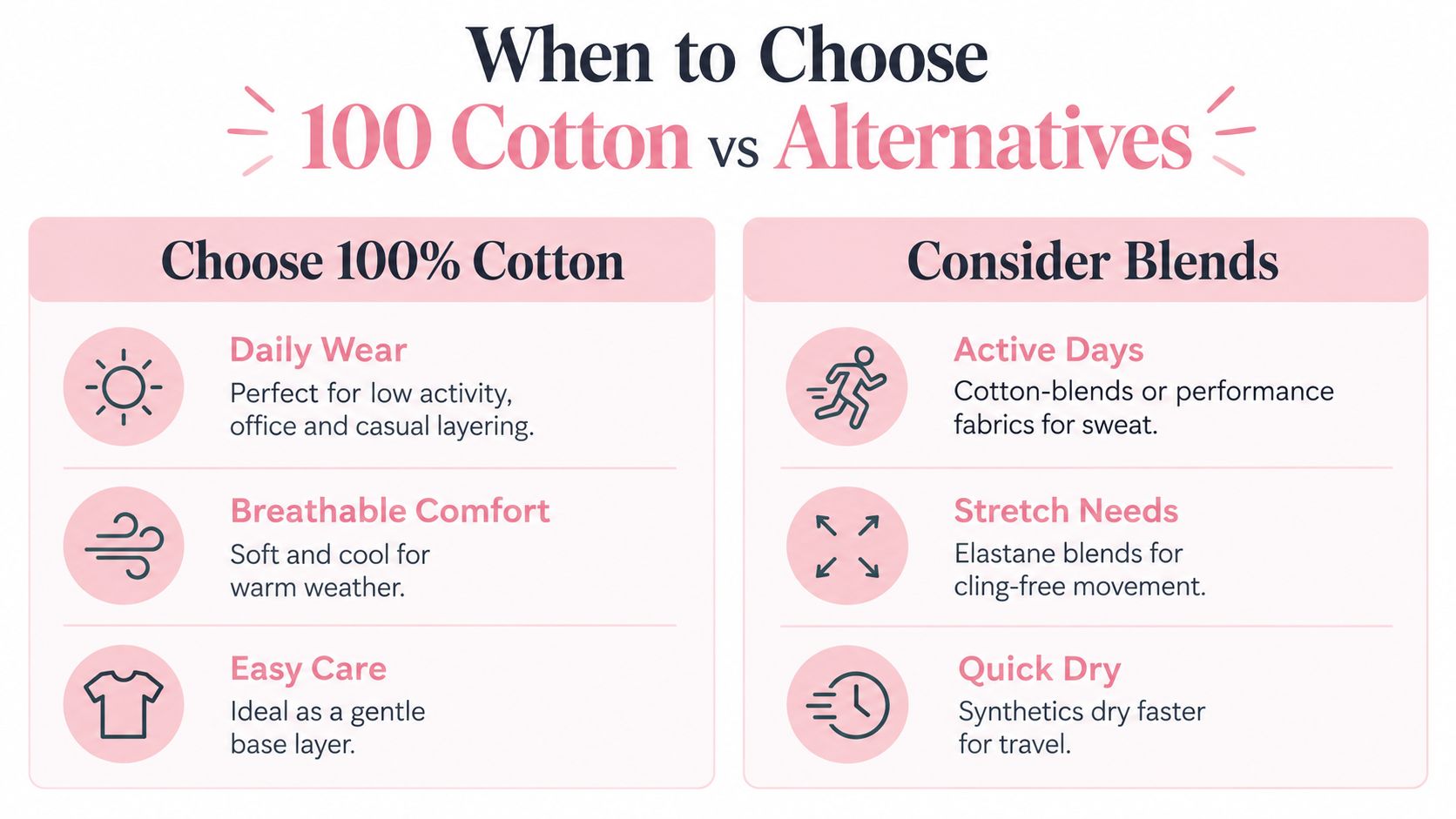
Cotton shines when comfort comes first and the day doesn't demand fast drying.
A soft cotton cami often works beautifully for office layering, easy weekends, sleep-adjacent lounging, and those in-between outfits where you want a smooth layer under a cardigan, overshirt, or blouse. It can also be a strong travel piece for low-key days when softness matters more than performance.
One underserved part of the conversation is visible sweat. An independent review on cotton camisole tradeoffs in wear and care points out that pure cotton breathes well and feels soft, but it also absorbs moisture, which can make sweat more visible, especially in thinner knits. That's exactly why some cotton camisoles feel delightful in the morning and less polished later in humid weather.
When another fabric choice makes more sense
Cotton isn't wrong for every hot day. It's just not the automatic winner for every sweaty one.
If your camisole has to handle a brisk commute, long outdoor stretches, repeated heat exposure, or lots of movement, a blend or quicker-drying fabric may be easier to live with. The same goes if you want a body-skimming fit with less cling or need more stretch through the ribcage and straps.
If your priority is softness at rest, cotton is often the answer. If your priority is staying dry while moving, look beyond fiber content alone.
When 100 Cotton Camisoles Shine vs When to Switch Fabrics
| Situation | Best Choice | Why It Works |
|---|---|---|
| Quiet workday under a button-down | 100% cotton | Breathable comfort and a natural hand feel suit low activity |
| Casual weekend with light layering | 100% cotton | Softness matters more than quick-dry performance |
| Warm weather at home or low-key errands | 100% cotton | Airy knits can feel easy and comfortable |
| Long, sweaty commute | Consider alternatives | Faster-drying fabrics may handle moisture better |
| High-movement day | Consider alternatives | Extra stretch and lower wet cling can help |
| Outfit needs a sleek, cling-free finish | Consider alternatives | Some non-cotton constructions drape more cleanly |
A fast decision filter
Use this quick checklist before you choose:
- Choose cotton when your day is mostly seated, lightly active, or comfort-led.
- Pause on cotton when your camisole will be visible during heavy heat or sweat.
- Switch fabrics when drying speed, stretch recovery, or a slicker finish matters more than that classic cotton feel.
That small shift makes shopping much easier. You're not looking for one perfect camisole for all situations. You're matching the fabric to the job.
How to Layer and Style Cotton Camisoles Without Clinging
A camisole doesn't have to stay hidden to look useful. Cotton camisoles are increasingly worn as visible layers, not just underwear-adjacent basics. That changes what you need from them.
Once a cami is part of the outfit, comfort is only half the story. Opacity, strap shape, neckline, and how the fabric falls all start to matter just as much.
Start with the hanger test
Before you even try a camisole on, hold it up to the light.
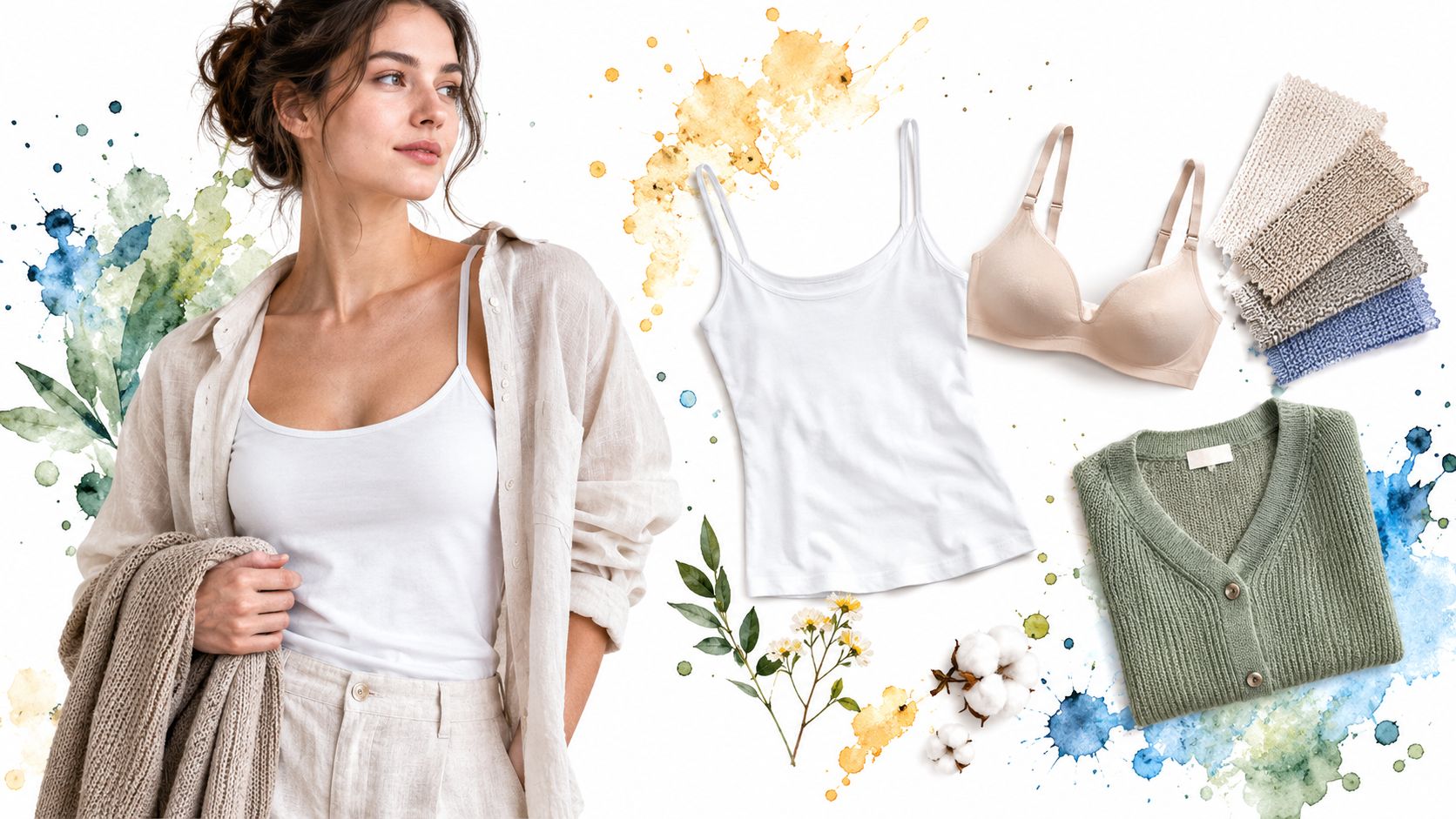
If the knit looks very open or papery, expect more transparency and more sweat visibility. If it has a bit more body, it will usually look steadier as a visible top. Fashion coverage on how camisole tops are being styled now notes that camisoles are being worn under blazers, through sheer shirts, and with high-waisted trousers, which makes these construction details far more important than older “just wear it underneath” advice.
Try this quick visual check:
- Look at the neckline edge. A flimsy edge can ripple under jackets.
- Check strap width. Wider straps often look more intentional and can hide bra straps more easily.
- Notice the surface. Smooth cotton usually reads neater than twisty or puckered knit.
Use neckline and strap rules
The easiest styling wins come from simple alignment.
A scoop-neck camisole layers cleanly under open shirts and soft blazers. A straighter neckline often looks more modern on its own with high-waisted trousers or skirts. Thin straps can look elegant, but they also reveal more of your bra situation and often make a camisole feel more delicate than polished.
For everyday outfit planning, a useful visual companion is this guide to cotton tanks for women, especially if you're comparing silhouettes that work under jackets and shirts.
The more visible the camisole, the more it should act like a top. That means checking opacity, edge finish, and strap placement before you buy.
Prevent cling without overcomplicating it
Cling usually comes from a few predictable issues. The fabric is too thin, the fit is too close, or the outer layer grabs the cotton instead of skimming over it.
A few practical fixes help:
- Size for skim, not squeeze. If the cami hugs every line of the torso, it's more likely to ride, cling, or bunch under another layer.
- Pair it with structure. Cotton camisoles often look sharper under a blazer, shirt jacket, or cardigan that has a bit of shape.
- Choose bottoms with a defined waist. Tucking a cotton cami into high-waisted trousers can make a simple knit look deliberate rather than casual.
- Watch for wrinkling. If the fabric creases easily, a quick steam does more for polish than almost any styling trick.
For a visual refresher on outfit balance, this short video shows useful layering ideas in motion.
Bra compatibility matters more than people admit
A camisole can look lovely on a model and frustrating in real life if the bra and cami fight each other.
If the straps sit too far in, your bra peeks out. If the armholes dip too low, side coverage becomes an issue. If the neckline is too soft, the top can collapse inward instead of staying smooth. The best cotton camisole for visible wear is often the one that cooperates with the bra you already like.
Keeping Your Camisoles True to Size and Color
Shrinkage gets blamed on cotton itself, but that's only part of the story. Two cotton camisoles can go through the same wash and come out acting like different garments because the knit, finishing, and care method matter so much.
That's good news, because it means you have more control than you might think.
What actually affects shrinkage
Textile guidance from CottonWorks on shrinking, skewing, and quality checks notes that shrinkage is driven not only by fiber type but also by yarn, construction, wet processing, finishing, cut-and-sew method, and care. The same guidance also cites a common GSM tolerance of about ±5% from target, which is useful because lighter and heavier camisoles won't behave the same way in fit or feel.
If that sounds technical, here's the plain version. A camisole's final behavior comes from how the fabric was built, not just what it's made from.
What to check before you buy
A few product details can save you a lot of frustration later.
- Knit type Jersey, rib, and denser knits all respond differently in wear and washing. Some stretch more. Some twist more. Some recover better.
- Fabric weight A lighter camisole usually feels cooler and drapes softly. A heavier one often holds shape better but may feel warmer.
- Prewashed or finished feel If a camisole already feels stable and relaxed in the hand, that can be a good sign. Very raw-feeling cotton may change more after the first washes.
Care starts before laundry day. The smartest shoppers read the garment, not just the fiber label.
For related cotton support details in close-to-skin basics, this article on a shelf bra camisole in cotton is helpful when you're comparing how layered garments manage comfort and structure.
Wash habits that protect fit and color
Good care is mostly about reducing stress.
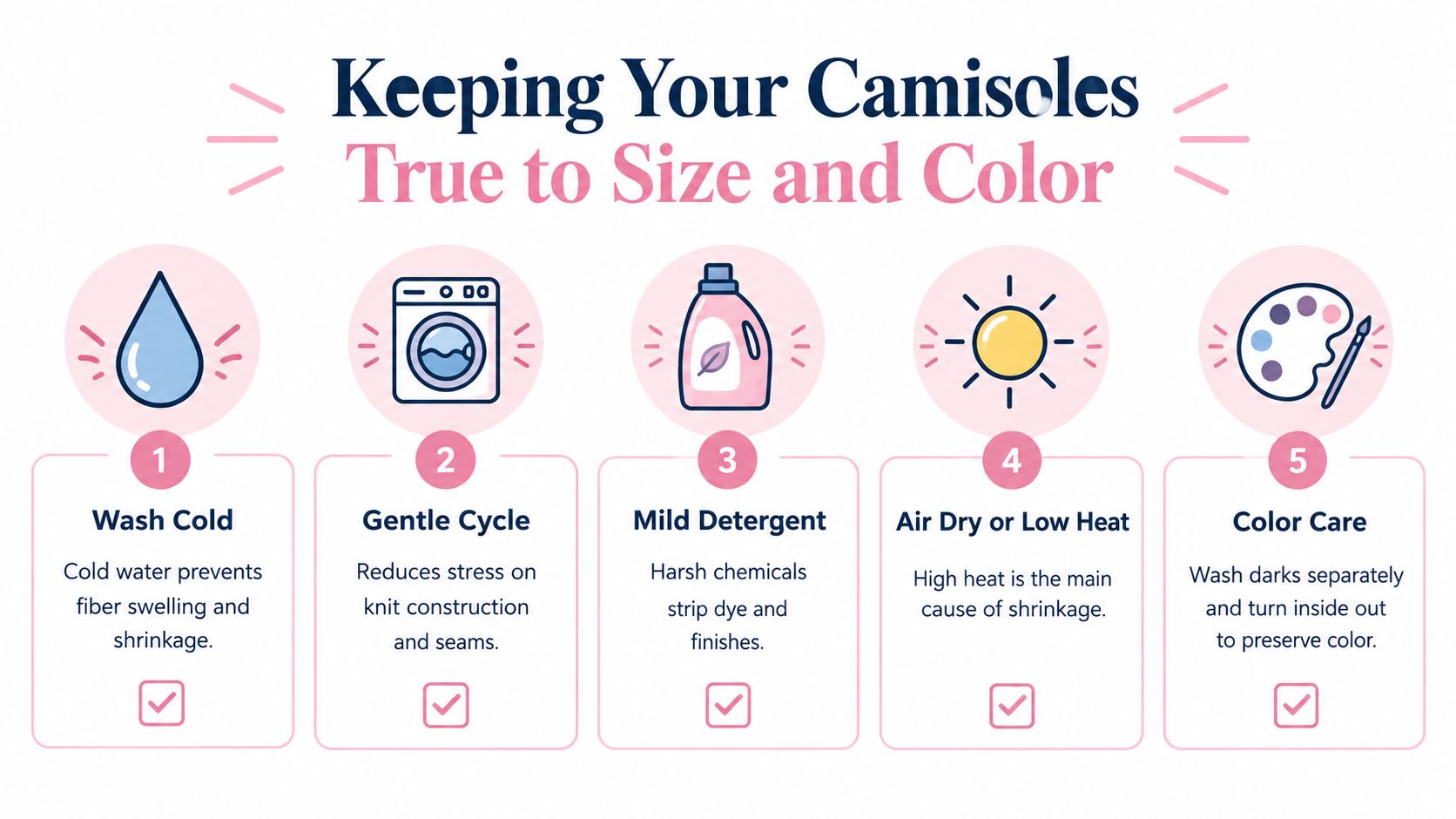
- Choose cold water Cooler washing is gentler on cotton and helps limit the swelling and agitation that can change shape.
- Use a gentle cycle Camisoles are small, stretchy, and easy to twist around heavier items. Less agitation usually means less distortion.
- Add a laundry bag This is especially useful for thin straps and lightweight knits.
- Air dry when possible Heat is where many camisoles lose their calm. Dryers can tighten fabric, stress elastic stitching, and fade color faster.
- Turn darker shades inside out That helps reduce surface abrasion and keeps the outside looking smoother.
A practical example of similar care logic appears in NuSoft Modal Brief(5-Pack), which uses a Lenzing Modal and elastic fiber main fabric with a 100% cotton gusset, and its care notes specify machine wash cold, use a laundry bag for gentle protection, and tumble dry low or air dry flat. That doesn't make it the same garment as a cotton camisole, but it reflects the same basic truth. Lightweight close-to-body pieces last longer when you reduce heat and friction.
Why color changes happen
Fading isn't always dramatic. Sometimes the first clue is that the camisole starts looking tired before it looks damaged.
Harsh detergents, high heat, and rough wash loads all wear on the surface and dye. A camisole that once looked crisp under a blazer can slowly shift into “only for home” territory. Gentle washing won't freeze a garment in time, but it often keeps the color and finish usable much longer.
Smart Shopping Checklist for Your Perfect Cotton Camisole
Shopping for 100 cotton camisoles gets much easier when you stop treating them like mystery basics. You don't need a lab test. You need a repeatable checklist.
Use your hands first
Touch tells you a lot.
A camisole that feels almost weightless may be lovely for soft layering at home, but it can also be the one that shows bra lines, sweat, or daylight through the fabric. One with a little more substance often gives you a cleaner outline and better confidence outside the house.
Ask yourself: does this fabric collapse, or does it hold a gentle shape?
Check the make, not just the material
Fiber content answers one question. Construction answers the rest.
Look for:
- Opacity you can trust Hold the fabric toward light. If it goes transparent fast, it may not work as a visible layer.
- Straps that match your real wardrobe Think about the bra you wear most often, not the ideal one.
- Smooth seams and edges Bulky finishing can show through shirts or create irritation under the arms.
- Care instructions you'll follow If a camisole needs delicate treatment and you know you wash everything together, be honest about that.
Read product descriptions like a filter
Online shopping gets easier when you scan for the details that matter most.
If a listing mentions knit type, fabric weight, wash behavior, or whether the garment has been prewashed, that's useful. If it only says “100% cotton” and nothing else, you still don't know much about how it will wear.
A smart buy is the camisole that still works after heat, motion, and repeated laundry. Not just the one that looks good in one photo.
Keep a simple pass-fail standard
A camisole earns its spot if it passes three tests:
- It feels good at the start of the day
- It stays presentable once your body warms up
- It survives washing without becoming a different garment
That checklist is simple, but it's strong. It helps you choose pieces that do more than sit folded in a drawer.
Your Next Steps to Confident Cotton Layering
The best lesson about 100 cotton camisoles is also the one most shoppers miss. Fiber content matters, but construction matters just as much.
That's why one cotton camisole becomes an easy favorite and another becomes a frustrating backup. The winner isn't always the softest one in the package. It's the one whose knit, weight, shape, and care needs fit your life.
A simple way to apply what you learned
Start with the camisoles you already own.
Lay out two or three and compare them side by side. Which one feels coolest? Which one looks most opaque? Which one comes out of the wash looking ready to wear, and which one always seems slightly twisted, shorter, or rumpled? That little audit will teach you more about your preferences than any label alone.
Then test them in the conditions that matter.
- Wear one on a warm errand run
- Try one under a blazer or open shirt
- Check it in natural light
- Notice whether it clings once you've been moving
Build a more useful camisole drawer
They don't need one perfect camisole. They need a small mix of right-for-the-job pieces.
One can be your soft, breathable home-and-layering staple. Another can be your more opaque visible top. A third might be the option you skip on sweaty days because you now understand what cotton does well and where it asks for backup.
That kind of wardrobe is calmer. It asks less guesswork from you in the morning.
When you know how cotton behaves, you stop expecting it to do every job. You start using it where it shines.
The confidence piece
A camisole may be a small garment, but it changes how an outfit feels against your skin and how you move through the day. Once you know how to judge breathability, sweat visibility, opacity, and wash stability, you're no longer shopping by hope.
You're choosing on purpose.
And that's really the goal. Not to make cotton complicated. To make it understandable enough that getting dressed feels easier.
Nuage Wears offers comfort-first underwear, bras, and everyday apparel designed around real wear problems like overheating, visible lines, and staying put through the day. If you're building a wardrobe where soft layers and practical fabric choices matter, explore Nuage Wears for everyday essentials that pair naturally with the kind of cotton layering covered here.


