


You're standing in front of the mirror on a warm morning, holding a pair of womens cotton shorts that look perfect on the hanger. Then the questions arrive. Will the waistband dig in by lunchtime? Will the fabric turn transparent when you sit down? Will the legs ride up, or will the shorts lose their shape before the day is over?
Those concerns are reasonable because comfort doesn't come from the fiber name alone. Fabric weight, weave, rise, leg ease, stretch, and care all work together as a comfort system. Cotton can feel wonderfully cool for errands, desk days, and relaxed weekends, yet the same fabric may feel damp and heavy during a sweaty workout or humid journey.
Table of Contents
- Why Womens Cotton Shorts Still Win for Everyday Comfort
- How Cotton Breathes and Handles Moisture on Warm Days
- Finding Your Best Cut and Rise for All Day Ease
- Fabric Weight Weave and Stretch That Keep Shape and Coverage
- Styling Womens Cotton Shorts From Casual to Polished
- Care Tips That Prevent Shrinkage Fading and Sagging
- Choosing Your Perfect Pair With Confidence
Why Womens Cotton Shorts Still Win for Everyday Comfort
A good pair of cotton shorts makes an ordinary hot day easier. You can walk to a café, sit through a long lunch, climb a few stairs, and spend the afternoon at home without feeling trapped inside shiny, clingy fabric. The sensation comes from cotton's soft hand feel, its ability to absorb ambient moisture, and the way a suitable weave lets air move around the skin.
Cotton also works across more than one style mood. A relaxed drawstring pair feels natural with a tank top and sandals, while a structured Bermuda short can look composed with a tucked shirt and loafers. The best pair isn't necessarily the trendiest pair. It's the one whose construction solves your most common discomfort.
The wider apparel market helps explain cotton's staying power. Womens cotton trousers and shorts, classified as HS 620462, are among the largest individual cotton garment markets in global trade. Exports rose from about US$17.69 billion in 2006 to US$23.48 billion in 2025, a gain of roughly 33%, according to the International Cotton Advisory Committee market overview. The same source reports that growth accelerated after 2020, with an increase of 20.2% through 2023 and a further 12.9% between 2023 and 2025, although the global import market in 2025 remained about 7.2% below its 2013 peak.
Comfort depends on more than cotton
Think of cotton as the starting ingredient, not the finished recipe. A very light fabric may feel airy but lack coverage. A dense fabric may look polished but feel warmer. A narrow waistband may create pressure even when the shorts themselves feel soft.
Cotton's appeal also connects with demand for comfortable lower-body basics. One recent industry estimate gave cotton a 44.8% revenue share in women's underpants in 2025, equal to about US$19.1 billion, within a broader market valued at US$42.6 billion. The report projects that market to reach US$68.4 billion by 2034 at a 5.4% CAGR, as described in this cotton apparel market summary. Those figures concern women's underpants rather than shorts, but they illustrate cotton's strong position in everyday comfort categories.
By the end of your selection process, you'll be able to look past a vague “breathable” label. You'll know how to match a weave and weight to your day, choose a rise that stays comfortable while sitting and moving, style relaxed shapes with intention, and wash the shorts without turning the fit into a surprise.
How Cotton Breathes and Handles Moisture on Warm Days
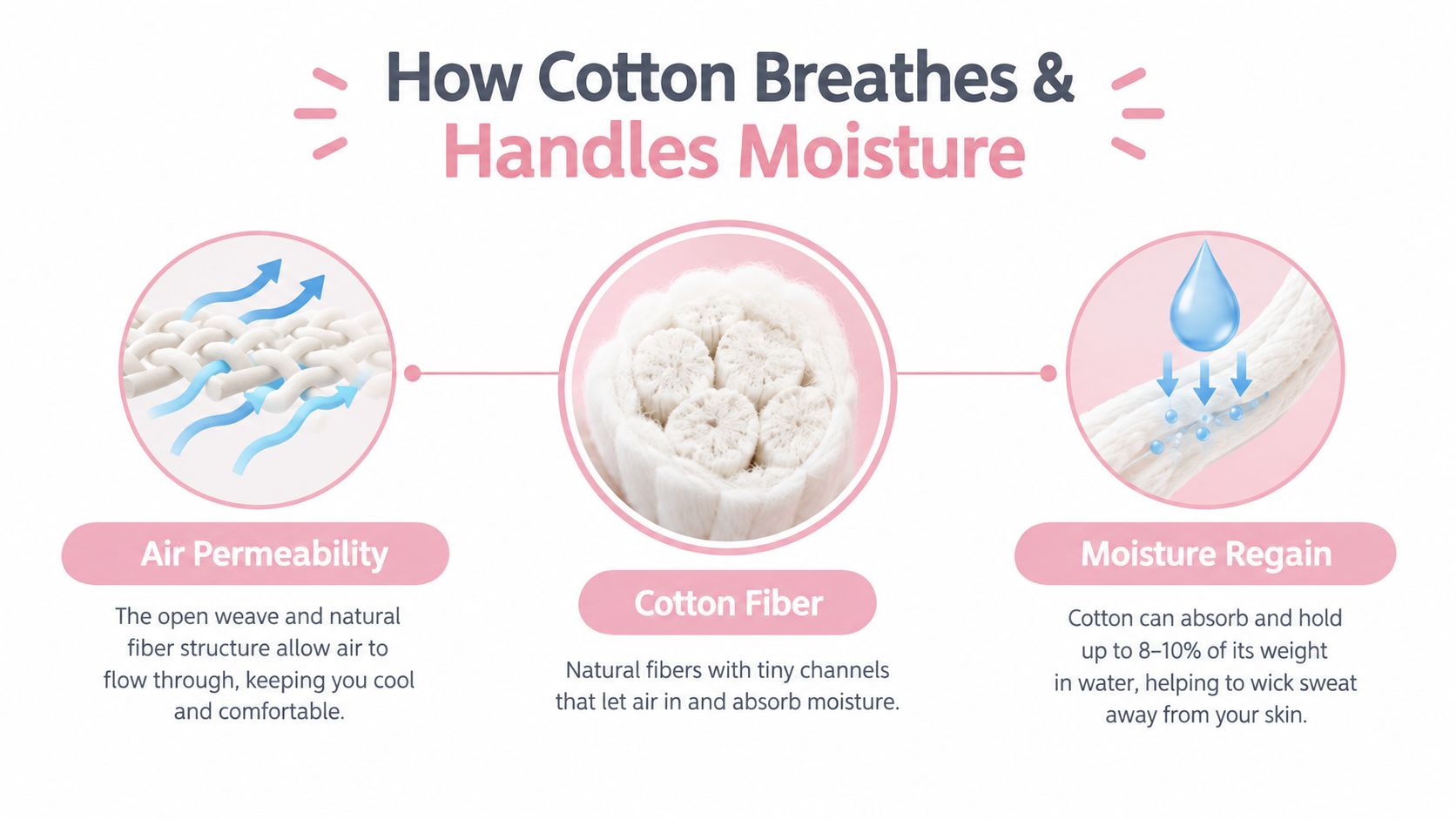
Cotton's warm-weather comfort starts with two textile ideas that sound technical but are easy to picture: air permeability and moisture regain.
Air permeability is like the number of small windows in a fabric wall. A woven cotton fabric has been reported at 159.58 cc/s/cm², compared with 139.85 cc/s/cm² for polyester at equivalent construction, in the cotton and polyester breathability comparison. More air can pass through the cotton structure in that test, which helps explain why a suitable cotton short can feel cooler during low-to-moderate activity.
Moisture regain describes how much moisture a fiber holds from the surrounding air under standard conditions. Cotton's equilibrium moisture regain is about 7 to 8.5% at 65% relative humidity and 20°C, according to the same textile guidance. In everyday language, cotton doesn't feel like a sealed plastic layer. Its fibers can take in some ambient moisture, which often contributes to a softer, less clammy sensation.
Why sweat changes the experience
Cotton's absorbency is helpful until your activity produces more moisture than the fabric can comfortably manage. As cotton absorbs sweat, the fibers swell. That swelling narrows the gaps between fibers, so the original airflow advantage can become less noticeable. The fabric may also feel heavier and stay damp against the skin.
That creates two kinds of comfort:
- Everyday comfort suits commuting, shopping, lounging, casual meals, and low-intensity movement. A soft cotton weave can feel cool and easy in these settings.
- Performance comfort matters during sustained exercise, humid travel, rain, or any situation where drying speed affects chafing and temperature. Wet cotton can cling to the skin and dry slowly, which outdoor clothing guidance generally treats as a disadvantage for active use. The women's hiking shorts guidance explains why wet cotton can increase sticking and chafing.
Practical rule: Choose cotton when softness and relaxed daily wear lead the decision. Choose an open weave or a faster-drying blend when sweat, rain, or repeated movement will be the main event.
For more context on how fabric handles warm-weather moisture close to the body, explore this guide to breathable and moisture-wicking underwear. The principle is similar for shorts: airflow helps, but moisture management determines whether comfort lasts after the fabric becomes damp.
Finding Your Best Cut and Rise for All Day Ease
The right silhouette solves a movement problem. A high rise can feel secure when you bend or reach, but it may feel restrictive if the waistband is firm and narrow. A lower rise may feel freer at first, then expose the back or create pulling when you sit. Rise, thigh ease, inseam, and waistband construction should be considered together.
Match the silhouette to the problem
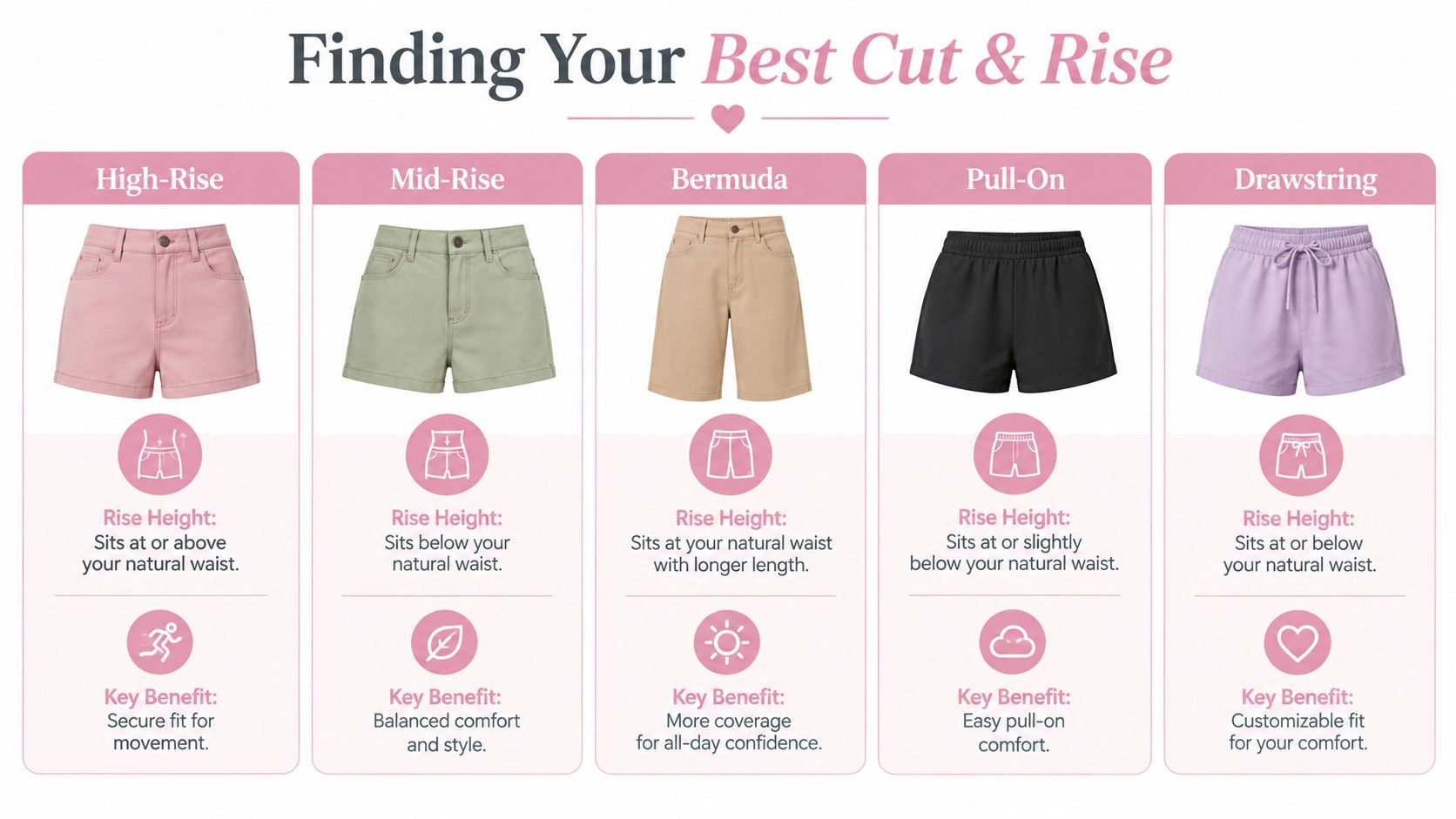
High-rise shorts sit higher on the torso and can provide a secure feeling during walking, bending, and light activity. Look for a waistband that spreads pressure rather than creating a tight ridge. If the band rolls, the rise may be too long for your torso, the elastic may be too soft, or the size may be too small.
Mid-rise shorts sit between the natural waist and the hips. They often suit shoppers who want coverage without a high waistband, especially with tucked tops or shorter layers. Test the back rise while sitting, because a pair that fits standing can pull down when your hips flex.
Bermuda shorts offer a longer leg and more coverage at the thigh. They work well for travel, casual offices with relaxed dress codes, and days when you prefer fabric to stay close to the knee. Balance the longer shape with a neat tank, tucked tee, or cropped jacket so the outfit doesn't look accidentally oversized.
Pull-on shorts remove buttons and zippers from the comfort equation. They're useful for home, errands, and relaxed travel, but the elastic needs enough recovery to stay flat. A soft, wide band usually feels more stable than a thin cord-like elastic.
Drawstring shorts allow fine adjustment around the waist. They're excellent when your comfort changes during a long day, though a bulky knot can show beneath a fitted top. Tie the cord slightly to the side or choose an internal drawstring if you want a cleaner front.
A quick lifestyle filter
For desk days, prioritize a smooth waistband and enough sitting ease through the abdomen. For travel, choose a forgiving rise, a secure leg opening, and a fabric that won't punish you if you remain seated for hours. For off-duty wear, pull-on and drawstring shapes make sense, while light activity calls for thigh room and a weave that doesn't trap heat.
Bonded bands can create a flatter edge and reduce rolling, while traditional elastic can offer familiar flexibility and easier adjustment. Neither construction wins automatically. The useful test is simple: sit, stand, bend, and walk before deciding whether the waistband stays in place without digging.
Fabric Weight Weave and Stretch That Keep Shape and Coverage
A cotton label can't tell you whether shorts will remain opaque, smooth, and structured. The product details need to answer three practical questions: How dense is the fabric? How tightly is it woven? Does it recover after movement?
Fabric weight is often expressed in GSM, or grams per square meter. Lighter cotton under about 140 GSM can become see-through when stretched or wet, while better-performing shorts often use a tighter weave and fabric around 180 to 220 GSM, according to independent cotton fabric guidance summarized in this shorts coverage and construction review. These aren't universal guarantees, because color, weave, lining, and finish also affect opacity, but they provide useful clues when a product page gives construction details.
Cotton shorts fabric weight and coverage guide
| Fabric Detail | What It Means for Comfort and Coverage | Best For |
|---|---|---|
| Light cotton under about 140 GSM | Airy and soft, but more likely to reveal the outline of the body when stretched or wet | Warm, low-friction lounging when coverage has been checked |
| Tighter woven cotton | Creates a more stable surface and can reduce transparency without relying only on added thickness | Everyday shorts, polished casual outfits, and seated wear |
| Cotton around 180 to 220 GSM | Offers a stronger balance of structure, coverage, and durability, though it may feel warmer than a very light weave | Regular wear, longer days, and relaxed tailored shapes |
| Cotton with a small amount of elastane | Adds stretch and recovery, helping the garment return closer to its original shape after movement | Fitted shorts, active daily routines, and flexible waist or thigh areas |
A pair can still sag if the pattern is too generous or the knit is loosely constructed. A small amount of elastane may improve recovery, but it doesn't replace a well-designed waistband or a suitable cut. Check whether the fabric description mentions stretch, recovery, lining, and weave rather than relying on “soft” alone.
Inspect the high-risk areas
Hold the shorts toward light and look at the seat, front, and upper thigh. If you can see your hand clearly through the fabric before trying them on, stretching may make the problem more obvious. Then check the waistband seam, pocket openings, and leg hems, because these areas reveal whether the garment has enough support for its intended shape.
For a softer, casual cotton construction, you can also review French terry shorts as a fabric reference. The important lesson is to connect the material to the job: airy and flexible for relaxed use, denser and more stable when coverage and shape retention matter.
Styling Womens Cotton Shorts From Casual to Polished
Cotton shorts look intentional when the outfit gives them a clear role. The easiest formula is to pair a relaxed bottom with one controlled element, such as a crisp shirt, structured bag, clean shoe, or defined waistband. That small contrast keeps comfort from reading as sleepwear.

Four easy outfit formulas
Weekend errands: Start with cotton shorts, a fitted tank or neat tee, and a lightweight overshirt. Leave the overshirt open to create a vertical line, then add simple sneakers or flat sandals. If the shorts are loose, a closer-fitting top keeps the proportions balanced.
Desk to dinner: Choose a longer, structured short in a darker or neutral shade. Tuck in a fluid blouse, add a slim belt if the waistband allows it, and finish with loafers or low block heels. For dinner, swap the practical daytime layer for a cropped jacket or a small piece of jewelry.
Travel days: Pull-on or drawstring shorts work well with a soft tee and an open button-front layer. The extra layer gives you a polished arrival outfit without sacrificing movement on the journey. Keep the top hem neat, because an untucked oversized shirt over roomy shorts can hide the waist and make the whole outfit feel shapeless.
Off-duty softness: Match relaxed shorts with a sweatshirt, ribbed tank, or lightweight cardigan. Echo one color between the top and shoes to make the simple combination feel deliberate.
Keep the base layer invisible
Fitted shorts can reveal underwear lines, especially when the fabric is light or has stretch. Choose an underlayer with smooth edges, a secure back rise, and a shape that doesn't bunch at the leg opening. The goal isn't maximum compression. It's a clean line that stays put when you sit, walk, and climb stairs.
Longer shorts benefit from a little visual lift above the waist, such as a tucked top or a shorter jacket. Shorter styles can take a longer open layer, which adds coverage without making the legs look crowded. Before leaving home, sit in the full outfit and check the waistband, pocket openings, and back coverage from several angles.
Care Tips That Prevent Shrinkage Fading and Sagging
Treat washing as part of the fit design. Cotton fibers relax and tighten when they meet moisture, heat, and agitation, so a careless first wash can change the rise, thigh ease, and inseam before you've had much wear from the shorts.
Untreated cotton may shrink by roughly 2 to 20% after washing, while consumer-facing technical guidance commonly recommends planning for about 3 to 5% shrinkage in the first wash or a 5 to 8% allowance in pattern making for natural breathable fabrics like cotton, as explained in this cotton shrinkage and breathability guide. The range is broad because fiber, finishing, construction, and laundering conditions differ.
Your first-wash checklist
- Read the care label: If the garment is marked pre-shrunk, it has received treatment to reduce expected dimensional change, but it still deserves gentle care.
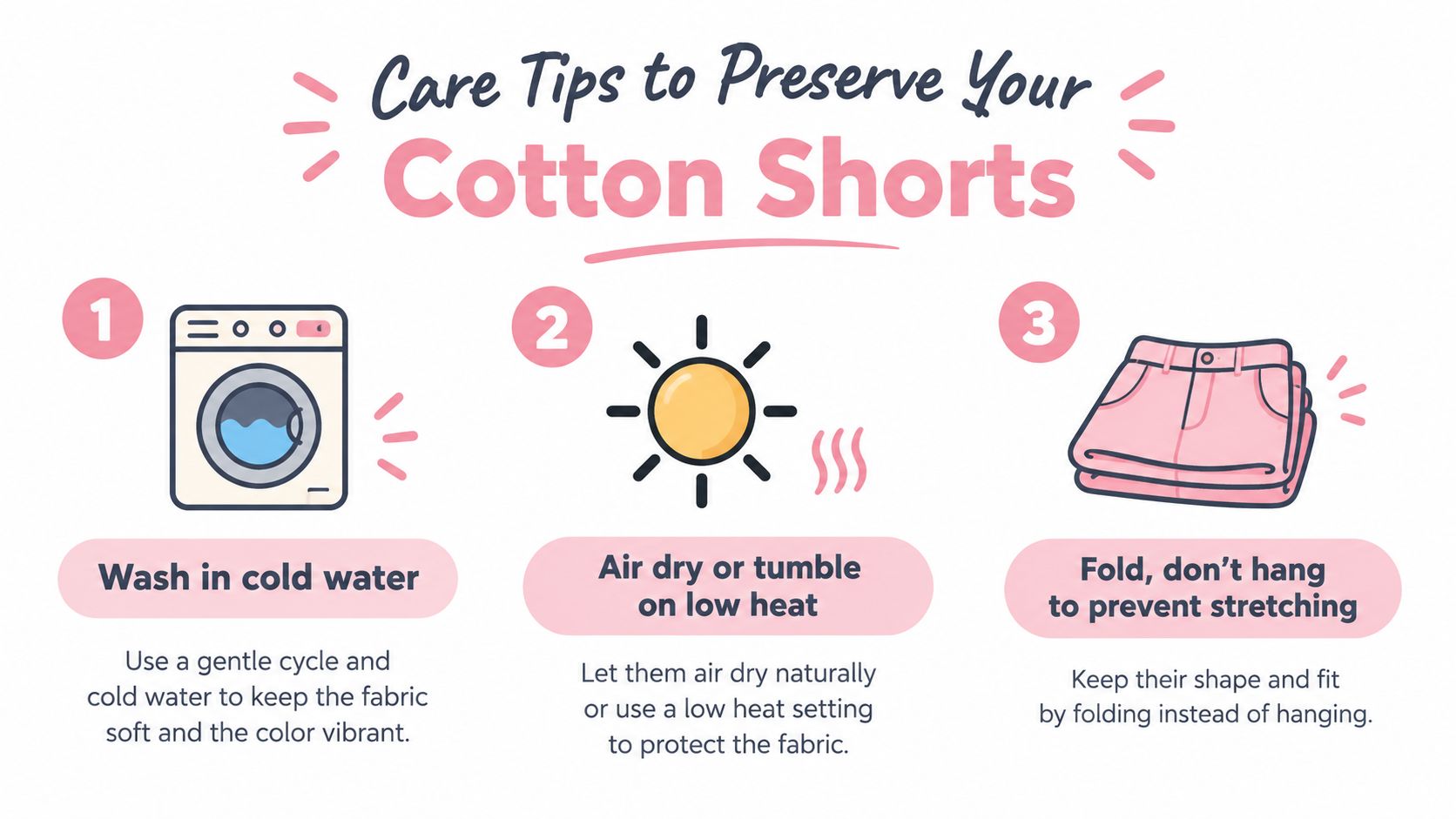
- Wash in cold water: Hot water increases the risk of shrinkage and color loss. Turn dark shorts inside out and wash similar colors together.
- Use a gentle cycle: Reduced agitation helps limit friction, which can roughen fibers and contribute to surface wear.
- Skip harsh bleach: It can weaken fibers and disturb color. Use a mild detergent suited to the garment's shade.
- Choose low heat or air-drying: High-heat tumble drying encourages further dimensional change. Reshape the shorts while damp and dry them away from intense direct sunlight when fading is a concern.
Prevent a stretched-out shape
Don't wring cotton shorts aggressively. Press out excess water, smooth the waistband and leg hems, and dry the garment in a position that doesn't pull on one area. For storage, folding is usually kinder to elastic waistbands and knit-heavy sections than hanging the shorts by a narrow clip.
If you photograph outfits for your own wardrobe notes or share them online, consistent image cropping helps the clothing remain easy to compare. A 280 × 210 image uses a 4:3 aspect ratio, because both dimensions divide by 70, leaving 4:3, as explained by this image ratio reference. Choosing one preset ratio and cropping before upload can also reduce layout shifts and awkward clipping in content grids, following this static image aspect ratio guidance.
Choosing Your Perfect Pair With Confidence
The most comfortable womens cotton shorts are the ones that match the day you have, not an imagined lifestyle. For dry, ordinary heat and low-to-moderate movement, cotton offers a soft, breathable experience. For sustained sweat, humid travel, rain, or serious workouts, a faster-drying construction may serve you better because wet cotton can cling, chafe, and stay damp.
Use this final fit check before buying:
- Start with the activity: Choose cotton for everyday ease, then consider an open weave or blend when drying speed matters.
- Check the rise seated: The waistband should stay in place without digging, rolling, or pulling down at the back.
- Test the thigh opening: You need enough ease to walk and sit without the hem climbing into the leg.
- Look at the fabric in light: Check for transparency before stretching, then reassess coverage when the fabric is under gentle tension.
- Read the care details: Pre-shrunk fabric, cold washing, and low-heat or air-drying instructions can help protect the original fit.
- Plan the rotation: Keep one relaxed pair for home and errands, one more structured pair for polished outfits, and a performance-oriented option for high-sweat days.
For smooth layering beneath lighter cotton, Nuage Wears' NuSoft Classic Cotton Brief is one option. It uses a cotton gusset, a mid-rise front with a slightly higher back rise, and a soft elastic logo waistband designed for a secure everyday fit.
Choose your pair by comfort problem first, then by color and trend. Try the shorts through the movements that fill your day, care for them gently from the first wash, and let the fabric, cut, and waistband work together instead of asking cotton alone to do every job.
Nuage Wears offers comfort-first underwear, bras, and everyday apparel designed around concerns such as visible lines, wedgies, digging, and overheating. Visit Nuage Wears to explore smooth, stay-put layers that pair naturally with your cotton shorts.


