


The plane touches down after a long flight, and the cabin air gives way to heat and humidity as soon as you step outside. Your clothes are rumpled, your plans have already changed, and the pair you put on that morning is rubbing in exactly the wrong place. At that point, underwear isn't a minor packing detail. It's part of whether you can focus on the trip instead of tugging at a waistband or wondering if anything you washed will be dry by morning.
A good travel setup depends on climate, laundry access, and itinerary length. Pick a fabric and cut that suit your days, then pack enough pairs for the drying conditions you will have, not the ones you hope for. That matters for travel at any scale: UN Tourism estimated 1.4 billion international tourist arrivals in 2024, 11% more than in 2023.
Table of Contents
- Why Your Underwear Quietly Runs the Trip
- Fabrics That Earn Their Space in Your Suitcase
- Matching the Cut to the Itinerary
- Building a Rotation That Actually Dries
- Sink Washing and Drying Without Ruining Them
- Capsules for Long-Haul, Active, and Business Trips
- Your Pre-Trip Underwear Checklist
Why Your Underwear Quietly Runs the Trip
A long flight is a surprisingly demanding test. You sit for hours, stand in queues, walk through terminals, then head into a climate that may be much hotter or colder than the one you left. Underwear that twists, rides up, traps sweat, or presses into your waist can turn ordinary travel into a day of constant adjustments.
The same pair can behave very differently across an itinerary. A soft style that feels fine on a cool train ride may stay damp after a sweaty afternoon in a humid city. A cut that disappears under work clothes may become uncomfortable during a day of sightseeing when you're walking far more than usual.
That's why I don't use a fixed packing formula. I start with three questions: How warm and humid will it be? When can I wash? How soon will a washed pair need to be wearable again? Those answers guide fabric, cut, and count. They're more useful than packing one pair for every calendar day and hoping the suitcase closes.
International travel was close to its pre-pandemic scale in 2024, but trips don't happen in one kind of weather or one kind of routine. UN Tourism reported that arrivals reached 99% of 2019 levels, a reminder that travelers move across a wide range of climates and conditions. Your own packing decision is smaller, but the practical challenge is the same: stay comfortable through sitting, movement, heat, and the chance you won't be able to change when you want to.
Treat underwear as a small travel system. Fabric handles moisture and drying; cut determines whether the pair suits the day; rotation and care determine whether you have a dry option tomorrow. Get those pieces right, and you're far more likely to forget what you're wearing, which is exactly the point.
Fabrics That Earn Their Space in Your Suitcase
No fabric wins every trip. Choose by what you'll do in it and how you'll wash it, not by a label promising a miracle.
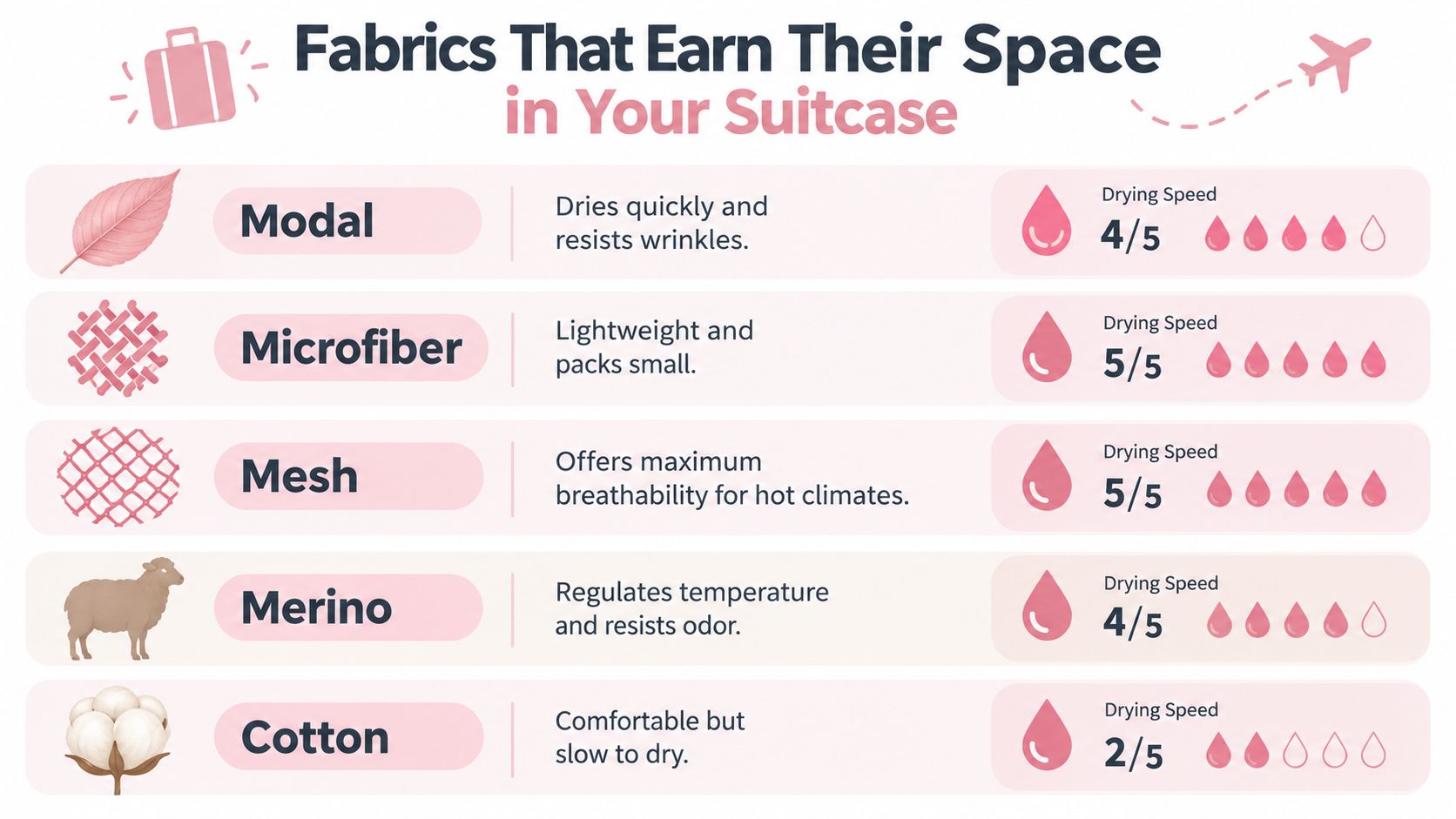
Modal feels soft against skin and works well for long stretches under ordinary clothes. It's a sensible pick for a cool city break or a flight followed by a low-key day. Don't assume softness guarantees quick drying, though. A pair still needs airflow and enough time to dry fully after a sink wash.
Microfiber is light and packs small, which makes it useful when space matters. It often dries faster than cotton, but synthetics can hold odor after a sweaty day. For a humid week in Bangkok, I'd favor a light, quick-drying pair over a thick cotton one, then make sure there's a plan to wash and dry it between wears. Breathable, moisture-wicking underwear can be a useful starting point when comparing construction and feel, but the label won't tell you how a particular pair behaves in your climate.
Mesh earns its place when airflow matters most. It can feel cooler in heat and during activity, but check the fit and finish: a breathable panel won't help if an edge rubs or the cut shifts while you walk.
Merino is a comfortable option for travelers moving between temperatures, and it can resist odor. It tends to need more time to dry than a quick-dry synthetic, so don't build a tight overnight rotation around it unless you've tested the pair at home.
Cotton feels familiar, but it absorbs sweat and stays wet longer. In a humid room, that can mean a damp pair when it's time to get dressed. It's fine when you have reliable laundry and plenty of drying time, but it's a poor choice for a rotation that depends on quick turnaround.
What antimicrobial finishes can and can't do
An antimicrobial finish isn't a substitute for washing, and it doesn't make a damp pair ready to wear. A controlled laundry study found that a 30°C wash followed by indoor air drying achieved roughly 6 log10 CFU/cm² microorganism reduction, while high- and low-temperature tumble drying exceeded 7 log10 CFU/cm². Those are study conditions, not a promise of sterilization from a hotel sink. The laundry study's findings reinforce a simple point: wash carefully and dry completely.
Store test: Feel the fabric, check that the seams lie flat, and ask yourself whether you can give it enough airflow to dry where you're going. If you can't, choose a different pair.
Matching the Cut to the Itinerary
The best cut is the one that stays comfortable under the clothes and through the movement you've planned. A thong can disappear under a silk slip at a business dinner, yet feel like the wrong choice on a long hike. A high-rise brief can feel reassuring on a flight, then dig into your waist on a hot walking day.
| Trip Type | Best Rise and Cut | Why It Works |
|---|---|---|
| Long-haul flight | Mid-rise brief or soft high-rise brief | Offers steady coverage while sitting, without forcing you into a cut that feels fussy after hours in a seat. |
| Active days | Stay-put brief or a longer leg cut | Helps reduce shifting and rubbing during walking, hiking, or repeated movement. |
| Business travel | Seamless brief or thong, depending on outfit | Laser-cut edges can stay discreet under fitted trousers, dresses, or silk. Choose the cut you already know you can wear all day. |
| Sightseeing-heavy city break | Mid-rise brief with a comfortable leg finish | A practical middle ground for long walks and varied outfits. |
| Beach days plus meetings | A breathable brief for daytime, an invisible-edge style for workwear | Different parts of the itinerary call for different cuts, so don't force one pair to do both jobs. |
Fit details matter more than labels
For a long flight, try the waistband while seated. If it rolls or pinches when you bend, you'll notice it more after hours in one position. A soft high-rise can feel smooth under a travel outfit, but it shouldn't compress your waist just to stay in place.
For active travel, prioritize a cut that doesn't creep up when you move. A longer leg may suit some travelers better, while others prefer a stay-put brief. The right choice depends on how the fabric and seams behave on your body, so test it during a full day at home before relying on it abroad.
Business outfits call for a different check. Laser-cut edges can reduce visible lines under fitted clothes, while bonded bands may help prevent rolling. In heat, breathable mesh panels can make a pair feel less stuffy, but no construction can compensate for a poor fit.
Don't pack a cut you're still trying to tolerate. Travel days aren't the time to discover that a waistband digs, a leg opening shifts, or a seam rubs after hours of walking.
Building a Rotation That Actually Dries
“One pair per day, plus one spare” is easy to remember, but it ignores the part that determines whether you can pack fewer: drying conditions. A sink-washed pair is useful only if it's completely dry before you need it again. Humidity, weak ventilation, and no safe place to hang laundry can make an overnight wash plan fail.
A practical starting point is three to six pairs, adjusted for access to laundry and the expected drying time. Wash the most heavily worn pair promptly, extract as much water as you can, and hang it where air can move around it. If the room is humid or you can't hang clothing privately, bring more. Saving suitcase space isn't worth re-wearing a damp pair.
Choose the count from your actual conditions
Think through the trip before choosing a number:
- Reliable laundry and ventilation: A smaller rotation may work if you can wash regularly and confirm that each pair dries fully.
- Warm, humid weather: Add pairs. Humid air can slow drying, even when the fabric feels light.
- Active itinerary: Add a buffer if you expect heavy sweating or may not have time to wash promptly.
- No dependable place to dry: Pack enough to avoid relying on overnight sink washes.
A damp waistband or gusset doesn't count as dry just because the rest of the garment feels wearable. Moisture left in fabric can contribute to odor and discomfort. Controlled textile research found that humid drying at approximately 31.8°C and 80% relative humidity increased bacterial growth and worsened odor, while dry conditions avoided that pattern. The takeaway isn't to panic about every slow-drying pair. It's to avoid packing or wearing one that's still damp.
Two trips, two different rotations
Five-day Lisbon city break with daily laundry: Three pairs can be enough if you wash promptly and have reliable ventilation. Keep a backup pair for the day a wash takes longer than expected.
Ten-day Bali trip with patchy laundry: Pack more rather than counting on a small rotation to dry overnight. Humidity and unreliable laundry access make a minimalist plan fragile, particularly after active days.
Practical rule: If you can't name where a washed pair will hang and how you'll know it's dry, bring another clean pair.
Sink Washing and Drying Without Ruining Them
A sink wash is a useful tool, not a reason to pack the bare minimum. Use it to keep a rotation moving, and take the drying step as seriously as the wash itself.
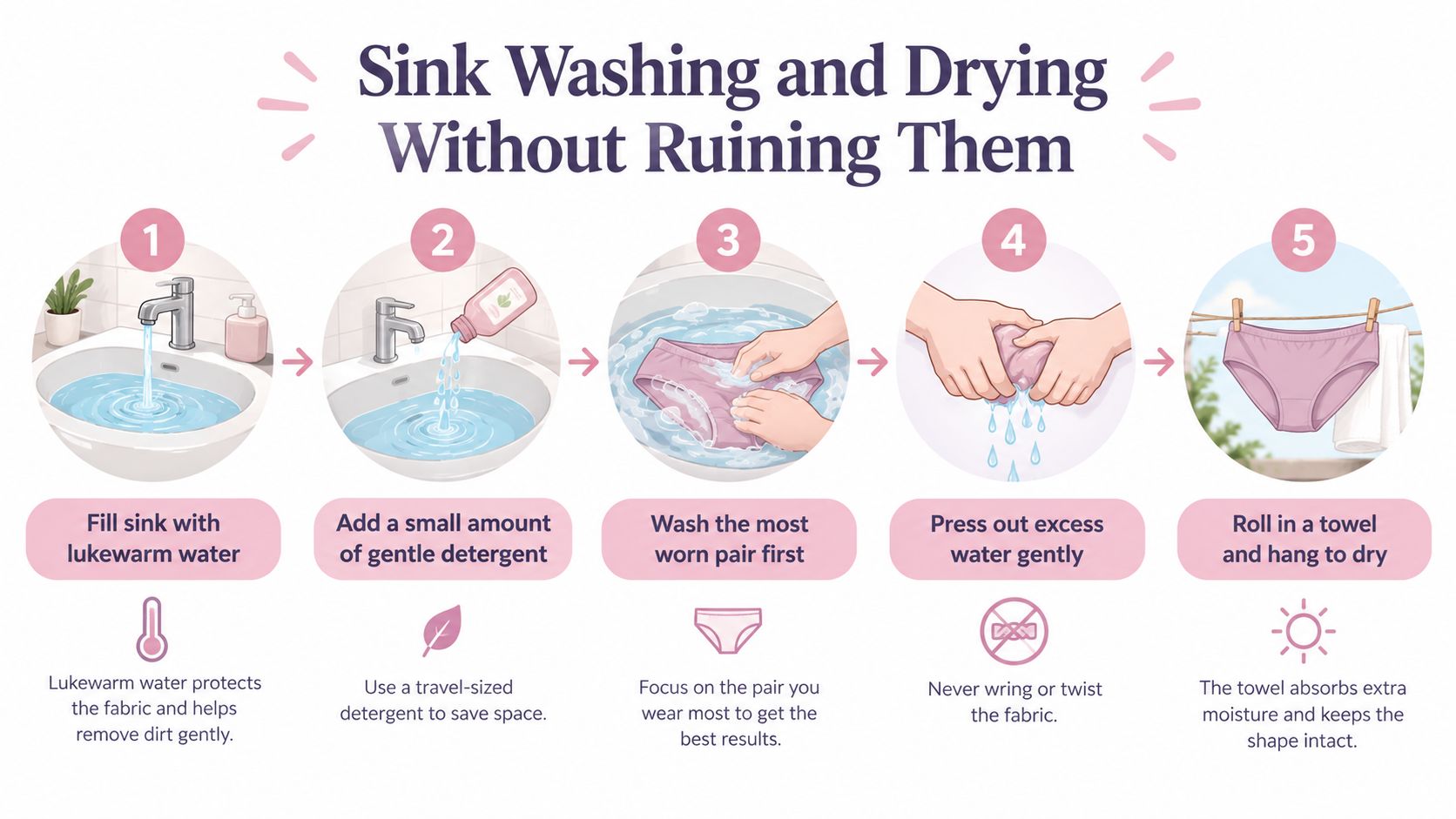
- Fill the sink or shower basin. Use water at the highest temperature allowed by the care label. Remove visible soil promptly rather than leaving it until the garment is harder to wash.
- Add a small amount of detergent. Use enough for the amount of water and fabric. Swish the pair gently so detergent reaches the gusset and waistband.
- Wash the most worn pair first. Gently agitate it, then rinse thoroughly. Don't assume a longer soak or more water can replace an adequate detergent dose.
- Press out water, don't twist. Twisting can stretch elastic and distort the fabric. Press the garment between your hands, then lay it on a clean towel.
- Roll the towel tightly and apply body weight. This pulls out more moisture without wringing the pair. Hang it fully spread, with airflow around the waistband and gusset.
A sealed or warm, humid bathroom can stall drying. Move the pair to a ventilated spot if you can, and don't put it away just because the surface feels dry. Check the gusset and waistband, where moisture often lingers.
For trips where a drying spot is awkward, a compact clothesline can make it easier to hang garments without draping them over furniture. These space-saving laundry gear tips offer practical ideas for creating a simple drying setup on the road.
A 40°C wash with detergent achieved effective soil removal in a controlled study, while stronger bacterial reduction was reported at 60°C with a lower detergent dose or at 40°C with a higher dose. Don't treat those laboratory results as a guarantee that a hotel sink wash sterilizes clothing. For low-temperature washing, thorough drying matters: controlled indoor air drying achieved approximately 6 log10 CFU/cm² reduction after a 30°C wash, and tumble drying achieved more than 7 log10 CFU/cm². More on caring for underwear can help you check garment-specific care before washing.
Use the video below as a visual reminder of the hand-washing routine.
Once the pair is fully dry, place it in a clean packing cube. Keep used damp garments separate in a breathable or washable laundry bag, never in a sealed compartment.
Capsules for Long-Haul, Active, and Business Trips
A capsule works when every pair has a job. Don't fill a cube with near-identical options if your itinerary includes a flight, a sweaty day outdoors, and a formal outfit. Build around the moments most likely to test comfort, then add a backup for the part of the trip where laundry is least certain.
Long-haul travel
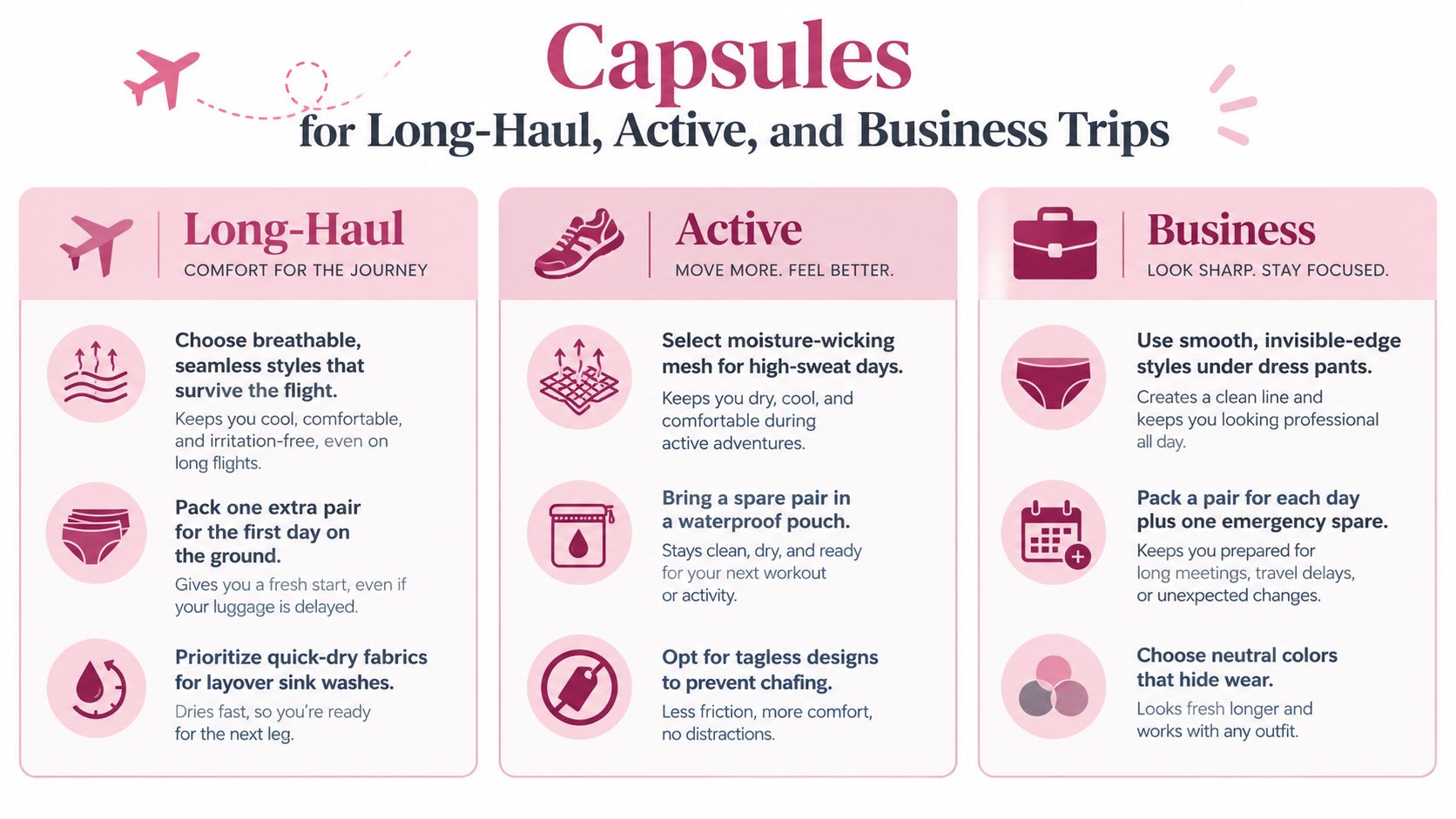
Pack breathable, smooth styles you already trust, plus one backup pair in your carry-on. Choose a cut that stays comfortable while sitting and still works for your first day on the ground. If a layover gives you time to wash, quick-drying fabric is more useful than an elaborate odor claim.
Active travel
Choose quick-drying mesh or another breathable fabric, with a stay-put cut that won't shift through a hike or a long walking day. Pack a small laundry kit with detergent and a way to extract water using a towel. Bring a spare in a separate pouch if your plans include swimming, rain, or a hard workout, so you're not forced to put on a damp pair afterward.
Business travel
For a week-long business trip with daily laundry, six pairs total gives you a workable rotation without treating every day as a separate packing problem. Choose smooth edges under dress clothes, a waistband that stays comfortable through meetings, and a discreet spare for a red-eye connection.
A three-day city break with hotel laundry service can work with three pairs, provided you know when the laundry will be done and have enough time to check that everything is dry. Don't assume hotel service will return garments on your preferred schedule.
Pick multi-packs for the cut you actually wear, not just the lower price per pair. A bundle is good value only when the styles suit your flights, work clothes, and walking days.
Your Pre-Trip Underwear Checklist
Fabric and features
- Pick breathable fabric for heat and activity.
- Choose quick-drying pairs only if you can hang them with airflow.
- Check seams and waistbands for rubbing, rolling, or digging.
- Treat antimicrobial claims as no replacement for washing and drying.
Count and capsule
- Match your pair count to laundry access and humidity.
- Pack a backup if a delayed wash would leave you short.
- Separate clean underwear from used or damp pairs.
Care kit
- Bring a small amount of suitable detergent.
- Keep a towel available for pressing out water.
- Plan where washed underwear will hang.
Trip-specific add-ons
- Carry a fresh pair for a long-haul arrival or connection.
- Choose a different cut if your itinerary shifts from hiking to formal plans.
- Keep toiletries compact too. If you're deciding what to bring, this guide to why small cologne bottles work can help you save space without packing a full-size bottle.
The right pair is the one you forget you're wearing. No fabric or packing plan replaces medical care for persistent irritation or recurrent infections.
Nuage Wears offers women's underwear in modal, breathable mesh, smooth, and stay-put styles, plus multi-packs for building a travel rotation. Choose the cut that suits your itinerary and visit Nuage Wears to find a comfortable pair for your next trip.


