


You've found the pair: crisp cotton, a flattering color, and a waistband that looks perfect on the hanger. Then you sit down, notice the waistband digging in, and discover that the leg feels stiff in exactly the wrong place. A good pair of women's cotton shorts shouldn't only look appealing in a product photo. It should fit when you walk, squat, travel, wash, and reach for your phone.
The right choice depends on more than softness. Inseam length, rise, pocket depth, fabric structure, shrinkage, and finishing all change how shorts behave. Use this guide to choose cotton shorts that earn regular space in your wardrobe instead of spending the season folded in a drawer.
Table of Contents
- Why Cotton Shorts Deserve a Spot in Every Wardrobe
- What Makes Cotton Shorts Feel the Way They Do
- Popular Styles and Cuts of Women Cotton Shorts
- Choosing the Right Cotton Fabric and Blend
- Getting the Fit Right From Inseam to Waistband
- Real Ways to Style Women Cotton Shorts
- Caring for Cotton Shorts So They Last
- A Simple Shorts Checklist Before You Buy
Why Cotton Shorts Deserve a Spot in Every Wardrobe
A woman leaves the fitting room in cotton shorts, walks a few steps, sits down, and checks the waistband. She needs one pair for warm mornings, weekend errands, and travel, yet the same pair must work with several tops. That everyday test explains cotton shorts' appeal: the fiber provides a familiar base, while the cut determines whether the result feels polished, loose, sporty, or ready for lounging.
Cotton can absorb moisture beside the skin, which helps explain its comfortable feel during low-to-moderate activity, although it may dry more slowly than synthetic fibers in textile research on cotton moisture behavior. Comfort still depends on construction. A pair with a practical inseam, a waistband that stays put, and pockets deep enough for the intended use is more likely to earn regular wear.
Three reasons they keep getting worn
- They become more familiar over time. Cotton often softens through washing instead of keeping a permanently slick or plasticky feel. With sensible care and comfortable construction, the fabric can settle into the wearer's movements.
- They cross style boundaries easily. Sneakers suit walking and errands, while sandals create an uncomplicated warm-weather outfit. A medium-weight woven pair can also support a tucked blouse or lightweight overshirt.
- They handle regular laundering well. Cotton still needs thoughtful washing, but a well-made pair can withstand repeated cleaning better than a trend-focused garment that quickly loses its shape.
The value comes from repeated wear, not the purchase alone. A pair that works for casual weekends, travel days, and daily errands can provide better price-to-wear value than a fashionable option that restricts movement or soon becomes uncomfortable.
Wardrobe rule: Choose the pair you'll reach for on a rushed morning, not only the pair that looks impressive on the hanger.
Shorts also developed beyond sports clothing. Historical summaries place an important shift in the 1920s, as women and girls increasingly wore shorts for sports and warm-weather activities. Shorter styles gained wider attention in the 1940s, and shorts became more familiar in everyday dress by the 1950s as outlined in this history of women's shorts. Their history helps explain their present flexibility. The garment has adapted alongside changing needs for movement, comfort, and casual dress.
What Makes Cotton Shorts Feel the Way They Do
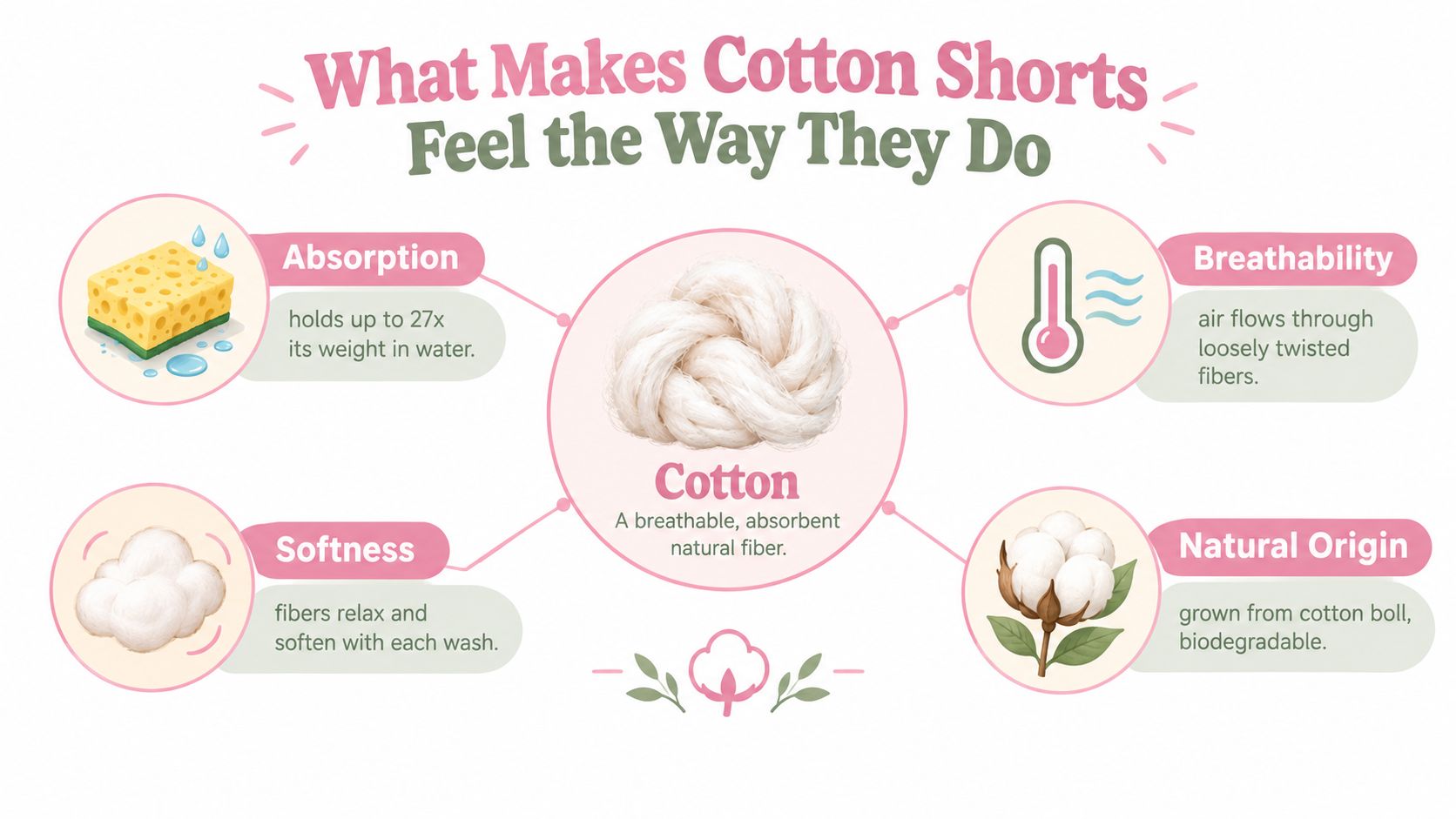
You step outside on a warm day and notice that one pair feels light and flexible, while another feels stiff or clingy. Both may be cotton. The difference comes from how the fibers become yarn, then fabric, then a finished garment.
Cotton's feel depends on construction as much as fiber content. A loosely twisted yarn can create a softer, airier surface. A tighter twist usually feels smoother and firmer. These choices affect how shorts bend, brush against the skin, and recover after movement. An infographic explaining the benefits of cotton material for shorts including absorption, breathability, softness, and natural origins.
Read the fabric structure
A woven fabric crosses yarns over and under one another, much like a small grid. This structure usually gives shorts a steadier shape and a more precise fit. A knit fabric forms connected loops instead. Those loops work like tiny springs, giving the garment more natural stretch and a softer reaction when you sit, walk, or climb stairs.
The choice matters in heat and motion. A knit may follow the body comfortably, but a dense knit can hold warmth close to the skin. A lightweight woven can feel airy, while a tightly packed twill may feel substantial and resist wrinkling. Check the fabric itself rather than judging cotton by name alone.
Thread count does not predict comfort by itself. Yarn thickness, spacing, and finishing all change the result. Voile can feel light because its open structure permits more air movement. Twill feels firmer because its construction packs more material into the surface.
Finishing changes the first impression and the later fit. Mercerization can smooth the surface and add a subtle sheen. Garment-dyeing can create a softer, lived-in hand. Laundering may alter that original feel, so allow for possible shrinkage when choosing the waistband and inseam.
Treatment can change how air moves through cotton. A study of treated cotton fabrics found statistically significant differences in air permeability between treatment variants, while heat and moisture transfer did not differ significantly in that analysis in this study of moisture-management-treated cotton. For shoppers, airflow is a practical comfort feature. It can determine whether cotton shorts feel fresh during movement or clammy in the heat.
Popular Styles and Cuts of Women Cotton Shorts
The best cut depends on what you want the shorts to do. A polished pair for an office-casual setting needs a different balance of structure and ease than a pair for sleep, cycling, or outdoor work. Start with the rise, then consider inseam, thigh room, hem shape, and fabric weight.
Match the silhouette to the day
Mid-rise and high-rise shorts usually look neat with a fitted waistband, pressed front, and clean hem. An inseam around 5 to 7 inches can provide useful coverage while keeping the leg line tidy. These cuts tend to suit pear, hourglass, and straight shapes when the waistband sits flat and the hip has enough ease.
Boyfriend and mom shorts generally offer a roomier thigh and a more relaxed seat. An inseam around 7 to 9 inches gives a casual, covered profile, while a tapered leg keeps the shape from looking overly broad. If your thighs touch, choose a hem that doesn't end at the widest point of the leg.
Pull-on and paperbag-waist styles prioritize ease. They work well for long days when a rigid button closure becomes annoying, but excess fabric at the waist can create bulk under a tucked top. Look for a rise that follows your natural waist without forcing the tie or elastic to do all the fitting work.
Bike shorts and lounge shorts often fall around 5 to 8 inches in inseam. Their success depends on stretch, smooth seams, and a hem that stays in place without squeezing. Cargo and utility cotton shorts often use an inseam around 5 to 7 inches, balancing movement with practical coverage. Pockets add function, but they can also pull the side seam downward when filled.
| Style | Typical Inseam | Best For | Fit Trade-off |
|---|---|---|---|
| Tailored mid-rise or high-rise | 5 to 7 inches | Office-casual outfits and polished weekends | Structure can feel restrictive if the waistband lacks ease |
| Boyfriend or mom | 7 to 9 inches | Relaxed styling and fuller thigh coverage | Roomier hips may need a tapered leg |
| Pull-on or paperbag waist | Varies by design | Long days, travel, and easy dressing | Elastic or gathered fabric can add waist bulk |
| Bike or lounge short | 5 to 8 inches | Movement, sleep, and home wear | Stretch and seam placement determine comfort |
| Cargo or utility | 5 to 7 inches | Outdoor days and hands-free errands | Filled pockets can weigh down the side seam |
For a softer, flexible feel, compare the silhouette with a French terry shorts guide. Fabric weight changes the personality of every cut. Stiff twill looks architectural, while a drapey cotton-linen blend falls closer to the body and may feel less formal.
Choosing the Right Cotton Fabric and Blend
Fiber content tells you what the fabric is made from, but structure tells you how it behaves. A pure cotton short may feel breathable and familiar against sensitive skin. A blend can add stretch and recovery. A treated cotton may help with moisture movement, though cotton's basic drying limitation still matters.
| Fabric | Breathability | Stretch | Typical GSM | Best For |
|---|---|---|---|---|
| 100% cotton woven | High in an open, suitable structure | Low unless specially constructed | Casual woven options vary | Everyday wear and skin-sensitive dressing |
| Cotton-linen blend | High and airy | Low to moderate | Lightweight to medium options | Hot-weather lounging and relaxed outfits |
| Cotton-spandex blend | Moderate to high, depending on structure | Noticeable stretch and recovery | Varies by garment | Travel, movement, and close-fitting cuts |
| Moisture-treated cotton | Depends strongly on airflow and finish | Depends on base fabric | Varies by treatment | Activity where improved moisture handling matters |
What the weight tells you
For casual woven shorts, a fabric around 180 to 220 GSM usually balances coverage and everyday comfort. Twill shorts around 240 to 300 GSM feel more structured and durable, but can feel warmer in direct heat. Knit jersey options around 140 to 180 GSM tend to drape more softly and suit lounge or movement-focused designs.
These are decision cues, not guarantees. A loose weave can feel cooler than a denser fabric at a similar weight, and a breathable knit can outperform a stiff woven in motion.
Long-staple and combed cotton generally create a smoother, more consistent yarn than carded cotton. That can help the surface resist roughness and pilling over time, although the final result also depends on friction, finishing, and laundering.
A small amount of elastane can change the experience significantly. A 2 to 5% addition can improve stretch and recovery without removing the breathable character shoppers often want from cotton. Choose pure cotton when skin feel and airflow lead the decision, a blend when bending and shape retention matter, and treated cotton when sweat management is a priority. For an adjacent everyday-bottoms perspective, see this guide to organic cotton pants for women.
Getting the Fit Right From Inseam to Waistband
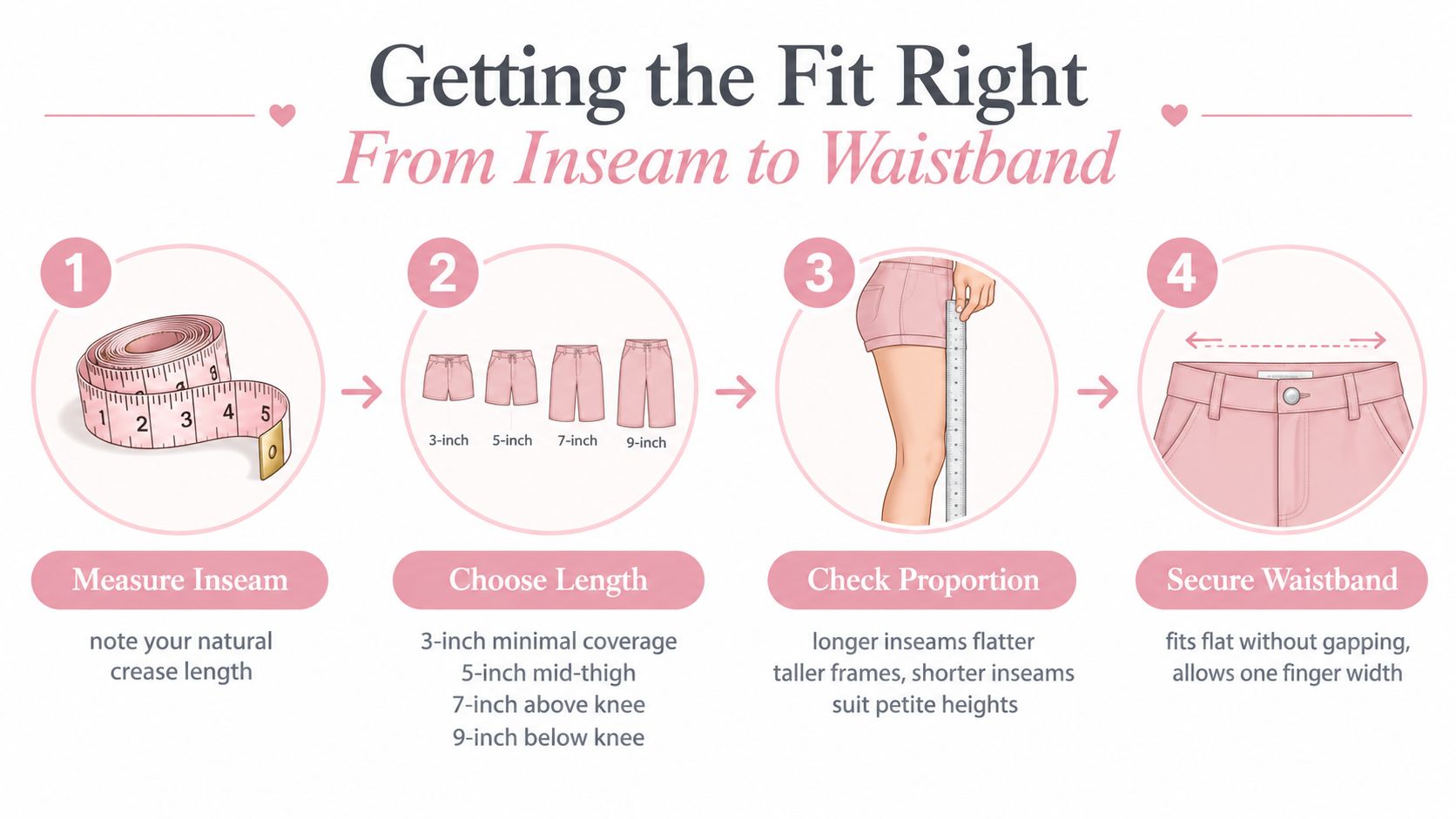
A pair of cotton shorts can fit the waist and still feel wrong through the leg. Measure the inseam from the crotch seam to the hem, then compare it with the coverage you want. A 3-inch inseam leaves the least coverage, 5 inches usually reaches mid-thigh, 7 inches comes closer to the knee, and 9 inches creates a longer, more covered line.
Your height, hip width, and thigh shape change how each length looks. A longer inseam can balance a taller frame, while a shorter one may suit petite proportions without overwhelming them. If your hips or thighs are fuller, use your own measurements rather than the model's proportions. The hem should rest comfortably instead of cutting across the widest part of your leg.
Use movement as your fitting room
Try a full squat. The waistband should stay anchored, the crotch should not pull sharply, and the hem should remain comfortable. Then sit down, walk a few steps, and reach forward. These movements reveal pressure points that standing still can hide.
Check the waistband for a flat fit with enough room to move. A little space allows comfort, but visible gaping can signal that the rise or waistband shape does not match your body. Side seams should hang vertically rather than twisting toward the front or back. Pocket openings should also lie flat when you stand naturally.
Pocket depth affects whether the shorts work during travel, errands, or a seated workday. A pocket that reaches the base of your hand when inserted gives a phone more room to stay secure while seated. Check the pocket bag, not only the opening. A wide opening may seem convenient but can expose contents as you walk or bend in this practical cotton-shorts guide.
Shrinkage can change the fit after washing. Unwashed 100% cotton may shrink about 3 to 5%, especially with high-heat drying. Applied to a 20-inch inseam, that range equals roughly 0.6 to 1 inch. Applied to a 30-inch waist measurement, it equals roughly 0.9 to 1.5 inches. Treat the care label as part of the sizing decision, and allow for that change before choosing a close fit.
Real Ways to Style Women Cotton Shorts
Start with the day ahead, then build around the shorts. For a casual outing, mid-rise, 5-inch denim-style cotton shorts pair well with a tucked linen tee, leather slide sandals, and a crossbody bag. A medium wash works like a quiet foundation, supporting neutral tops without making the outfit feel busy.
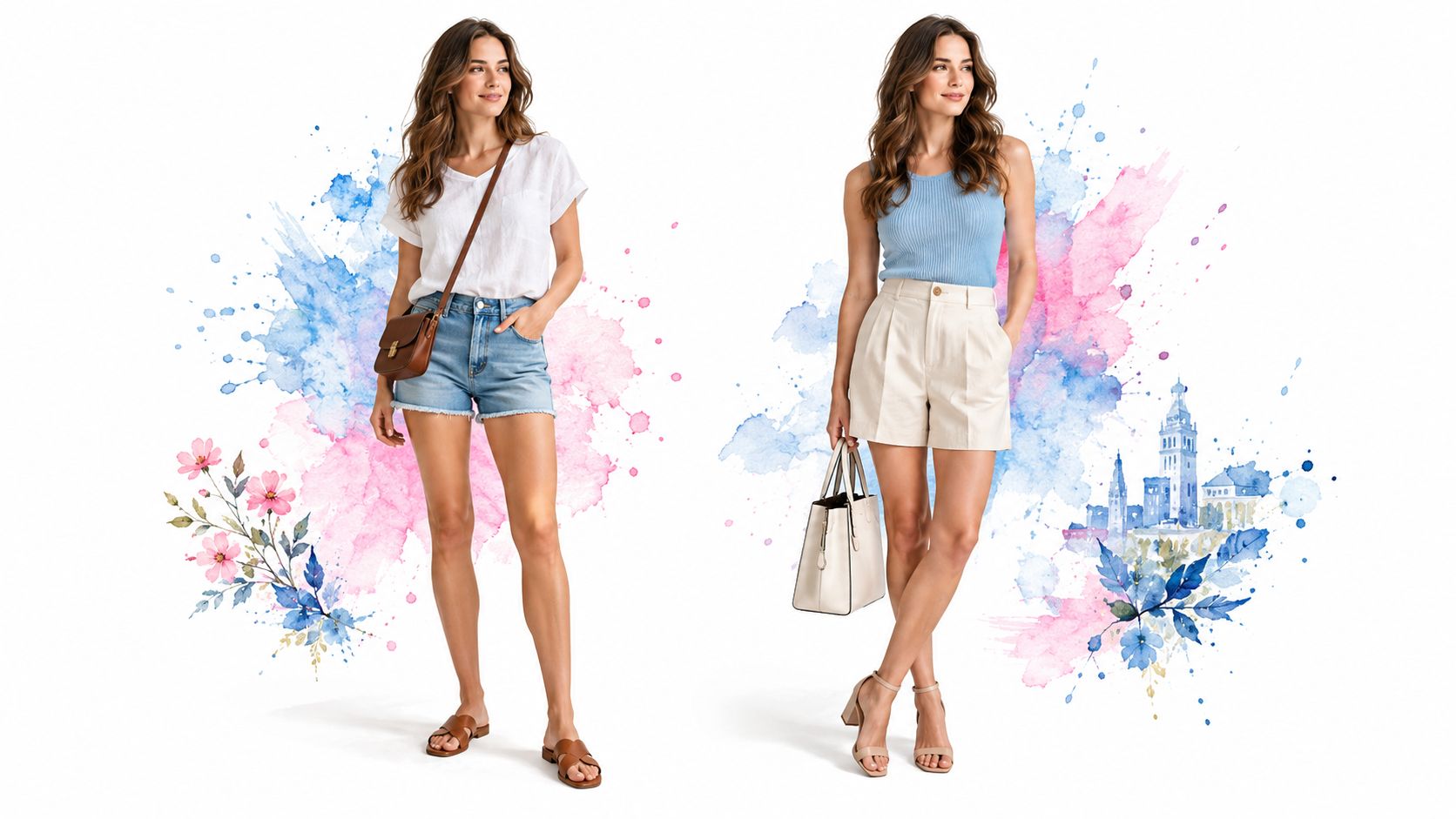
Test the outfit by sitting, walking, and reaching forward. The tee should stay reasonably secure without repeated retucking, and the waistband should not compete for attention. Pair a firm, structured short with a softer top for balance. Two rigid pieces can make cotton feel heavier and restrict movement.
For brunch, sightseeing, or travel, a cotton-blend knit short suits a more active schedule. Add a cropped polo, white sneakers, and a lightweight cap. Knit structure gives the fabric more flexibility, while the blend helps the leg line recover after sitting. Keep the accessories simple so the shorts remain the visual anchor.
A few small changes can shift the same pair between settings:
- For longer walks: Choose canvas sneakers instead of sandals and wear the crossbody close to your body.
- For a cooler evening: Replace the tee with an open button-down or tuck it lightly.
- For a sharper tuck: Try a ribbed tank with a smooth waistband. Add a simple belt only when the loops support it.
Color can guide an outfit as much as fabric. Warm neutrals generally coordinate well with warm undertones, while cool greyed shades often suit cooler undertones. Cream, muted green, dusty pink, and blue-based tones can work across undertones when the top near your face provides balance. Match the shorts with shoes and shirts you already wear instead of following a fixed color list.
The embedded video provides another visual reference for combining casual bottoms with warm-weather tops.
Caring for Cotton Shorts So They Last
A good cotton short can lose its fit through heat, friction, or careless storage. Treat the fibers gently, and the waistband, color, and shape have a better chance of staying consistent.
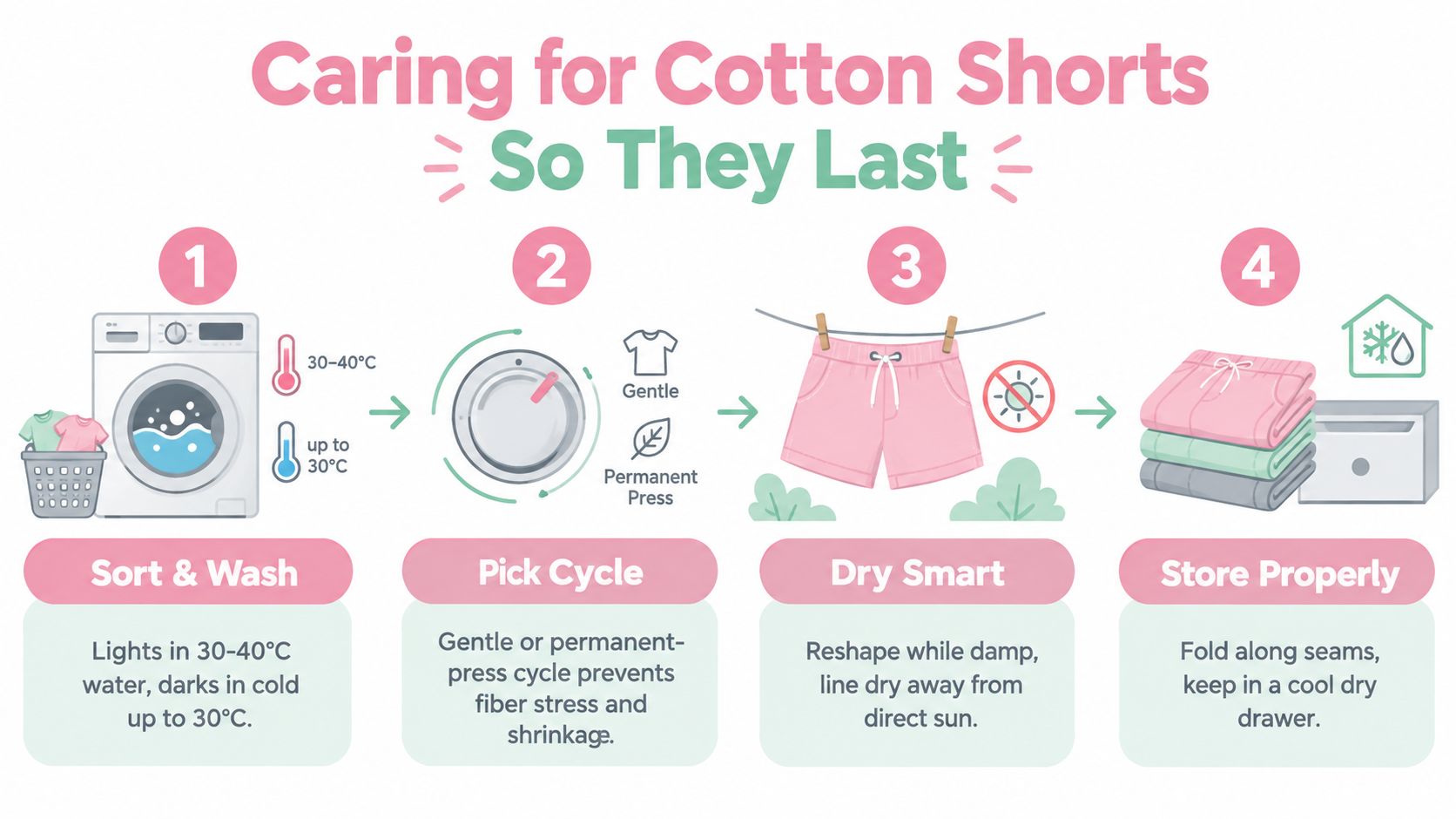
Start by reading the care label, then sort light and dark colors. Close fasteners, turn printed or dyed shorts inside out, and wash them with fabrics that will not scrape the surface. For light colors, use 30 to 40°C water when the label allows it. Cold water or temperatures up to 30°C suit dark colors and help limit color stress. A gentle or permanent-press cycle reduces rough agitation, which can cause surface wear, distortion, and shrinkage.
A simple routine works well:
- Prepare the load. Keep abrasive items away from cotton, avoid chlorine bleach on colored shorts, and choose a mild detergent to help maintain the color.
- Correct the shape early. While the shorts are damp, smooth the waistband, straighten the side seams, and align the hems. Damp cotton behaves like soft clay, so small adjustments are easier before the fabric dries.
- Control heat during drying. Line dry in the shade to protect color and avoid heat-related shrinkage. Low tumble drying is faster, but repeated heat can make cotton contract and gradually reduce softness.
- Store without pulling the waist. Fold the shorts along their seams and place them in a cool, dry drawer. A narrow clip can stretch the waistband, particularly when the shorts are heavy or damp.
Pilling around the inner thigh usually reflects repeated friction, not one bad wash. Turn the shorts inside out, select a gentler cycle, and keep them away from rough fabrics. If a print starts fading, reduce direct sun exposure and continue laundering it inside out.
Waistbands also relax under repeated stretching. Let the shorts rest between wears, avoid packing drawers too tightly, and fold them instead of hanging them by the waistband.
A Simple Shorts Checklist Before You Buy
A product page can look convincing until you sit, walk, or reach for your phone. Use this checklist to test how the shorts will behave in daily wear:
- Fabric and weight: Choose pure cotton for airflow and a familiar hand, 2–5% elastane when movement matters, or treated cotton for sweat-heavy activity. Lighter fabric suits lounging and heat; twill offers more structure and coverage.
- Inseam: Check the measurement, not only “short” or “long.” A shorter inseam can feel cooler, while a longer one gives more thigh coverage. Match it to your activity and preferred proportions.
- Waistband: Sit, squat, and bend. The waistband should remain flat without digging, sliding, or gaping.
- Pockets: If the shorts need to carry a phone, confirm that the pocket bag is deep enough to hold it securely. Practical guidance often points to 6 inches or deeper as suggested by independent practical guidance.
- Shrinkage: For untreated cotton, compare the garment's measurements with the fit you need after washing. Leave a little room where a small contraction would affect the inseam or waist, and follow the care label.
- Construction: Check stitching, pocket attachment, seam alignment, and hem finishing. These details indicate whether the shorts can handle repeated movement.
- Color: Choose a shade that works with your existing tops and shoes, rather than one that only stands out on screen.
- Price and build: Compare fabric density, finishing, pocket construction, and waistband quality. A higher price makes sense only when those features support regular wear.
The right cotton short balances comfortable movement, useful coverage, reliable pockets, and manageable care. Nuage Wears offers comfort-focused everyday apparel and intimates, including cotton-based options for breathable, stay-put wear. Explore Nuage Wears for pieces that complement your cotton-shorts wardrobe.


