


You're standing in front of an open drawer, still waiting for your coffee to brew, trying to choose a layer that won't distract you later. A soft camisole goes under your cardigan, disappears beneath your clothes, and gives you just enough coverage for the changing temperature between the bedroom, commute, office, and evening plans.
That simple choice raises useful questions. Why does 100% cotton feel different from a stretch blend? Does “breathable” mean it won't feel damp? How can you prevent shrinkage, and what fit keeps the hem from rolling? A camisole made from pure cotton can be a dependable everyday basic, but it performs best when you match its fabric, construction, and care routine to the way you'll wear it.
Table of Contents
- Why a Cotton Camisole Earns a Spot in Your Drawer
- What Makes a 100 Percent Cotton Camisole Different
- The Comfort and Skin-Friendly Benefits of Cotton
- Finding the Right Fit and Layering It Like a Pro
- When Pure Cotton Works and When Another Fabric Wins
- Caring for Cotton Camisoles So They Stay Soft
- Choosing a Cotton Camisole That Fits Your Day
Why a Cotton Camisole Earns a Spot in Your Drawer
A camisole began as an undergarment, not a statement piece. In the Victorian era, women's petticoats gradually lost their bodices, and the camisole developed from the corset cover that took their place. By the late nineteenth century, the term referred to this lighter upper-body layer, which later evolved into the familiar camisole used for layering and everyday comfort. Cotton's historical importance helps explain why cotton-based basics became so recognizable. In 1913, cotton represented about 80% of global fiber consumption, or roughly 4 billion kilograms, according to this historical account of cotton and apparel.
The modern version is less formal and far more versatile. You might wear a slim cotton camisole beneath a work shirt to soften the feel of a structured fabric, under a cardigan on a flight, or with loose trousers at home. It doesn't ask for much styling, yet it solves several small wardrobe problems at once: added coverage, a smoother layer, and a familiar fabric against your skin.
The quiet workhorse effect
Pure cotton earns its place through repetition. A good camisole can move between outfits without looking like a separate event. A neutral shade works below translucent shirts, while a ribbed style can become visible beneath an open overshirt as part of the outfit.
Cotton also has a long apparel history behind it. Although cotton's share of total textile-fiber consumption declined from about half until the 1980s to 24% in 2020, its share of cotton retail apparel and home furnishings rebounded from a historic low of 34% in the early 1970s to more than 60% today in major consumer markets, as reported by Textile World's overview of cotton's global journey. Those figures don't mean every cotton garment is automatically durable or sustainable. They do show how the fiber remains embedded in everyday apparel.
Practical rule: Choose a cotton camisole when you want a soft, familiar layer for ordinary movement, moderate temperatures, and clothes you'll wear often.
The appeal becomes clearer when you stop treating “cotton” as a complete description. Fiber content tells you what the yarn is made from, but knit structure, weight, fit, finishing, and care determine how the camisole behaves. The next step is learning to read those details rather than relying on the label alone.
What Makes a 100 Percent Cotton Camisole Different
A 100% cotton camisole contains cotton as its only listed fiber. Check the sewn-in label rather than assuming that a garment described as “cotton” is pure cotton. A cotton-spandex camisole, for example, may feel softer and stretch more easily, but it isn't the same fabric choice because the added elastane changes recovery, fit, and care.
The most common construction is jersey knit. Instead of crossing yarns in a firm grid, the machine forms the yarn into connected loops. Those loops give the fabric flexibility and a soft drape, which is why a jersey camisole can move with your torso without feeling like a woven shirt.
Reading the knit by touch
Single jersey usually feels light and fluid, with one main face and a softer reverse. Interlock uses a more stable double-knit structure, so it often feels smoother, denser, and less transparent. Rib knit has visible vertical channels and generally offers more give, although the amount of stretch depends on the yarn and construction.
Thread count and ply influence the fabric's character, but they're not a complete quality score. A finer yarn can create a lighter hand, while multiple yarn strands can make the knit feel fuller. For a camisole, you'll usually care more about whether the fabric is opaque enough, whether the seams lie flat, and whether the knit returns to shape after gentle stretching.
The label also helps you anticipate tradeoffs:
- Pure cotton: Soft, breathable, absorbent, and comfortable against skin, but more vulnerable to laundering-related dimensional change.
- Cotton with elastane: More stretch and better recovery, with a closer fit that may stay in place more easily.
- Modal or other regenerated-cellulose blends: Often smooth and fluid, with a different moisture and drape profile from cotton.
- Synthetic performance blends: Usually designed to move moisture and dry faster, though the hand feel and skin response vary.
For a plain-language guide to related cotton layering pieces, see this cotton tanks guide for women.
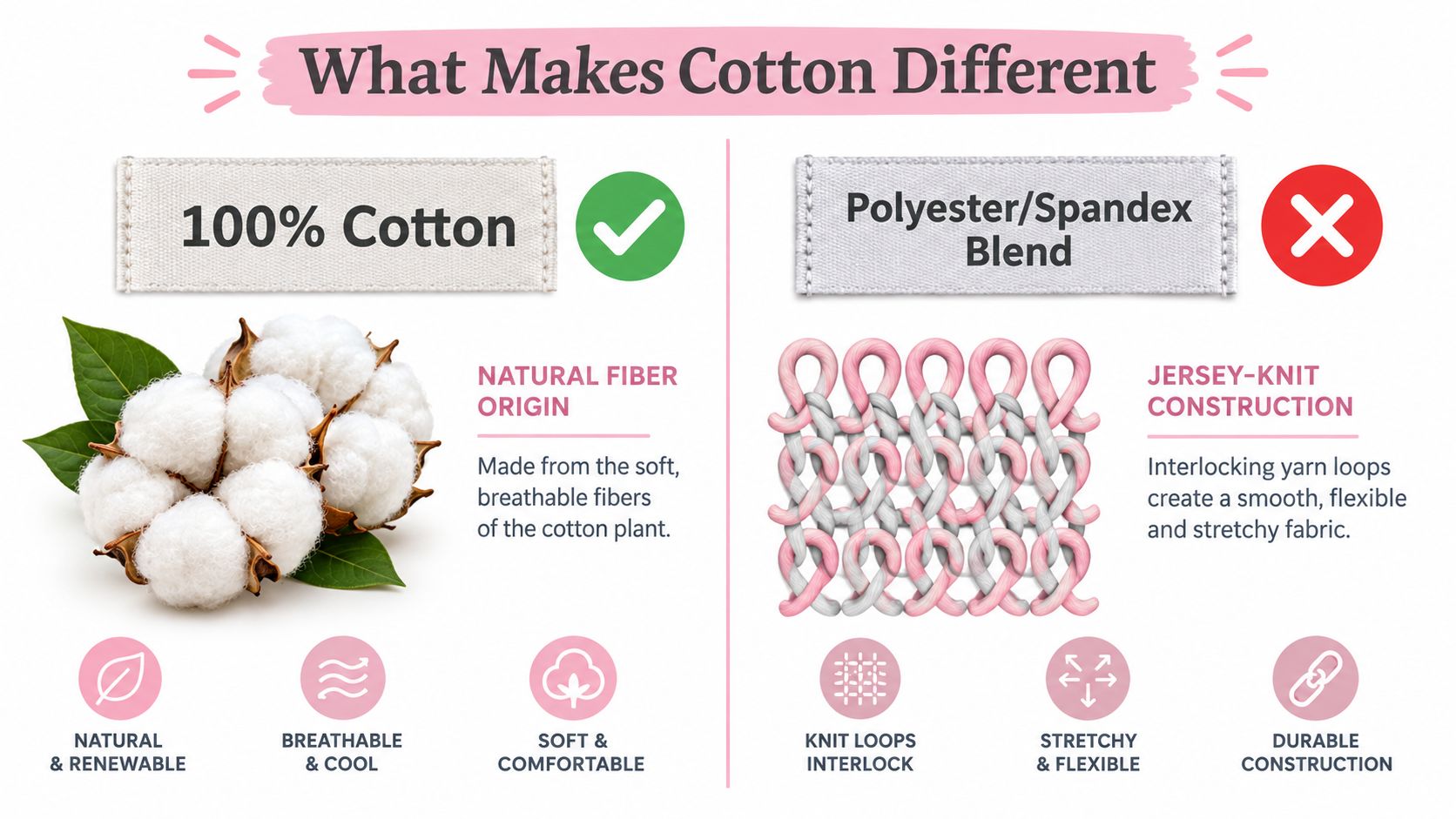
A practical test is simple. Hold the camisole up to light to judge opacity, stretch the side seam gently to see how quickly it recovers, and rub the fabric between your fingers to compare density and surface softness. A label tells you the fiber origin. Your hands and eyes tell you whether the construction suits your wardrobe.
The Comfort and Skin-Friendly Benefits of Cotton
Cotton's comfort comes from how the fiber interacts with heat, moisture, and touch. Cotton is hygroscopic, which means it takes up moisture. One textile source states that cotton can absorb up to 25% of its weight in water before feeling damp, as explained in this guide to cotton jersey-knit fabric.
That absorption can make a cotton camisole feel less clammy during ordinary wear. The fabric can take up perspiration rather than leaving every small trace of moisture sitting on the surface. Cotton jersey also allows air to pass through the knit, so it can feel comfortable beneath a cardigan, shirt, or light sweater.
But breathability and dryness aren't the same thing. A cotton camisole may feel pleasant at the beginning of a warm day and then become heavy or clingy after prolonged sweating. Absorbed moisture remains in the garment longer than it would in a fast-drying performance fabric, especially when the camisole fits closely or the weather is humid.
A comfort comparison
| Fabric | Breathability | Moisture Absorption | Skin Feel | Drying Speed |
|---|---|---|---|---|
| 100% cotton | Generally airy in a light knit | High | Soft and familiar | Slower when saturated |
| Cotton blend | Varies by blend and knit | Moderate to high | Soft with added stretch or smoothness | Often faster than pure cotton |
| Modal blend | Usually comfortable and fluid | Moderate to high | Smooth and drapey | Often quicker than heavier cotton |
| Technical synthetic blend | Depends on mesh or knit design | Usually lower | May feel sleek or more structured | Often fast |
Cotton can also suit people who dislike a slick synthetic sensation. A smooth, well-finished camisole may reduce friction around the shoulders and underarms, although no fiber can guarantee a reaction-free experience. If you have eczema, post-shave sensitivity, or easily irritated skin, look for soft seams, gentle finishing, and dyes or treatments that your skin tolerates.
Cotton is a strong choice for low-impact comfort, not a promise that you'll stay dry through every kind of activity.
The best use case is everyday layering, desk work, relaxed walking, and moderate temperatures. If you're commuting in humid weather, exercising, or wearing one camisole for a long stretch without changing, the same absorbency that feels comfortable at first may become the main drawback.
Finding the Right Fit and Layering It Like a Pro
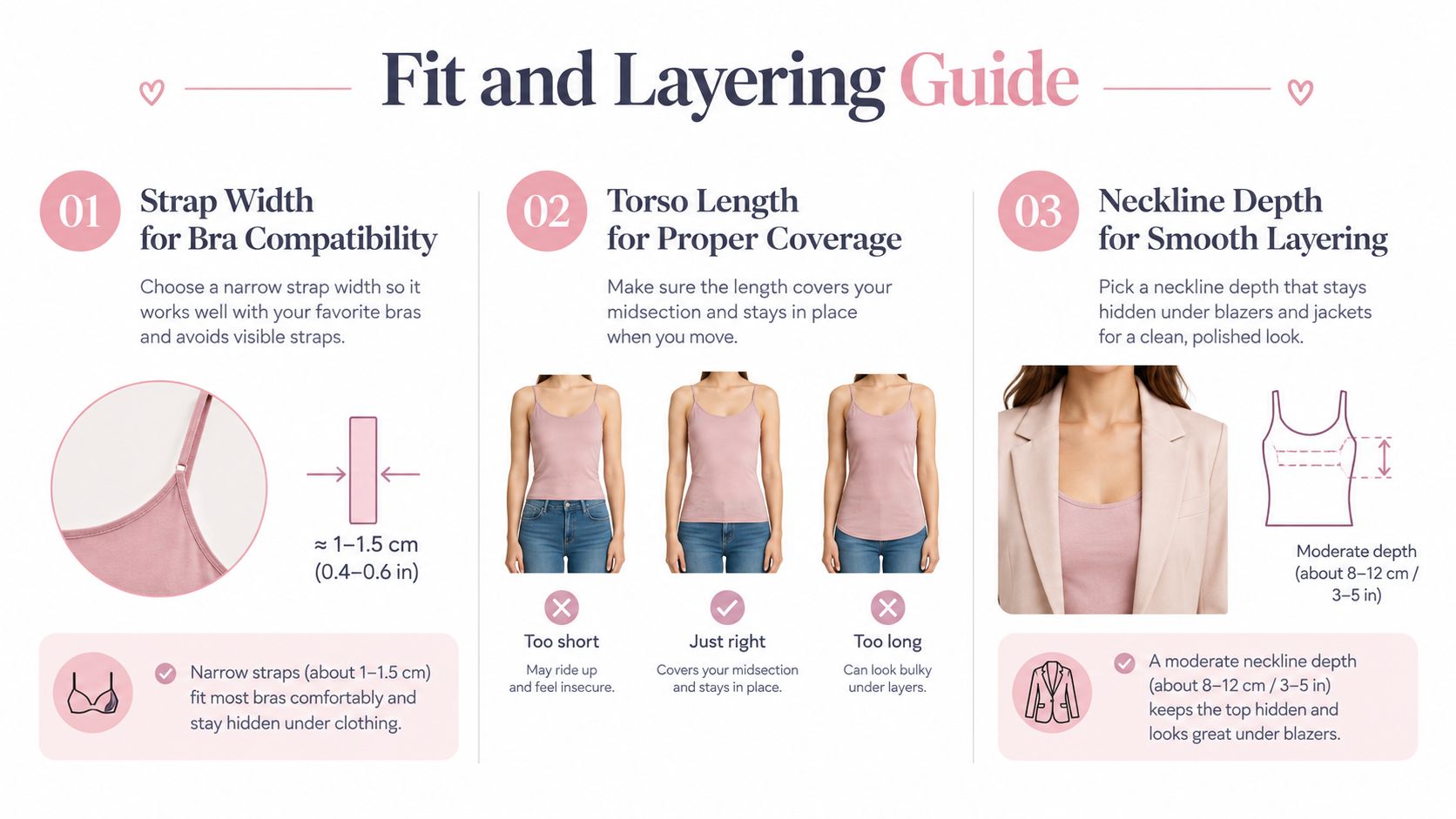
A cotton camisole looks polished under clothing when three areas cooperate: strap placement, torso length, and neckline depth. If one is wrong, the garment may bunch, expose the bra, roll at the hem, or show above the outer layer.
Start with the straps. Narrow straps can work under thin-strap dresses, but they may not cover bra straps or distribute pressure as comfortably. Wider straps are easier to pair with everyday bras and often sit more securely on the shoulder. Adjustable straps help when you're switching between a lower neckline and a higher cardigan, but adjustment hardware can become visible under very fitted clothing.
Match the shape to the outfit
Torso length matters more than many shoppers expect. A hem that ends at the waistband may ride up whenever you sit or reach. A longer body can tuck into trousers or a skirt, but excess fabric may bunch beneath close-fitting bottoms. Aim for enough length to stay in place without creating a thick fold.
The neckline should support the outer garment rather than compete with it. A lower scoop can suit an open shirt, while a higher neckline is usually easier beneath a blazer or a buttoned blouse. For a more supportive style, compare construction details in this shelf-bra camisole guide.
Try these outfit formulas:
- Office: Wear a ribbed cotton camisole beneath a relaxed blazer. Choose a neckline that stays hidden when the blazer opens naturally, and select a hem long enough to remain tucked while seated.
- Weekend: Layer a fitted white camisole under an unbuttoned linen shirt. The contrast makes the base layer intentional, while the close fit prevents excess fabric beneath the looser shirt.
- Travel: Pair a neutral-toned camisole with a cardigan and flexible trousers. A smooth surface helps the layers slide over one another, and a secure hem reduces constant readjustment during sitting.
Fixing the common annoyances
A rolling hem often signals that the camisole is too snug through the hips, too short for your torso, or finished with an unstable edge. Try a longer cut, a slightly roomier size, or a smoother waistband before assuming the fabric itself is the problem. Straps that slip may need adjustment, but if they keep falling after tightening, the neckline or shoulder width may not match your body.
A camisole should skim rather than compress unless it's specifically designed as a fitted support layer. Leave enough ease for breathing and sitting, then let the outer garment provide the visual shape.
When Pure Cotton Works and When Another Fabric Wins
Pure cotton is a sensible default for moderate temperatures, indoor layering, low-impact movement, and sensitive-skin comfort. It feels natural, takes up perspiration, and works well with wardrobes built around cardigans, shirts, sweaters, and relaxed dresses.
The decision changes when moisture has nowhere to go. During a humid commute, a close-fitting cotton camisole can hold sweat and feel heavier against your torso. A modal-cotton blend may feel smoother and dry sooner, while a technical mesh design can provide more airflow for active use. Neither option is universally superior. Each answers a different problem.
Match the fabric to the day
For high-intensity movement, a polyester-spandex style generally offers stronger stretch recovery and faster moisture transport than pure cotton. That can make it more practical for exercise, repetitive movement, or workdays where you sweat heavily.
For cold-weather base layering, merino can regulate temperature differently from cotton and may suit people who need warmth during changing conditions. A cotton camisole remains useful as a soft inner layer, but it may not be the most efficient choice when you need insulation, rapid drying, or repeated wear during travel.
| Fabric | Breathability | Moisture Wicking | Drying Speed | Odor Resistance | Care Ease |
|---|---|---|---|---|---|
| 100% cotton | Good in light knits | Limited after saturation | Slow to moderate | Variable | Simple, but shrinkage needs control |
| Cotton blend | Depends on added fiber | Moderate | Moderate | Variable | Usually straightforward |
| Modal blend | Comfortable and fluid | Moderate | Moderate to fast | Variable | Follow label, avoid harsh heat |
| Technical mesh blend | Often high | Strong in performance designs | Fast | Varies by treatment and use | May need careful washing |
| Merino | Breathable across changing temperatures | Moderate | Moderate | Often valued for repeated wear | Requires attentive care |
The sustainability conversation also needs precision. Cotton can be conventional, organic, or regenerative, and those labels don't mean the same thing. Recent intimate-apparel coverage describes growing attention to regenerative cotton in 2026 and identifies cotton as the leading material segment in U.S. intimate apparel in 2025, as discussed in this intimate-apparel fabric guide. Treat those claims as category context, not proof that every cotton garment has a lower impact. Look for clear sourcing details and relevant certification rather than relying on a broad “eco” label.
Caring for Cotton Camisoles So They Stay Soft
Cotton's main care risk is dimensional change. Independent garment-care guidance reports that cotton garments commonly shrink about 3% to 5% during the first wash, while some fine cotton knits can reach 3% to 8% or more under warm washing and tumble-drying conditions, as explained by Orvis's guide to why clothes shrink.
You can reduce that risk with a calm, low-heat routine. The objective isn't complicated. Avoid sudden heat, excessive friction, and careless drying.
A gentle wash routine
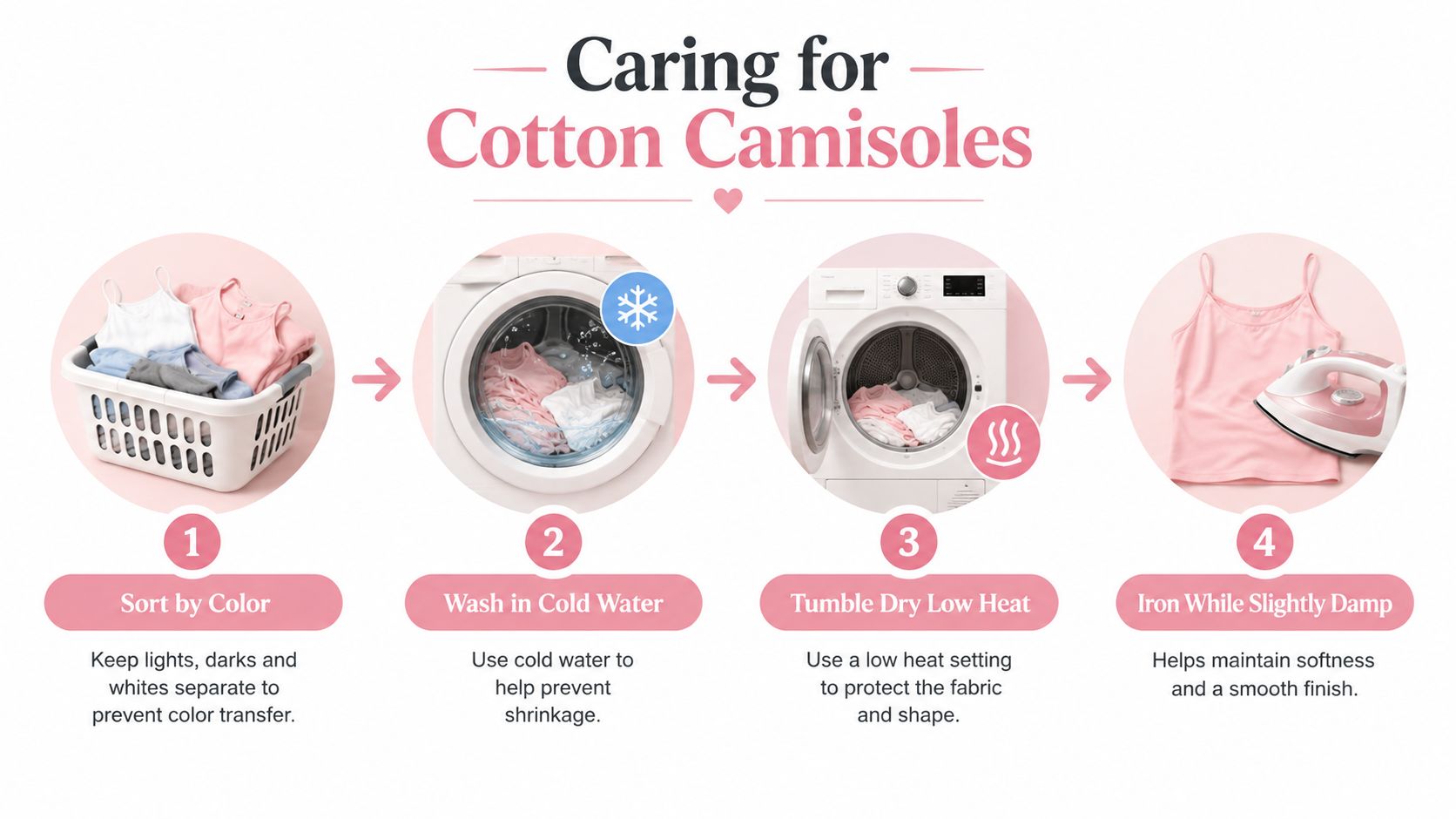
- Sort by color. Wash pale camisoles separately from dark or strongly dyed garments, especially during their first washes.
- Use cold water or a cool cycle. Cold water reduces heat-related consolidation and helps protect the original fit.
- Choose a gentle detergent. Use enough to clean the garment without leaving a stiff residue. Skip harsh brighteners if your skin is sensitive.
- Turn the camisole inside out. This reduces surface rubbing and can help limit pilling.
- Select the construction-appropriate cycle. A delicate machine cycle suits many jersey camisoles. Hand washing is a gentler option for fine straps, delicate trim, or a built-in shelf layer.
Dry without locking in shrinkage
Air drying is the safest choice. Lay the camisole flat on a clean towel, reshape the straps and side seams, and let it dry away from direct, intense sunlight. You can also hang it on a padded hanger if the fabric isn't heavy with water, but avoid a thin hanger that may stretch the shoulder area.
If you use a dryer, choose low heat and remove the camisole while it's slightly damp. The same care guidance recommends cold washing, low or no heat, and preferably air drying to minimize fit loss. Don't iron aggressively. If needed, press while slightly damp at a suitable temperature, or use steam to refresh the fabric.
For storage, use a breathable drawer rather than sealing the garment in plastic. Cedar blocks can help keep the drawer fresh. Treat deodorant marks promptly with a gentle spot treatment, testing an inconspicuous area first. If an older camisole feels stiff, a mild vinegar rinse can help remove detergent buildup, but rinse thoroughly and never combine vinegar with bleach.
Choosing a Cotton Camisole That Fits Your Day
Before checkout, choose the day first and the fabric second. A camisole for office layering has different requirements from one for a humid commute, a relaxed weekend, or a night of sleep.
Use this checklist:
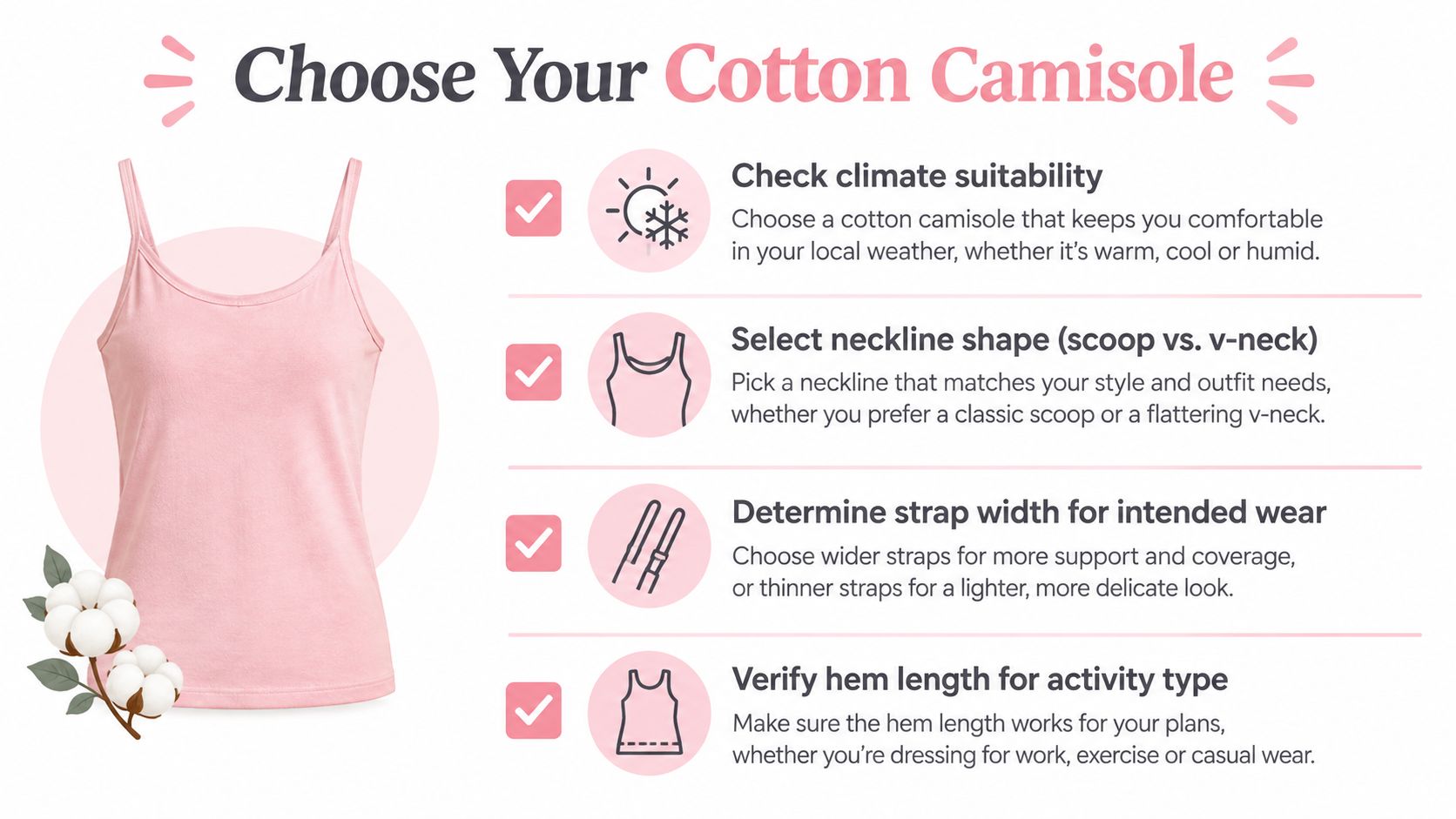
- Check the climate. Pure cotton suits moderate conditions and low-impact wear. If you expect prolonged sweating or humidity, consider whether absorbency will become uncomfortable.
- Select the neckline. A scoop can work beneath an open shirt, while a higher front usually layers more discreetly under a blazer or cardigan.
- Determine strap width. Match narrow or wider straps to your bra, outer garment, and comfort preferences. Adjustable straps add flexibility but may show beneath close-fitting layers.
- Verify hem length. Choose enough coverage to stay tucked when sitting, without excess fabric that bunches under trousers or skirts.
Then inspect the construction. Check the knit's opacity, seam finishing, edge stability, and whether the fabric feels appropriate for the season. A lighter jersey may feel easy in warm weather, while a denser knit can provide more coverage under pale or loosely woven layers. If the product lists fabric weight or GSM, use it as a comparison clue rather than treating a higher number as automatically better.
Sourcing deserves the same attention as fit. If sustainability matters to you, look for specific information about conventional, organic, or regenerative cotton and any certifications attached to those claims. The right purchase balances skin feel, expected activity, care requirements, and the clothes already in your wardrobe.
A camisole 100 cotton choice makes the most sense when you want a soft, recognizable layer and you're prepared to control heat and moisture during washing and wear. Nuage Wears also offers comfort-focused everyday intimates, including cotton-gusset briefs and breathable mesh styles, for wardrobes that need different fabric solutions across different days.
Choose your next camisole by checking the label, testing the fit points, and matching the fabric to your real routine rather than buying on the word “breathable” alone. Explore the comfort-first underwear and everyday apparel options at Nuage Wears, then choose the layer that best supports your workdays, travel plans, and relaxed time at home.


