


You're dressed, the light is unforgiving, and the outfit looked perfect until you turned sideways. A raised waistband shows beneath your ponte trousers, or a VPL cuts across the back of a thin skirt. Under a white top, a contrasting brief creates a shadow that has nothing to do with your carefully chosen silhouette.
That moment sends shoppers searching for underwear black without visible edges, usually with one assumption: black must be the safest option. Sometimes it is. Sometimes it makes the problem worse. The reliable answer depends on edge finish, fabric density, rise, cut, and ventilation, not color alone.
Table of Contents
- The Outfit Moment That Made You Search
- What Laser-Cut Construction Does
- Why Black Earns Its Place in the Drawer
- Where Black Quietly Disappoints
- Styling Black Seamless Underwear by Outfit
- Matching Rise and Cut to Your Wardrobe
- Caring for Black So It Stays Invisible
- Your Black No-Show Checklist
The Outfit Moment That Made You Search
Most searches for black underwear begin with a faulty assumption: black is automatically the safest choice. Color matters, but the result under clothing depends just as much on the edge finish, fabric density, fit, and ventilation.
A fitted slip dress may look smooth from the front, then reveal a shallow waistband groove or a ridge from the leg opening at the side. Under white trousers, a pale brief can show through even when it fits comfortably. Switching to black may reduce the contrast, yet a lightweight pair can leave a dark outline of its own.
Small construction failures can change the whole outfit. A raised edge pulls attention toward the underwear, a loose waistband rolls, and narrow elastic digs into the body. A thin knit may also reveal the garment's shape beneath it.
Stylist's rule: Don't ask whether black underwear is invisible. Ask which construction creates the least visible interruption under this particular outfit.
Seamless describes the garment's construction, not a promise that it will disappear under every fabric. Black usually works well beneath dark clothing because it limits contrast and keeps a capsule wardrobe visually consistent. It fails when the knit is flimsy, the fit is wrong, or the edge is thick enough to catch the light.
Match the underwear to the outfit. Choose a flat bonded or laser-cut edge for close-fitting garments, a denser knit when opacity matters, and a breathable construction for warm weather or extended wear. Black is a useful styling tool, not a universal solution.
What Laser-Cut Construction Does
Traditional underwear uses folded fabric, stitching, elastic, or serged edges. These methods secure the garment, but they can also create raised areas that transfer through stretch clothing. A smoother design reduces that interruption through knit-in shaping, bonded panels, and raw or laser-cut edges.
A garment knitted to shape joins sections with fewer stitched connections. Bonded construction uses adhesive technology to attach fabric or stabilize an edge without a bulky sewn seam. A laser-cut edge is cut and heat-sealed, allowing thermoplastic fibers to form a narrow, flatter finish. This guide to how laser-cut edges are constructed explains why the finish behaves differently from a folded or serged hem.
The practical point is clear: a smooth construction still has an edge. It has been eliminated, fused, or micro-cut rather than finished with a prominent fold and line of thread. That difference can reduce visible lines, but it cannot correct poor fit or unsuitable fabric weight.
The edge is only half the answer
Independent textile guidance places a narrow laser-cut edge at roughly 1–3 mm, compared with about 8–15 mm for a serged or bound edge. The thinner profile gives less material to press into leggings, fitted dresses, and other stretch garments. That helps explain why edge treatment can matter more than color in close-fitting clothing.
Fabric density still controls the result. An ultra-thin, loose-knit pair can show a darker patch or soft ridge even when its edge lies flat. A medium-weight stretch fabric often creates a cleaner outline because it distributes tension more evenly across the body.
| Construction Type | Hem Thickness | Invisibility Under Clothing |
|---|---|---|
| Folded and stitched | About 2–4 mm | More likely to create a ridge |
| Serged or bound | About 8–15 mm | Usually visible under close-fitting stretch fabric |
| Laser-cut | Roughly 1–3 mm | Low-profile, especially under leggings and fitted garments |
| Bonded | Varies by design | Can lie flat when the bond is smooth and stable |
Check the whole garment
Inspect the waistband, leg openings, gusset, and side panels together. A flat leg edge cannot compensate for a waistband that rolls or a side seam positioned across the widest part of your hip.
For a dependable low-line result, choose a stable stretch knit with a clean edge and enough recovery to stay in place. If the clothing is sheer or extremely clingy, test the underwear in daylight. Fabric thickness and fit often affect visibility more than color, especially when black creates a noticeable shadow beneath pale fabric.
Why Black Earns Its Place in the Drawer
Black earns its place because it solves several wardrobe problems at once. It coordinates with dark trousers, dresses, skirts, and activewear without forcing you to think about color matching. It also tolerates everyday marks, including skincare or deodorant residue, better than very light fabric.
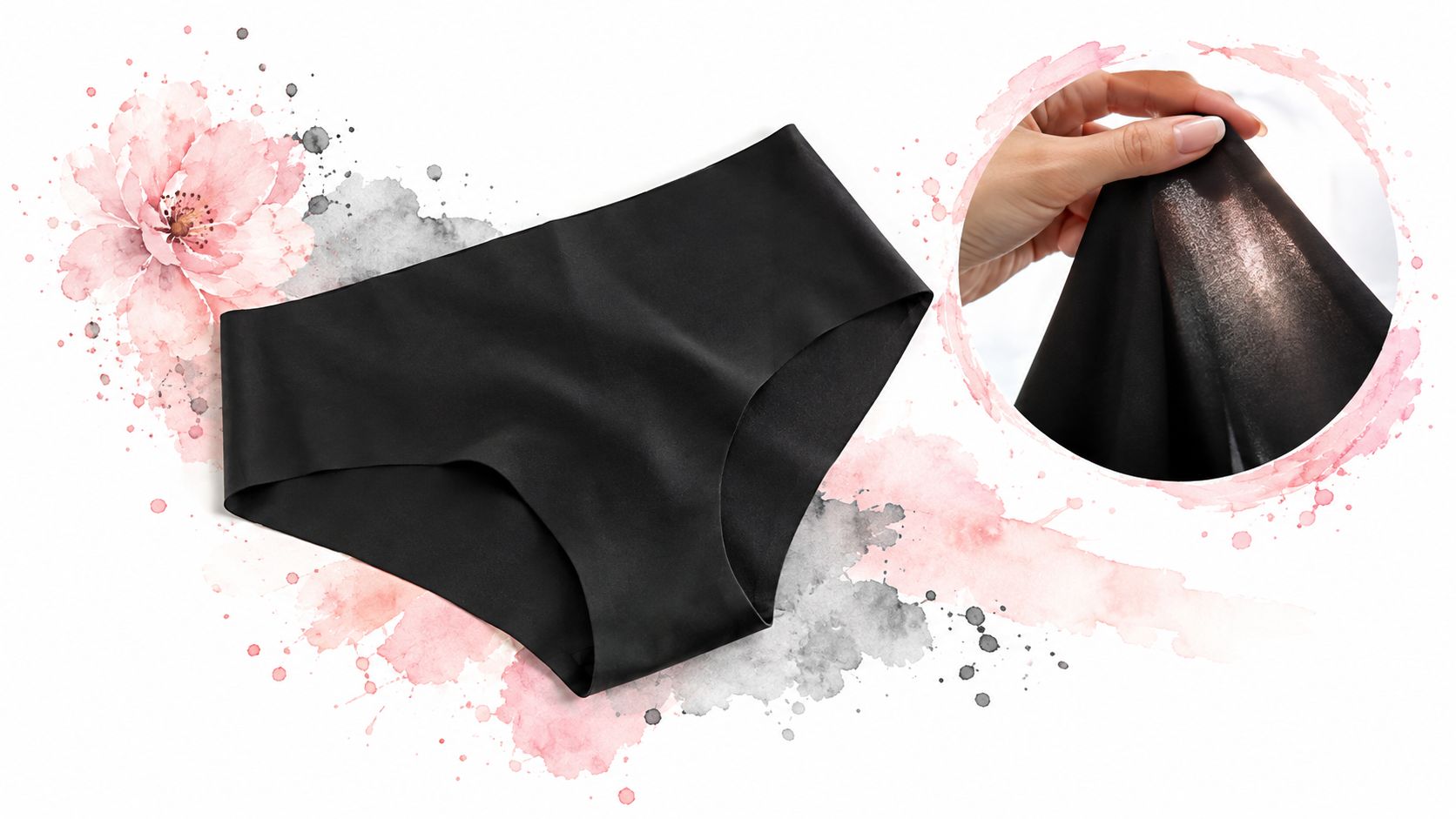
The optical advantage is real, but it has limits. Black absorbs light, so it can appear less conspicuous beneath dark or moderately opaque clothing. Under pale, thin fabric, however, the entire shape can read as a shadow. A dense matte knit handles that situation better than a thin, open texture.
Consumer preference supports black's role as a wardrobe staple. A 2023 underwear-industry report listed black as the most popular underwear color at 35%, ahead of white at 25% and gray at 20%. You can review the underwear color preference data for that comparison.
Black works best with the right surface
A dense, matte black pair with no visible seams usually looks quieter under dark fitted clothes than a shiny or loosely knitted alternative. Shine catches light and can reveal the garment's boundary. A soft matte surface absorbs attention.
Black also supports a compact underwear drawer. One well-fitting style can serve under work trousers, dark denim, a jersey dress, or leggings. That versatility is useful, but don't confuse it with universal invisibility. If the edge is thick, the waistband digs, or the fabric lacks opacity, black won't rescue the outfit.
Choose black when you want a low-contrast base under dark clothing, a color that coordinates easily, and a finish that won't look conspicuous if a waistband briefly appears. Pair the color with a flat edge and fabric weight suited to the garment. Black is a strong foundation because the construction supports the color, not because dye performs magic.
Where Black Quietly Disappoints
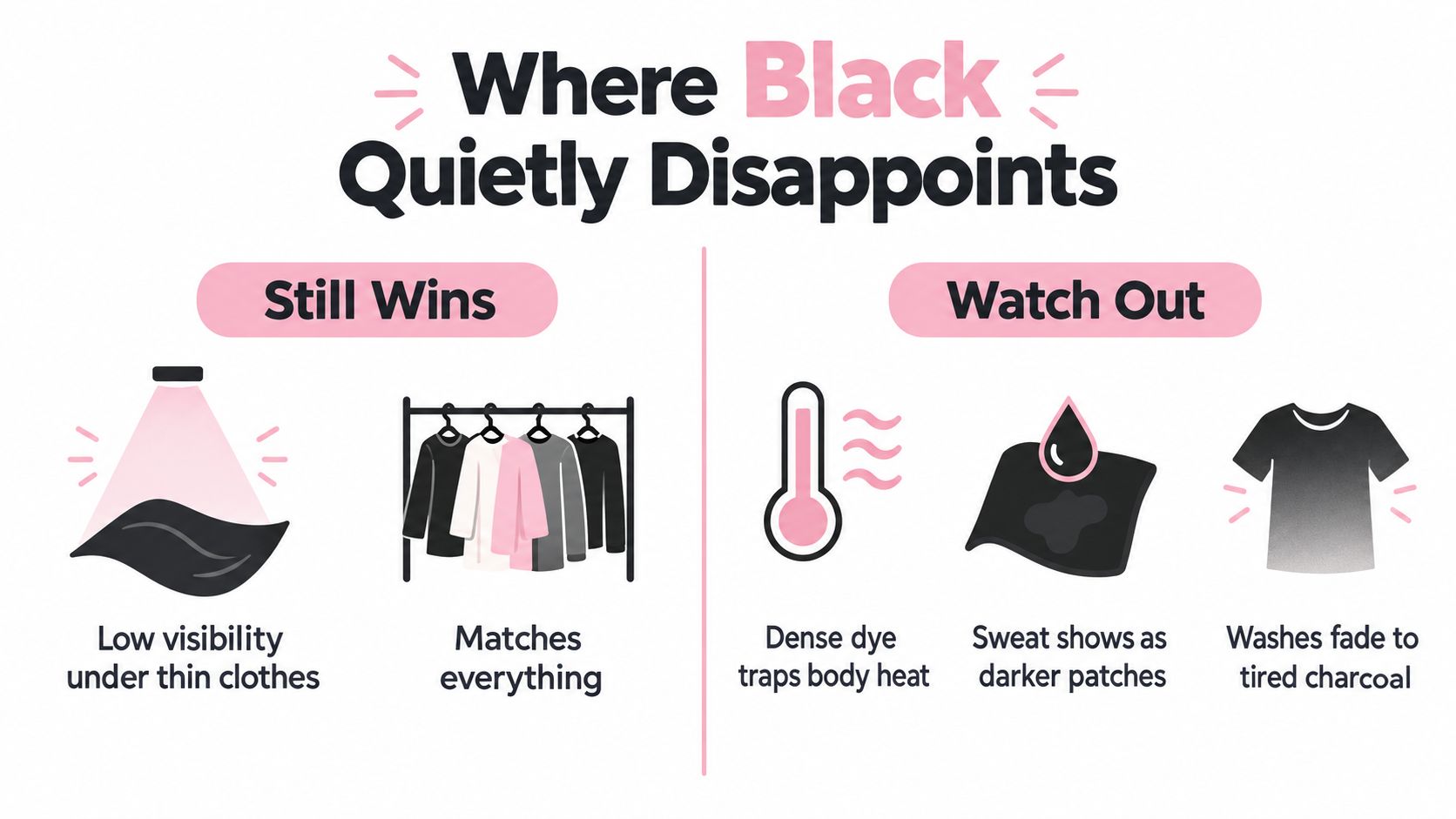
Black isn't automatically the coolest or most invisible choice. Dense dye and limited ventilation can make black intimates feel warmer during long wear, especially in hot conditions. Moisture from sweat can create darker patches on dark fabric, and those patches may show through a thin or clingy garment as an uneven area.
The guidance on black intimate underwear and ventilation highlights why fiber choice and airflow matter more than color alone. Look for breathable synthetic or modal-based constructions that move heat and moisture away from the body when you'll wear the pair for hours.
Black also loses its advantage under pale clothing. Beneath white trousers, ivory linen, or a pale knitted dress, a black brief can create a visible shadow at the hip or rear. In that situation, a close-to-skin shade, a lined garment, or a denser construction is usually smarter.
Know the quiet failure points
Lightweight black knits can look less opaque than shoppers expect. A very thin construction may reveal its outline under strong daylight, while a medium-weight fabric stays visually even. Black can also make pilling more noticeable because light fuzz contrasts sharply with a deep surface.
If your concern is skin discoloration or irritation in the intimate area, underwear choice is only one part of the routine. A separate clinical guide to routines for dark spots can help you think about skin care without treating an underwear color as a medical solution.
Use another color or construction when the outfit is pale, the weather is hot, or the fabric is sheer. Black remains excellent for dark clothing and everyday styling, but it isn't the right answer for every silhouette.
Styling Black Seamless Underwear by Outfit
Start with the garment's pressure points. Where does it cling, where does it stretch, and where will a waistband land? The best black underwear is the pair whose edges avoid those areas while staying secure through movement.
Leggings and bike shorts
Choose a high-rise thong or bikini with a laser-cut waistband. Place the waistband above the garment's hip seam rather than directly on it, which reduces the chance of a second horizontal line appearing across your waist. A thong minimizes rear coverage, while a bikini gives more coverage if its leg opening is raw-cut and flat.
Test the pair by bending, sitting, and walking. If the waistband rolls during those movements, it will eventually show through even if the cut looked smooth while standing.
Workwear and structured clothing
Pencil skirts, fitted trousers, and structured dresses usually benefit from a mid-rise hipster in a denser microfiber or modal-based knit. Mid-weight woven clothing can reveal a flimsy edge, but a stable fabric creates a smoother transition between the body and the outfit.
A hipster is often more comfortable than a thong for desk-to-dinner wear because it provides rear coverage without a bulky hem. Keep the waistband below the trouser line if the trousers are mid-rise, or choose a higher rise when the waistband needs to sit under a high-waisted garment.
Sheer and evening pieces
A brief with bonded edges gives a more secure base beneath chiffon or a sheer skirt. Choose a slightly higher cotton gusset when you'll wear the outfit for an extended evening, because comfort matters once you stop standing in front of the mirror and start moving through the night.
A backless dress needs a different solution. If the design exposes the lower back, conventional underwear will conflict with the garment's architecture. A stick-on solution may be more appropriate than forcing a high-rise brief into a cut that doesn't accommodate it.
Activewear and casual jersey
These are the easiest outfits for a laser-cut black pair. Stretch jersey and performance fabrics often forgive small changes in thickness, while a clean edge prevents the familiar line across the glutes.
For heat, prioritize airflow over color. Mesh zoning or a breathable knit can make a longer training session or travel day more comfortable than a dense black fabric with limited ventilation.
Matching Rise and Cut to Your Wardrobe
The right cut starts with two questions: where does your natural waist sit, and how much rear coverage do you want? A thong resolves many silhouette problems, but it isn't automatically the most comfortable choice. A brief can feel better and still disappear if the edge and fabric weight match the outfit.
Use this matrix as a practical filter before you buy.
| Cut | Best For | Rise | Rear Coverage | Fabric Weight |
|---|---|---|---|---|
| Thong | Close-fitting leggings and body-skimming skirts | Low to high, matched to garment | Minimal | Light to medium, with a stable waistband |
| Bikini | Cropped tops and everyday casual outfits | Low to mid | Moderate | Light or medium, depending on opacity |
| Hipster | Broad wardrobe use and workwear | Mid | Moderate to full | Medium, preferably matte |
| Brief | Dresses, trousers, and comfort-first dressing | Mid to high | Full | Medium to dense for opacity |
| High-waist brief | High-rise trousers and longer torsos | High | Full | Medium to dense, with a smooth waistband |
A high-waist brief pairs naturally with high-rise trousers because both waistlines occupy the same vertical space. It can also suit a longer torso, where a low or mid-rise waistband feels misplaced. A low-rise bikini works better with cropped tops and shorter rises, provided the clothing doesn't expose the waistband.
Thongs earn their place when the outfit demands maximum rear invisibility. They aren't a default recommendation for every day. Hipsters remain the versatile middle ground for shoppers who want coverage without a prominent edge.
Judge opacity without overcomplicating it
If a product description gives fabric weight, use it as a clue rather than a guarantee. A fabric listed at GSM 110 may feel lighter and less opaque than one listed at GSM 140, but fiber composition, knit structure, stretch, and finishing still change how it behaves. If a textile protein is layered into the construction, judge the final fabric rather than the fiber label alone.
Hold the fabric toward daylight when possible. Stretch it gently, check whether the knit opens, and inspect the waistband for recovery. A pair that looks opaque at rest may become more revealing when pulled across the hips.
Caring for Black So It Stays Invisible
Black underwear fails when washing damages the two features that make it useful. The color fades toward a tired charcoal, while raw-cut edges curl, pill, or snag. Once the surface looks worn, the underwear becomes more visible under clothing even if the original fit was excellent.
A low-friction wash routine
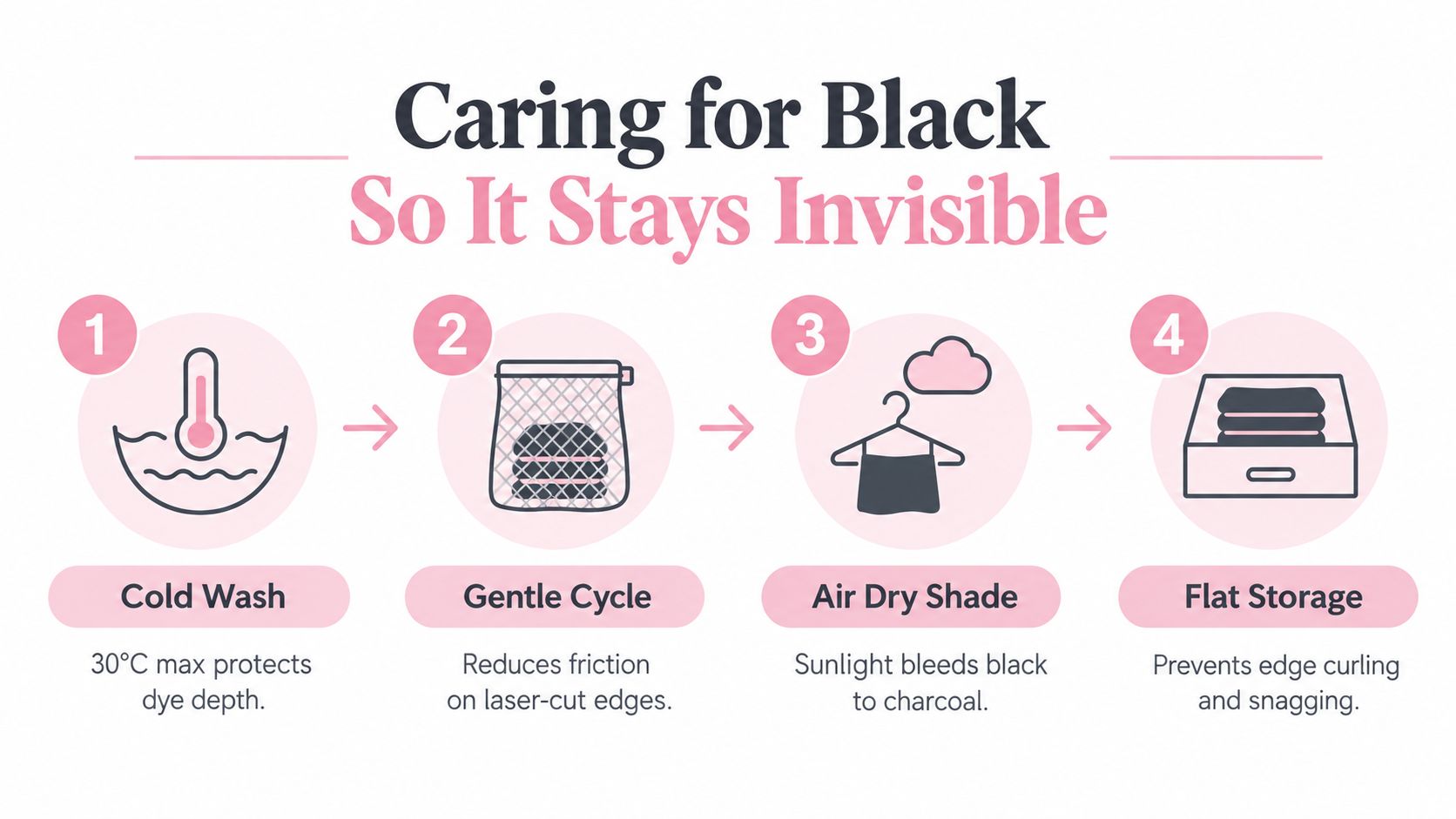
Wash black intimates in a cool load at 30°C or cold. Use detergent formulated for dark loads, and place each pair in a mesh lingerie bag so zippers, hooks, and rougher garments don't catch the laser-cut edge.
For sensitive skin or a simpler laundry routine, this guide to dye-free detergent offers useful background on choosing a less complicated formula. Avoid excess detergent, which can leave residue that changes the fabric's hand and dulls a matte finish.
A detailed guide to washing underwear can help you build the rest of the routine around fabric care rather than treating intimates like ordinary basics.
Dry and store with intention
Skip the tumble dryer. Lay the underwear flat or hang it in the shade, away from direct sunlight, which can fade black faster and stress elastic fibers through repeated heat exposure.
Fold each pair rather than balling it up. Keep the edges flat in the drawer, and rotate your stock so the same pairs don't absorb all the weekly friction. This isn't fussy care. It preserves the clean lines that let the garment disappear beneath clothing.
Your Black No-Show Checklist
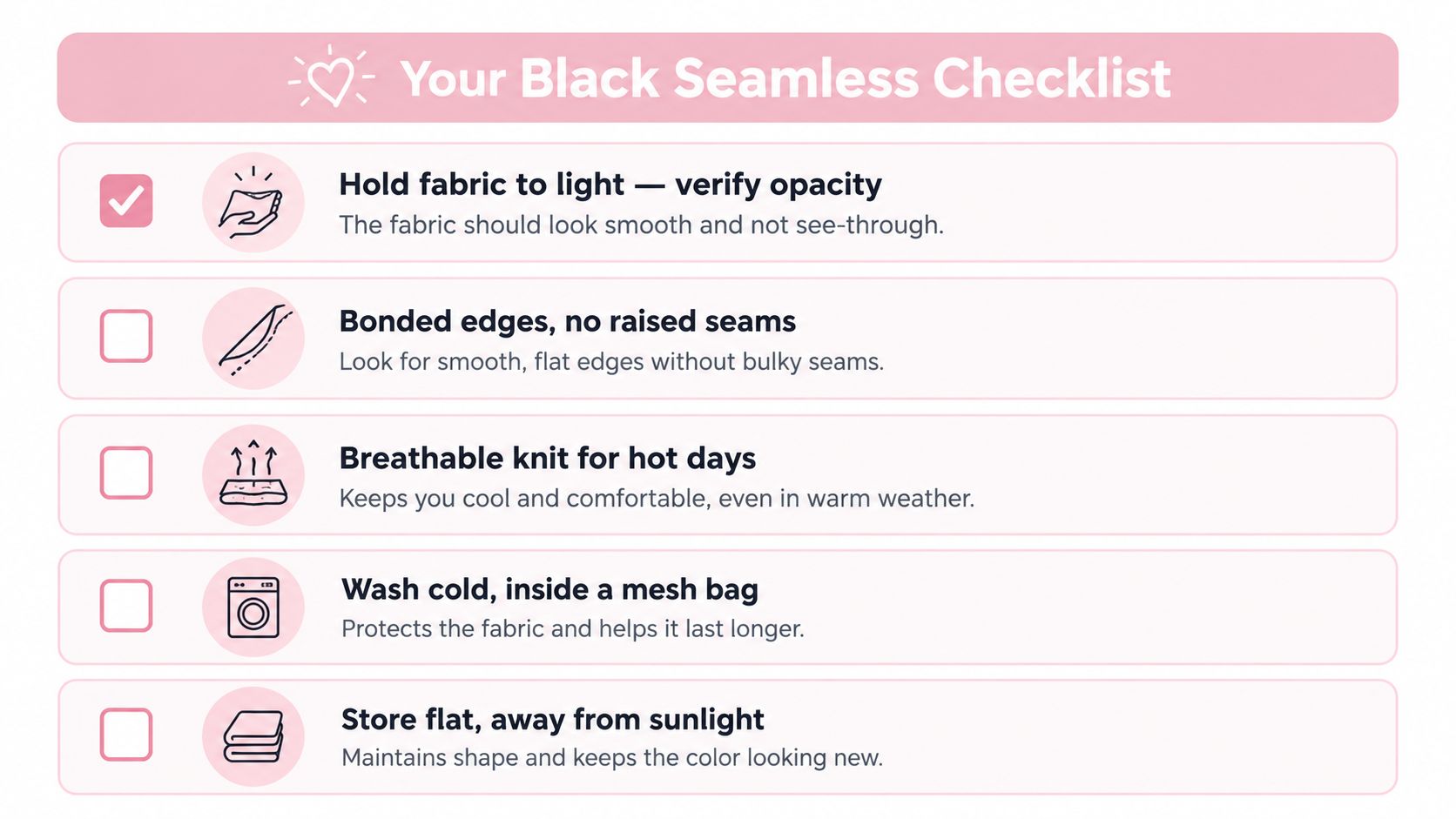
Choose black underwear for the outfit, not from habit. Black works when the fabric, edges, airflow, and rise suit what you are wearing.
- Check the knit: Hold it to daylight and stretch it gently. It should remain opaque.
- Inspect the edges: Choose bonded or laser-cut hems without raised seams, loose threads, or rough transitions.
- Prioritize airflow: Select a breathable knit or targeted mesh for hot days, travel, workouts, and long periods of sitting.
- Match the rise: Pair high-rise underwear with high-rise trousers, mid-rise styles with fitted workwear, and lower rises with cropped silhouettes.
- Protect the finish: Wash cold, use a mesh bag, air-dry in shade, and store each pair flat.
For everyday outfits, a dense matte-black style with a bonded or laser-cut edge is the strongest choice. Under pale clothing, a closer-to-skin shade or lined garment may blend in more discreetly. In heat, choose ventilation rather than assuming a thinner black knit will feel cooler.
Build a small rotation of two or three well-made black staple items, and care for them like black clothing rather than disposable basics. Nuage Wears offers laser-cut no-visible-line styles, stay-put cuts, high-rise designs, and breathable mesh options. The laser-cut category is useful when a clean edge matters most.
Visit Nuage Wears to explore black underwear with no-VPL edges, stay-put comfort, breathable mesh, and high-rise support. Choose the cut for the clothing it must disappear under, then rotate those pairs through workdays, travel, movement, and evenings out.


