


You've found the dress that looks perfect for a summer wedding, brunch, or seaside trip. Then the test begins. The bodice slides down when you walk, the fabric clings after a warm afternoon, or the pale cotton looks transparent in sunlight. A cotton strapless sundress can feel wonderfully cool and easy, but only when its fiber, weave, support, and lining work together.
The smartest way to shop is to treat the dress as a fit-engineering problem first and a style choice second. Cotton isn't one uniform material. Lawn, voile, gauze, poplin, jersey, and sateen can all feel completely different against the skin, while boning, grip bands, shelf bras, and back closures determine whether the strapless shape stays secure. This guide will help you judge those details before a hot day exposes them.
Table of Contents
- Why a Cotton Strapless Sundress Deserves a Second Look
- The Cotton Fiber Basics That Shape How It Wears
- Anatomy of a Strapless Bodice and How It Stays Up
- Choosing the Right Cotton Weave for Heat and Movement
- Opacity, Sweat, and the Slip Question
- Three Real Outfits You Can Build Around One Dress
- Care and Storage That Keep Shape and Elastic Alive
- Putting It All Together
Why a Cotton Strapless Sundress Deserves a Second Look
At a July wedding, two common dress problems can arrive together. A synthetic fabric may hold heat against your body, while a loose strapless bodice slowly works its way downward every time you reach for a drink or raise your arms. Cotton could improve the first problem, but only if the dress uses a breathable construction and includes enough support to solve the second.
That distinction matters because cotton is a fiber family, not a guarantee of comfort. A loose cotton lawn can feel airy, while dense cotton jersey may sit close to the skin and retain warmth. A lined bodice can improve opacity and shape, yet too much lining can reduce airflow. The label alone won't tell you whether the finished dress suits your climate.
Cotton remains a major apparel fiber. Global cotton lint production is estimated at about 26 million tonnes in 2025/26, with world consumption around 25.2 million tonnes, indicating continued surplus in the cotton market, as reported in the global cotton market overview. Textile Exchange reports that cotton represents roughly 20% of global fiber production, and about 60–70% of cotton fiber goes into apparel, so cotton dresses belong to a broad supply chain rather than a niche fabric category.
Comfort depends on the finished garment
Cotton's apparel role has changed as synthetic fibers expanded. Industry data places cotton at roughly 68.3% of global fiber demand in 1960, compared with about 21.1% in 2025, while cotton-made knitted garment exports rose from about $69.9 billion in 2006 to about $128.3 billion in 2025, according to cotton industry data. The result is a modern design challenge: retain cotton's familiar softness and breathability while engineering the structure a strapless dress needs.
By the end of this guide, you'll be able to inspect a bodice, identify a breathable weave, plan for opacity and sweat, and decide whether the dress can handle your actual day. You won't have to choose between looking polished and constantly pulling up your neckline.
The Cotton Fiber Basics That Shape How It Wears
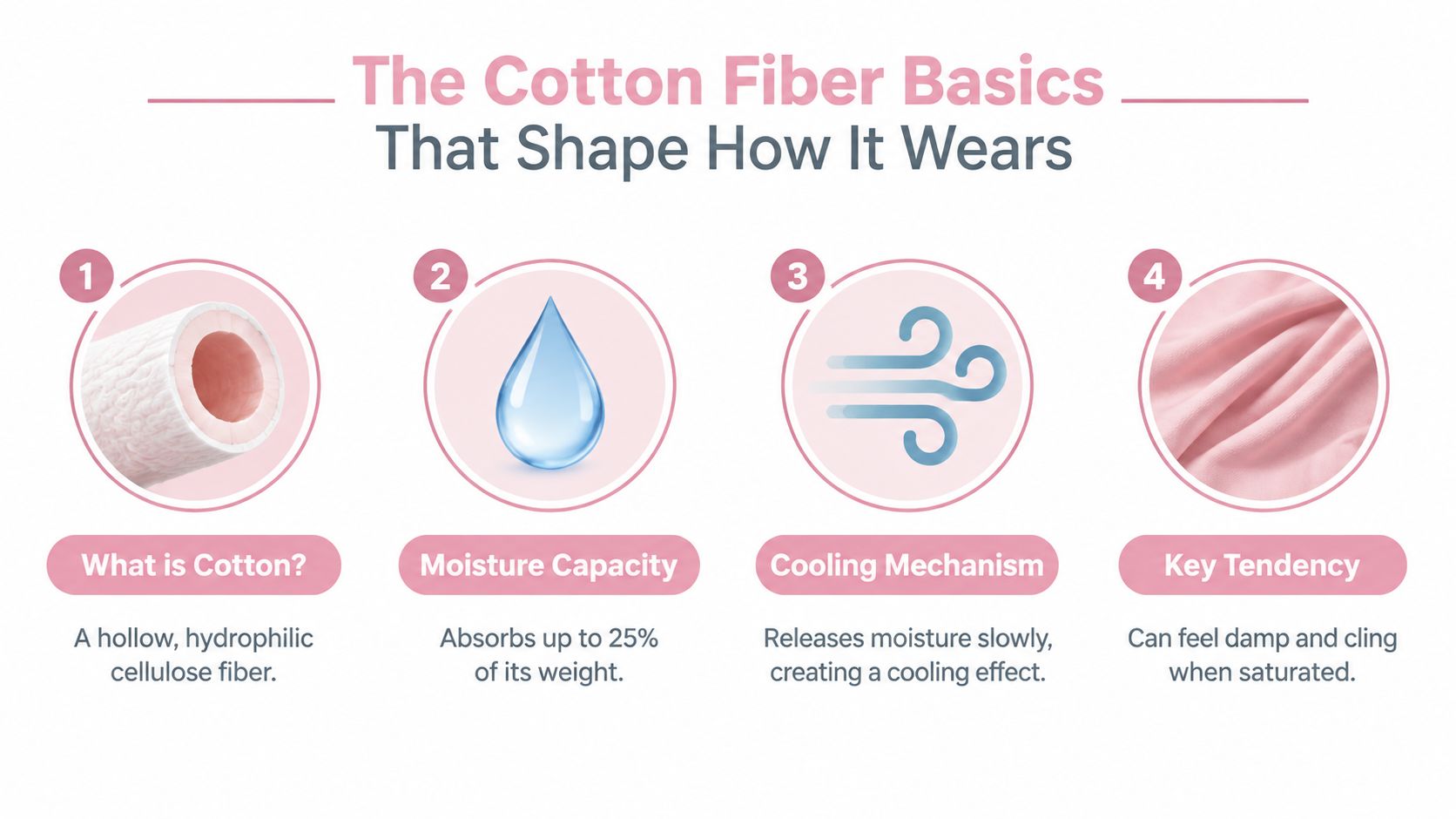
Cotton is a hollow, hydrophilic cellulose fiber, which means it attracts and holds moisture. It can absorb up to roughly a quarter of its weight in water, and it takes two to three times longer than polyester to reach moisture saturation, according to Cotton Incorporated's comfort measurement guide. That helps explain cotton's cool, soft reputation, but it also explains why a damp dress can cling instead of drying quickly.
Use familiar fabrics to understand weight
Think of a laundry room. A lightweight cotton T-shirt feels flexible and airy, while a cotton towel has more body, absorbs more, and takes longer to dry. Fabric weight, often described as GSM, or grams per square meter, gives you a similar mental picture. The exact weight isn't the only factor, but it helps you anticipate drape, opacity, and warmth.
A light lawn or voile tends to move easily and pass more air. Quilting-style cotton has more substance and can create a cleaner skirt shape. Sateen feels smoother and denser, which may look elegant but can sit warmer against the body. For a strapless bodice, moderate body can help the fabric hold its shape, but excessive density may make the ribcage feel enclosed.
Fiber length and finishing change the hand
Longer cotton staples generally create smoother yarns with a cleaner drape and less surface fuzz. Ringspun yarns feel softer because the fibers are twisted more tightly, combed cotton removes shorter fibers for a smoother surface, and mercerized cotton receives a finish that can increase luster and dimensional stability. These details won't replace good patternmaking, but they influence whether the bodice feels soft, crisp, matte, or polished.
Climate rule: Choose the lightest cotton that still gives the skirt enough opacity and the bodice enough body. In hot, humid weather, prioritize an open weave and restrained lining over a thick fabric that promises structure through weight alone.
Anatomy of a Strapless Bodice and How It Stays Up
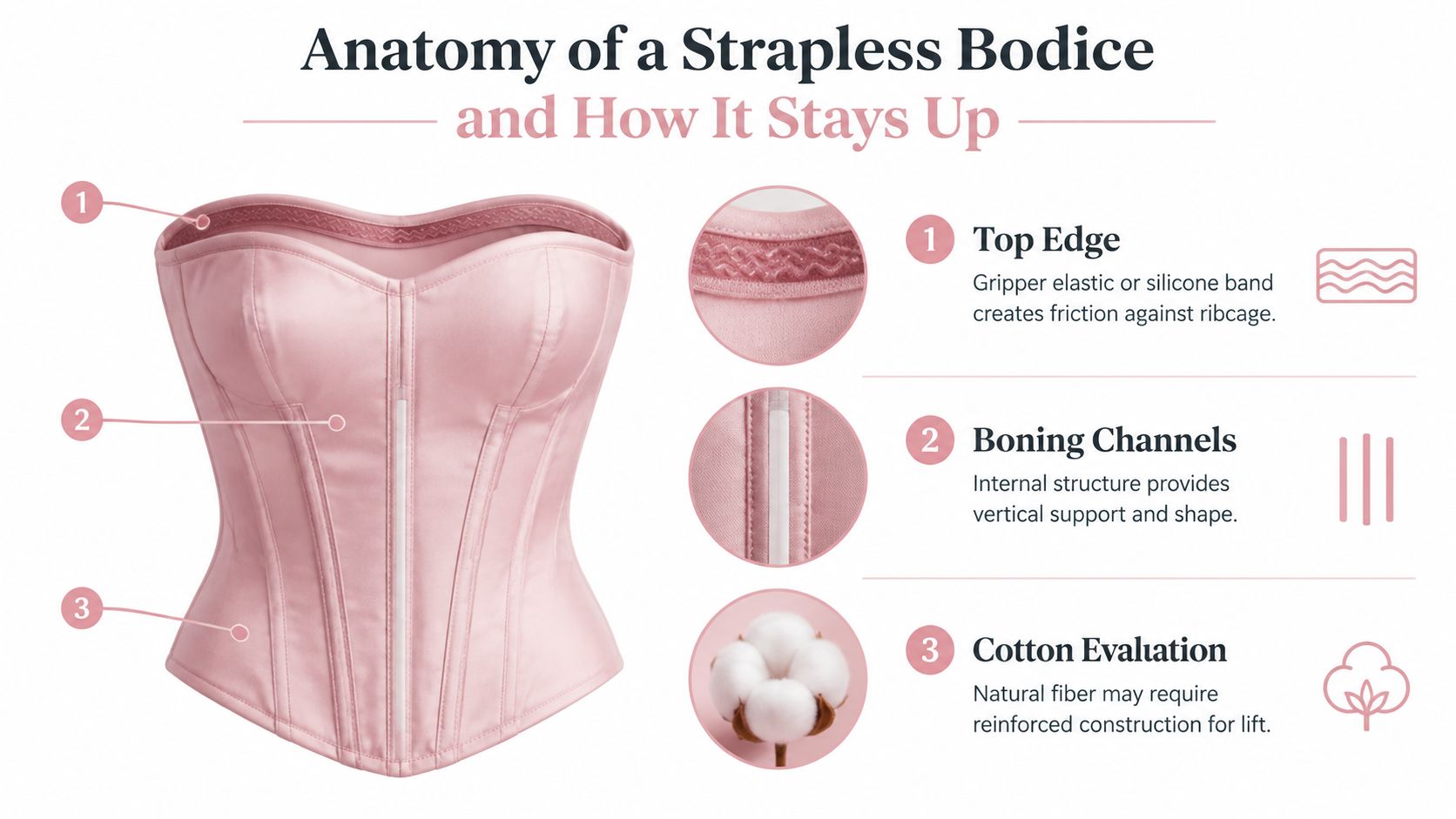
A strapless bodice stays up through friction, contour, and tension. No single component should carry the whole job. The top edge may include gripper elastic or a silicone strip that creates friction against the ribcage. The bodice should then follow the body's shape, while internal support prevents the fabric from collapsing or rolling.
Read the support package
Vertical or spiral boning sits inside channels and helps keep the bodice upright. It can also stop the top edge from folding outward when you move. Cotton has limited natural stretch compared with many stretch fabrics, so the pattern, seams, and support components need to provide the give and recovery your body expects.
A shelf bra or sewn-in cup layer can stabilize the bust area without requiring a separate strapless bra. Detachable cups offer flexibility, but check whether they shift inside the lining. If you prefer more built-in support, inspect the cup seams and any underwire alternative rather than assuming the word “lined” means “supportive.” For a broader discussion of integrated support layers, see this guide to shelf bra tanks.
The lining has several jobs. It can hide seam allowances, add opacity, reduce rough contact with the skin, and help the bodice keep its shape. It can also add warmth, especially when the shell and lining are both dense. Side seams should sit around the ribcage rather than drifting toward the waist, because the ribcage provides the stable circumference the dress needs.
Closure choice affects movement
A zipper gives a firm, form-fitting closure, but it leaves less room for size fluctuation. Hooks can offer incremental adjustment, while a smocked back panel provides more flexibility and often feels easier during a long day. The tradeoff is that a very soft, lightly supported smocked bodice may feel less sculpted than a structured sateen version.
| Fit signal | What you want to feel | Warning sign |
|---|---|---|
| Top edge | Secure contact without pinching | Gaping or cutting into the skin |
| Ribcage | Even pressure around the torso | Bodice slides when you walk |
| Bust area | Cups and seams stay centered | Wrinkling, spilling, or empty space |
| Boning | Upright support without poking | Channels bend sharply or dig |
| Back closure | Firm but comfortable tension | Zipper strain or smocking collapse |
Try sitting, reaching forward, walking, and lifting your arms. If you need to pull the dress upward after each movement, the problem isn't styling. The bodice needs a better support package or a different size.
Choosing the Right Cotton Weave for Heat and Movement
Fabric construction determines how much air reaches your skin. Independent textile guidance explains that looser weaves and thinner materials generally improve breathability, while tighter weaves and knits reduce it, as described in this breathable fabric guide. That makes lawn, voile, gauze, and seersucker strong candidates for hot-weather skirts, provided the dress remains opaque enough for your plans.
A breathable shell still needs sensible support. A cotton lawn skirt may float beautifully, but a strapless bodice made from the same delicate cloth can require a reinforced lining, grip edge, or internal structure. A good design uses the shell for airflow and the inner layer for security, instead of making the entire dress heavy.
| Weave | GSM Range | Breathability | Cling Risk | Best Use |
|---|---|---|---|---|
| Lawn or voile | Qualitatively lightweight | High when loosely woven | Moderate if damp | Very warm days and relaxed events |
| Seersucker | Qualitatively lightweight to mid-weight | High because the puckered surface lifts fabric from skin | Lower than flat close-fitting cloth | Outdoor events and active summer wear |
| Poplin | Qualitatively mid-weight | Moderate | Moderate | City wear and polished daytime outfits |
| Jersey | Qualitatively light to heavy | Varies, often lower in dense weights | Higher when close fitting | Casual styles with controlled lining |
| Sateen | Qualitatively dense | Lower than open plain weaves | Moderate to high | Structured, dressier bodices |
Test the cloth before you buy
Hold the skirt or a loose fabric edge toward a bright window. If you can clearly see your hand or the outline of dark clothing, plan for a slip or look for a lined version. Then perform a simple cling check. Press the fabric lightly against your forearm, release it, and watch whether it falls away or stays attached.
A cotton strapless sundress for a dry, breezy location can tolerate a lighter shell. For humid weather, choose airflow plus space between the fabric and your body. A full lining may solve transparency but undo the breathability advantage, so evaluate the complete garment rather than the shell alone.
Opacity, Sweat, and the Slip Question
Light cotton creates a three-part decision: can you see through it, will moisture show, and what layer will sit underneath? White and pastel fabrics deserve extra attention because a dress that looks opaque indoors may reveal its outline in strong daylight. A backlit check is more reliable than judging the garment under soft shop lighting.
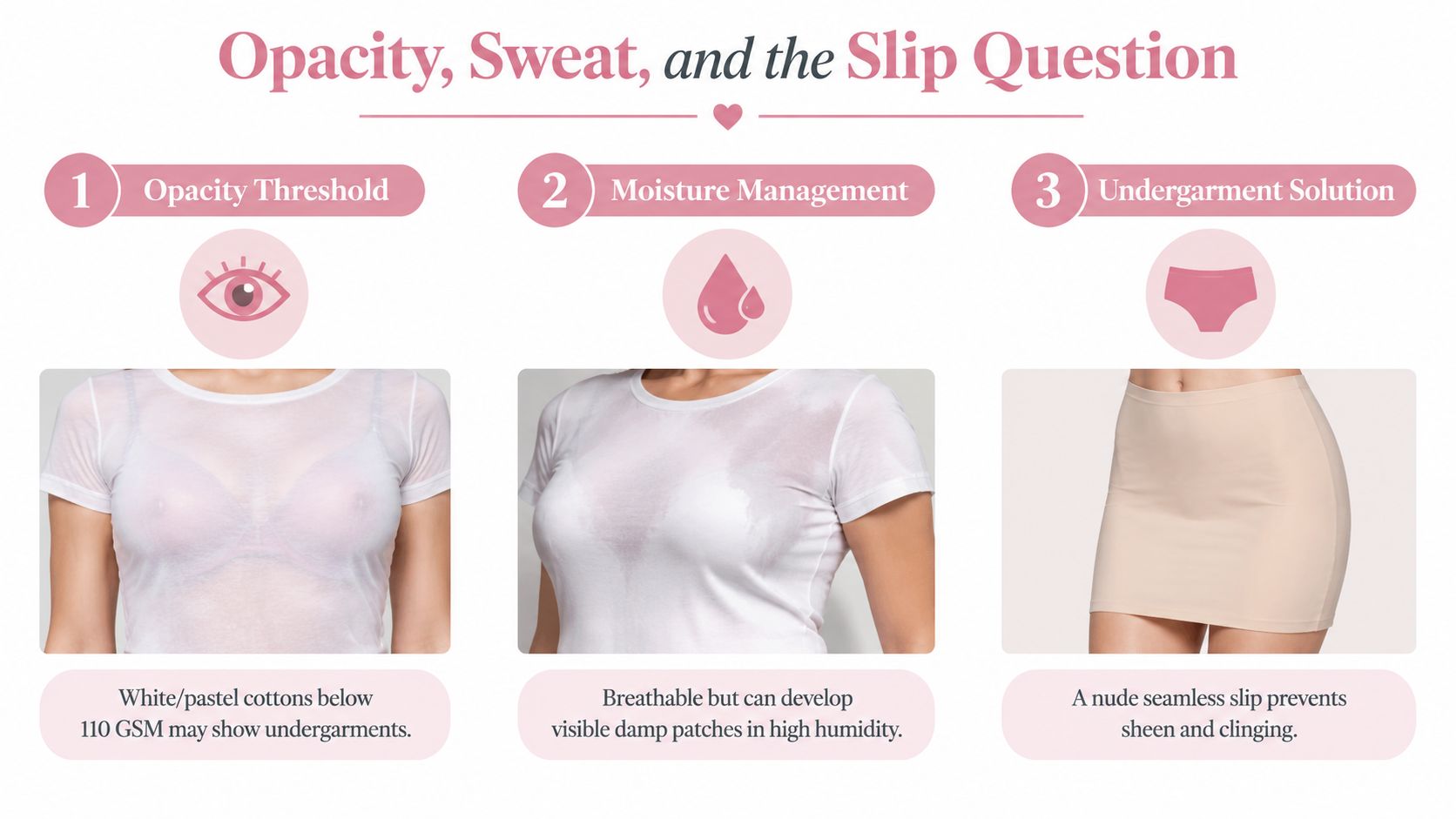
Cotton absorbs perspiration rather than immediately moving it away from the skin. That can feel comfortable in dry conditions, but saturated fabric may become sticky and lose some recovery. Dark colors often make damp areas less noticeable, while prints can disguise moisture variation more effectively than pale solids.
Match the solution to the problem
A half-slip made from lightweight cotton lawn can add coverage without creating a heavy underlayer. A cotton-lined bodice gives support and opacity where you need it most. A nude microfiber slip can reduce visible contrast and friction, though it may feel warmer than a breathable natural-fiber layer.
Underwear also affects the final result. Clean, bonded edges can reduce visible lines, while a stable brief can prevent constant shifting beneath a fitted skirt. If you're deciding between minimal coverage and a smoother base, this guide to thongs versus seamless briefs under a tight dress can help you weigh the tradeoff.
Use this quick decision tree:
- Is the dress pale or visibly sheer in backlight? Add a slip or choose a lined version.
- Does the hem move freely during walking? If yes, a half-slip may be enough. If no, choose a full slip that won't ride upward.
- Is the event formal or photographed outdoors? Favor a smooth, nude-toned underlayer that won't show through flash or strong sun.
Three Real Outfits You Can Build Around One Dress
A single cotton strapless sundress can serve very different occasions when its construction matches the setting. The trick is to change the accessories without asking a delicate, unsupported dress to perform like a structured one.
City brunch
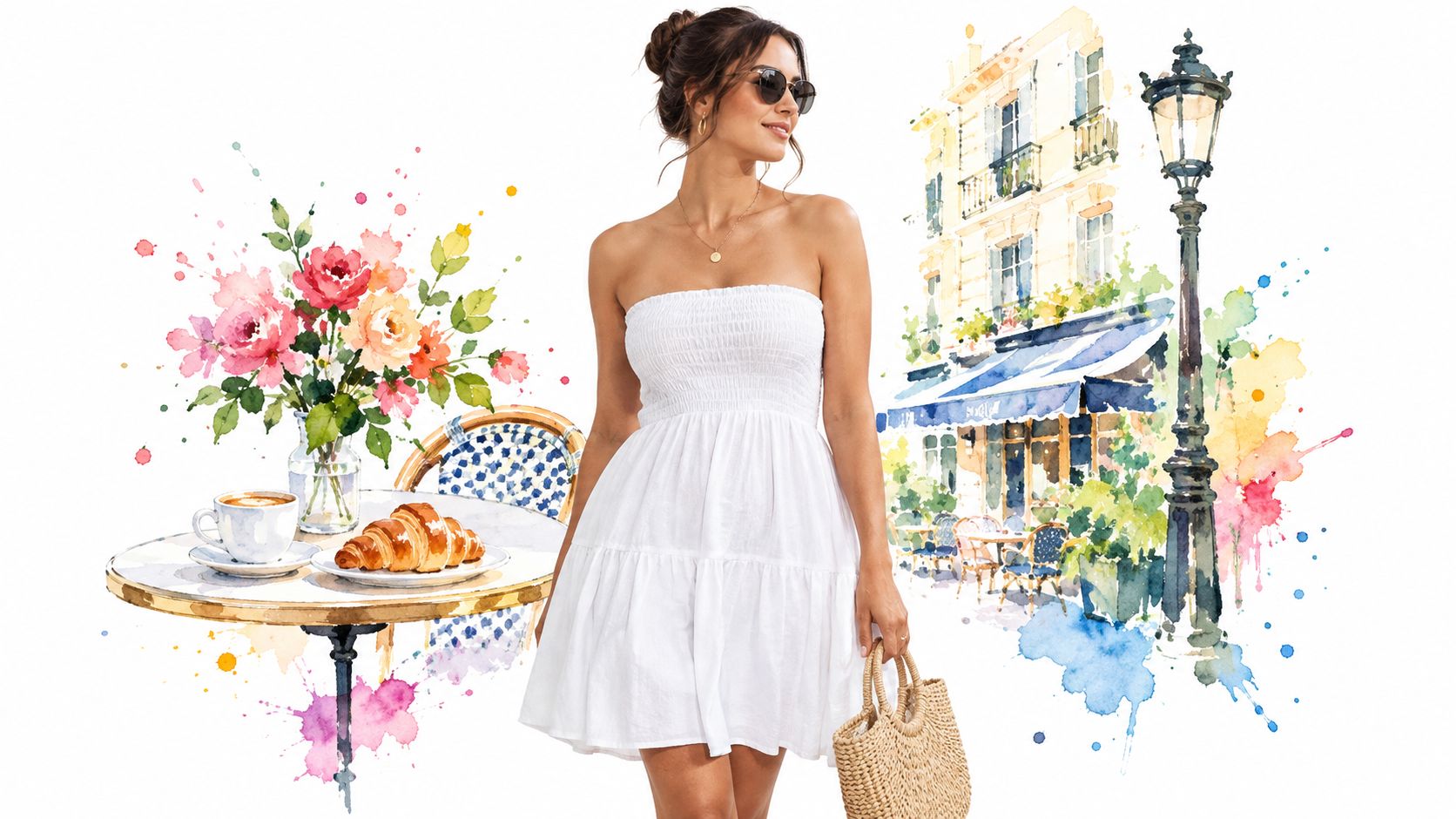
Choose mid-weight cotton poplin with a smocked back panel and a removable tie belt. The poplin gives the skirt a clean outline for a café setting, while the flexible back makes sitting, walking, and lingering over a meal more comfortable.
Leather sandals and a raffia tote keep the outfit relaxed without making it look like beachwear. If the bodice includes a grip edge but no shelf bra, select a supportive bandeau or another strap-free base that won't create visible lines.
Beach wedding
For a beach wedding, prioritize a lined bodice, a seersucker skirt, and a built-in shelf bra. The lining manages opacity and the shelf bra reduces the need to coordinate separate support, while the puckered weave keeps some fabric away from the skin.
Block-heel wedges are steadier on outdoor ground than narrow heels. Add pearl studs and a wide-brim straw hat for polish, but check that the hat and hair won't repeatedly brush the neckline. A secure bodice matters more than decorative detail when wind and movement enter the day.
Weekend travel
Travel rewards a cotton-linen blend with a wrinkle-resistant finish, a side-seam zip, and hidden pockets. The blend can offer a relaxed hand while the closure keeps the bodice neat, and pockets reduce the need to carry a separate small bag.
Roll the skirt loosely rather than compressing the bodice. Wear the dress with flat sandals during transit, then add a lightweight overshirt or simple jewelry after arrival.
The styling logic becomes clearer when you see it in motion. This video offers another visual reference for building a warm-weather outfit around a strapless silhouette:
Care and Storage That Keep Shape and Elastic Alive
Cotton can handle regular wear, but a strapless bodice contains components that need gentler treatment than a basic cotton top. Elastic, silicone grip strips, boning channels, cup padding, and closures can all lose function when exposed to unnecessary heat, abrasion, or harsh chemicals.
Wash with the structure in mind
Start by checking the care label, then use a cold-water cycle with a pH-neutral detergent when the garment allows machine washing. Close zippers and hooks, place the dress in a mesh lingerie bag, and avoid washing it with rough items that can catch the grip edge or distort the boning channels.
Skip chlorine bleach. It can weaken spandex and other elastic fibers, which may leave the top edge less secure even when the cotton shell still looks fine. Treat marks locally instead of repeatedly subjecting the entire dress to aggressive washing.
Remove the dress promptly and reshape the bodice while it's damp. Lay it flat on a clean towel, align the seams, smooth the neckline, and gently restore the grip band to its original curve. Avoid wringing, because twisting can pull the lining and shell out of alignment.
Dry and iron carefully
A dryer's heat can stress elastic and change the shape of a fitted bodice. Flat-drying on a towel takes more space, but it lets you control the garment's final shape. Keep the dress away from direct intense heat while it dries.
If wrinkles remain, use the lowest suitable iron setting and place a pressing cloth between the iron and the garment. High heat can crush or distort boning casings, especially when you press directly over a channel. Steam from a short distance is often safer, but don't let the garment remain wet for storage.
Store the dress without stretching it
Fold along the natural seams rather than across the bodice. If the dress has shelf-bra cups, place acid-free tissue inside them so they don't flatten or crease during storage. Avoid hanging a strapless dress by narrow straps or forcing the neckline over a hanger, because the weight can stretch the upper edge.
Before seasonal storage, run this checklist:
- Inspect support: Check the grip band, boning channels, cups, seams, and closure.
- Clean completely: Store only after perspiration and body oils have been removed.
- Dry thoroughly: Make sure the lining and inner layers feel fully dry.
- Fold smoothly: Use tissue in shaped cups and avoid sharp folds across the bodice.
- Recheck before wear: Try the dress on before the event, not on the way out the door.
Putting It All Together
A successful cotton strapless sundress passes four practical checkpoints before you buy it.
Start with the climate
Choose the weave according to the air around you, not just the color or silhouette. Open, lightweight construction generally supports airflow, while dense fabric and extensive lining may feel warmer. Cotton's moisture absorption can feel pleasant, but it won't automatically keep a close-fitting dress dry during a humid day.
Inspect the support package
Look for a combination of grip band, boning, shaped seams, and a shelf bra or stable cup layer. Your ribcage should feel supported, not squeezed. Walk, sit, reach, and raise your arms. The dress should remain in place without requiring repeated adjustment.
Solve opacity before the event
Use backlighting to assess transparency, then decide whether you need a half-slip, full slip, or smoother base. Don't wait until outdoor sunlight reveals the problem. A light shell can be wonderfully breathable and still need an underlayer.
Choose care you'll actually follow
If the dress needs careful washing, flat drying, and deliberate storage, make sure that routine fits your wardrobe habits. Protecting elastic and boning preserves the very features that make a strapless style wearable.
A well-chosen cotton dress can offer a cooler, softer experience than a cling-prone synthetic alternative, but the advantage comes from fiber plus construction, not fiber alone. In the fitting room, use one simple test: move through the actions your day requires, and buy only when the bodice stays secure, the skirt remains comfortable, and the fabric looks appropriate in the light where you'll wear it.
Nuage Wears offers comfort-first underwear, bras, bralettes, and everyday apparel designed around concerns such as visible lines, wedgies, digging, and overheating. Visit Nuage Wears to find breathable, stay-put underlayers that can help your cotton strapless sundress feel more secure from the first step to the last.


