


You're standing in front of the mirror, tucking tissue back into your bra near your armpit. It looks smooth for a moment, then you lift your arms or turn sideways and the bulge returns. That doesn't automatically mean you need a smaller band or a tighter bra. It means the cup, wire, or side panel may not be containing your tissue in the right place.
The best bra for side breasts depends on why tissue is escaping. A wide breast root, a cup that's too shallow, and an underwire sitting on breast tissue can all create a similar outline, but they call for different fixes. Start by identifying the cause, then choose the construction that addresses it.
| Bra style | Side containment | Comfort | Best for | Watch out for |
|---|---|---|---|---|
| Full-cup side-support bra | Strong, especially with a firm, tall wing | Structured, with broad coverage | Fuller busts and daily support | A narrow or rigid cup can still press on tissue |
| Balconette | Depends on cup width and outer coverage | Open neckline, often less upper-cup coverage | Wider roots and lower necklines | Some cuts leave outer tissue exposed |
| Plunge | Usually moderate, varies by wire and wing | Low center, less fabric between breasts | Lower necklines | A narrow outer cup may not contain tissue |
| T-shirt molded cup | Smooth under clothing, but shape-dependent | Seamless feel; molded cups can feel firm | Thin knits and fitted tops | A shallow molded cup can push tissue outward |
| Wire-free bralette | Light to moderate, depending on panel design | Soft and flexible | Lounging and lower-movement days | Stretch alone may not hold tissue through movement |
Table of Contents
- Why Side Breast Tissue Needs a Different Fit Strategy
- Why Compression Usually Makes Side Bulge Worse
- The Five Construction Features That Actually Contain Side Tissue
- Comparing Bra Styles for Side Breast Containment
- How to Measure and Assess Fit Before You Buy
- Matching Bra Construction to Your Outfit and Wardrobe
- Real Wear Scenarios That Reveal the Right Support Level
- Your Decision Framework for Choosing the Best Bra for Side Breasts
Why Side Breast Tissue Needs a Different Fit Strategy
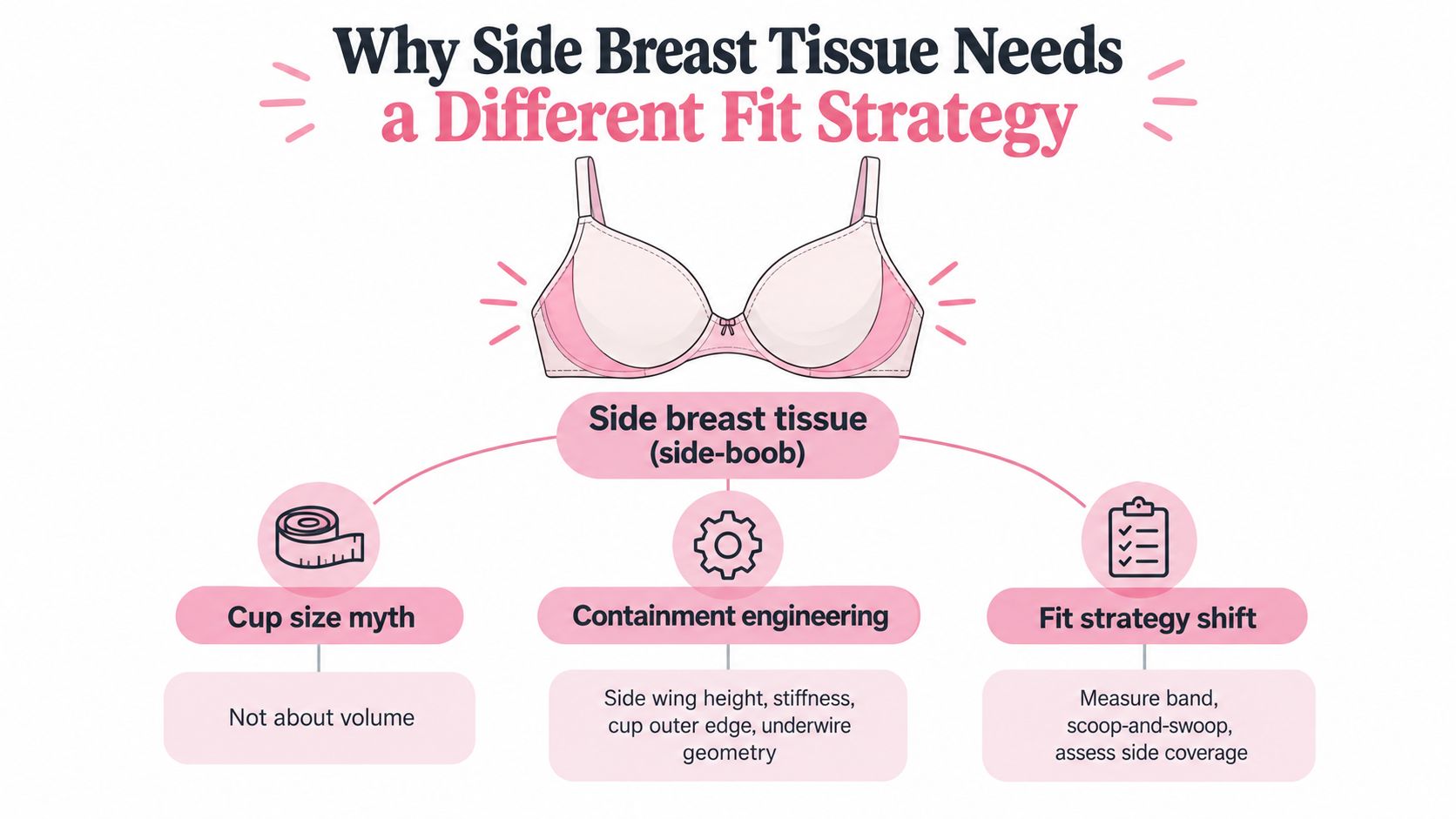
You tuck the tissue near your armpit into the cup, smooth your top, and think the problem is solved. Then you move, and the tissue slips out again. That familiar mirror check often gets treated as proof that the cup is too small, but the same symptom can come from different fit problems.
Breast asymmetry is common, and it matters because a bra has to contain each breast even when their volume, projection, or position differs. A 2016 study of women seeking plastic-surgery consultation identified at least one form of asymmetry in 91% of cases. The study population wasn't a random global sample, so that figure isn't a universal prevalence estimate, but it underscores why a design shouldn't assume both sides fit identically. The clinical discussion of breast asymmetry notes differences in nipple–areola position, breast-mound shape, and chest-wall structure.
Identify what's creating the spill
True lateral tissue may extend toward the underarm even when the cup volume is adequate. It needs an outer cup and side wing that gather and contain tissue without cutting into it. A wide breast root describes tissue that starts farther across the chest; a narrow wire can sit on that tissue instead of around it, so a wider wire and fuller outer coverage may work better.
A too-shallow cup can push tissue sideways because it doesn't provide enough depth or room at the outer edge. In that case, a larger cup or a different cup shape may help more than tightening the band. An incorrectly shaped underwire can also displace tissue toward the underarm if its curve doesn't follow the breast root.
Fit specialist's rule: Diagnose where the cup or wire is failing before you change the band.
The useful question isn't whether you have side breasts. It's whether tissue is spilling over the cup, sitting under the wire, or being pushed outward by the cup's shape. Each clue points toward a different construction fix.
Why Compression Usually Makes Side Bulge Worse
Sizing down can make the band feel more restrictive without creating more room at the cup's outer edge. A tight band isn't a substitute for lateral containment. If the cup is too shallow, too narrow, or shaped incorrectly, stronger pressure can squeeze tissue toward the underarm rather than keeping it inside the cup.
Fit research reinforces the need to assess the whole garment rather than chasing a tighter fit. In a University of Lancashire study, all 24 participants failed the researchers' fit assessment in their usual bras; 16 participants, or 67%, still failed in a professionally fitted bra. The better-fitting garment nevertheless produced immediate changes in breast support and spinal posture. The bra-fit research summary also describes a separate study in which 87.5% of participants failed the fit assessment in a standard bra, compared with 4.2% in an alternative breast-support garment. The lesson isn't to seek maximum compression. It's to check band, cup, straps, and coverage together.
Contain laterally before compressing
A better starting point is a stable side wing, sufficient cup depth, and an outer cup edge that lies beyond the breast tissue. The band should anchor the bra without riding up or digging in. If that structure is right, it can support the tissue without forcing it flat.
Asymmetry adds another reason not to force both breasts into a rigid, overly compressed fit. The larger breast generally determines the cup fit; a removable insert or a flexible cup can help balance the smaller side. A bra that's too tight across both sides may flatten the fuller breast while leaving the underlying shape problem untouched.
Movement also matters. During unsupported running, breast motion has been measured in several directions, including side-to-side displacement of approximately 1.8–6.2 cm. Research on breast support and movement distinguishes lateral motion from vertical movement, which is why a bra intended to manage side spill needs lateral structure, not just lift.
The Five Construction Features That Actually Contain Side Tissue
A bra can look supportive on a hanger and still let tissue escape. Check the construction feature by feature. Side containment comes from how the wing, cup, wire or channel, straps, and band work together, not from a label promising strong support.
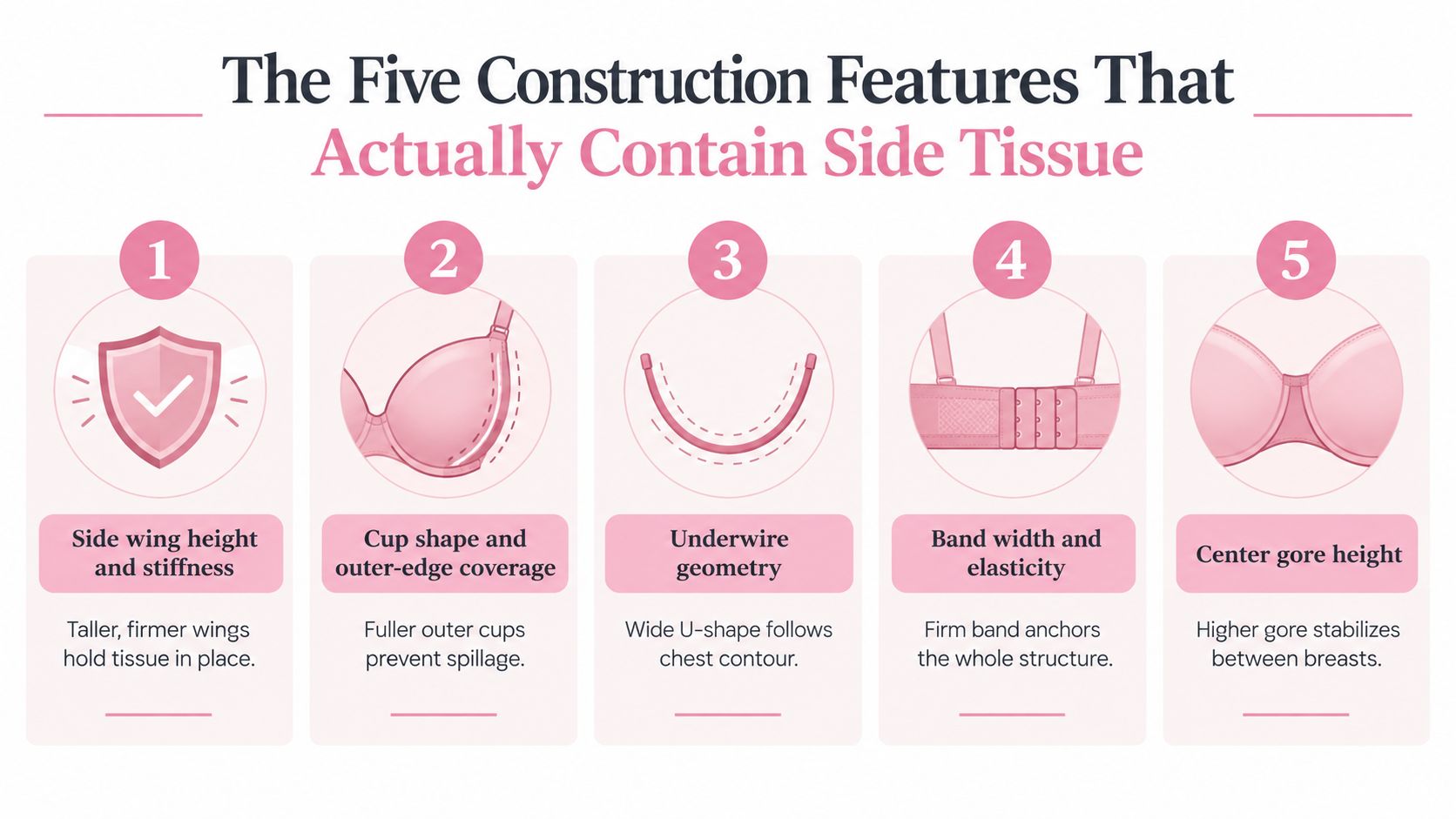
Evaluate the parts, not the promise
Side wing height and stiffness. A taller, stable wing can hold tissue near the underarm, but a wing that feels like a rigid wall may dig in. Look for a firm panel that lies flat and transitions gradually into the cup. An abrupt edge can create a ridge or concentrated pressure point.
Cup shape and outer-edge coverage. The cup needs enough depth to accept breast tissue and enough width at the outer edge to contain it. A shallow cup may push tissue outward even if the band seems right. If you're comparing fit options for a fuller bust, this guide to bras for large breasts offers another place to consider coverage and support needs.
Underwire geometry, or wire-free channeling. The wire should trace around the breast root, with its outer end sitting behind the tissue rather than on it. In a wire-free bra, look for a stable channel or panel that guides tissue inward without relying on compression alone.
Strap width and angle. Straps should stabilize the cup rather than pull its outer edge toward the armpit. Wider straps can feel more supportive, but width alone doesn't fix a poorly shaped cup. Check whether the strap sits comfortably and keeps the cup in place during arm movement.
Band tension and hook configuration. The band anchors the bra. It should stay level and feel secure, not painfully tight. A multi-hook closure can make adjustment easier as the elastic changes with wear, but it won't correct a cup that's too narrow or shallow.
The listed features are separate decision levers. If the wire is on tissue, assess wire shape; if the cup edge cuts in, assess cup width and depth; if the whole bra shifts, check the band and straps before choosing more compression.
Comparing Bra Styles for Side Breast Containment
A bra style is useful only if its construction addresses the reason tissue escapes. Side breast tissue that extends beyond the breast root needs room and coverage at the outer cup. A wide root needs a cup and wire shaped to follow that broader base. If tissue spills because the cup is too small or shallow, changing to a different style name will not solve the fit.
Match the construction to the cause
A full-cup side-support bra is a strong option when tissue needs more coverage or guidance into the cup. Its side panel can direct tissue inward, while the cup provides coverage above. Choose one whose wire follows the breast root; a wire that sits on breast tissue will undermine the support. The higher neckline may show beneath a low-cut top.
A balconette can work for a wide-root shape when the cup is broad enough and its outer edge reaches far enough around the breast. Its open neckline suits clothing that shows more upper chest. Check that the shorter cup edge does not leave side tissue uncovered.
A plunge is designed for a low center front, not automatically for low side coverage. It can suit a lower neckline if the side wing is tall enough and the outer cup contains tissue. The low gore alone says little about side fit.
A T-shirt molded cup gives a smooth outline under fitted clothing. Its fixed shape can be less forgiving than fabric cups: a cup that lacks depth or width at the outer edge may push tissue toward the underarm. Choose it for a smooth finish only when the molded cup matches your shape.
A wire-free bralette can suit lounging or lower-movement days when comfort is the priority. Look for a stable side panel that holds tissue rather than a stretchy edge that lets it drift outward. Soft fabric can feel comfortable, but it does not provide containment on its own.
The trade-offs differ. Full cups offer coverage but can feel structured; balconettes and plunges accommodate lower necklines, with side coverage depending on the cut. Molded cups smooth clothing but allow less room for shape differences, while bralettes favor ease when their panels are stable enough for the day's activity.
Choose the construction feature that matches the cause: more cup depth for shallow-cup spill, a wider cup or wire for a wide root, and a stable side panel for tissue that needs guidance. For active wear, prioritize a panel that holds its position; for a low neckline, check side coverage before choosing a plunge or balconette.
How to Measure and Assess Fit Before You Buy
A size label can help you start, but movement reveals whether the bra contains tissue. Try the checks below in a bra that's fastened comfortably, then repeat them standing and seated. Fit should hold through ordinary movement without pinching or migration.
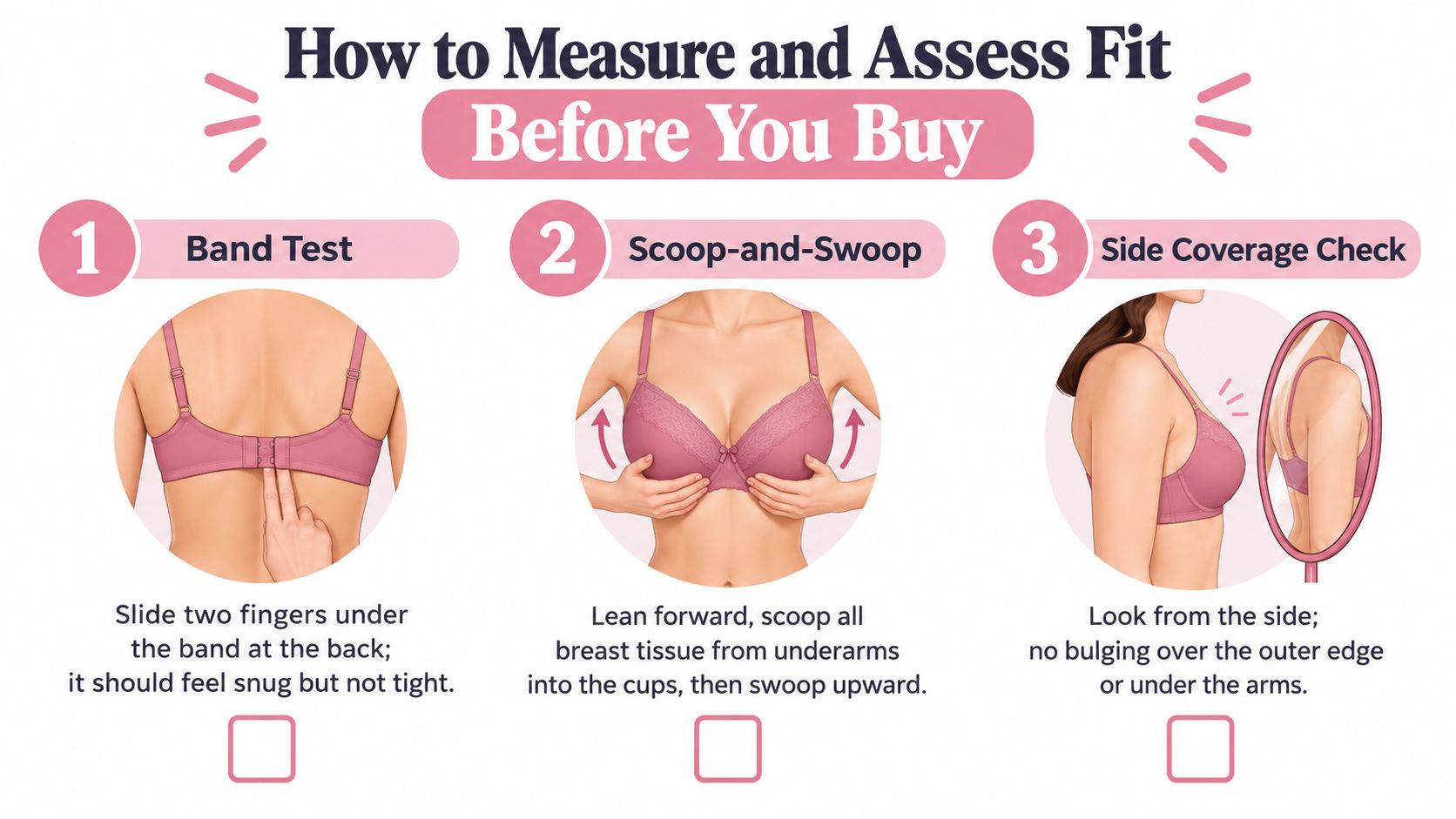
Run a practical fit check
Check the band. Slide two fingers under the back of the band. It should feel snug but not tight, and it should sit level rather than riding up. If the band shifts when you raise your arms, reassess the band and strap adjustment before assuming you need a smaller size.
Scoop and swoop. Lean forward and use your hand to gather tissue from under the arm and underneath the breast into the cup. Then settle the tissue upward into the cup. If it immediately spills over the outer edge, the cup may be too small, too shallow, or too narrow for your shape.
Trace the wire. Follow the underwire around the breast root. It should sit behind the tissue, not on it. If it presses into breast tissue near the armpit, try a different wire shape or a wider cup rather than tightening the band.
Raise your arms and rotate your torso. Watch for the side panel rolling, the band climbing, or tissue escaping at the outer edge. A stable bra should keep its position as you move.
Sit and check the center. The center gore should rest comfortably against the chest when the bra's design allows it to do so. Notice whether the cups shift or the wire digs when you sit; a fit that feels fine standing can change with posture.
For asymmetry, fit the cup to the larger breast first. If the smaller side gaps, a removable pad or an adjustable cup may help. Sister sizing can be useful when the cup fit is close but the band feels too loose or tight, though it won't solve a wire or cup-shape mismatch. For another plain-language fit reference, these House of Saint fit tips can support your own assessment. If you're looking for guidance about a particular band size, see this bra size 44 guide.
Red flags: wire resting on tissue, a band riding up, outer-cup overflow, or pressure that worsens as you move. Those clues help separate a size issue from a shape issue, though some bras have both.
Matching Bra Construction to Your Outfit and Wardrobe
The right fit still needs to work under the clothes you wear. A smooth cup may disappear under a knit top but feel bulky beneath a structured shirt. Choose the bra for both your breast shape and the fabric sitting over it.

Match the details to the outfit
For a thin knit top, prioritize a smooth cup edge and a side panel that lies flat. A bonded full-cup side-support construction can help create a clean outline, but check that the panel doesn't end abruptly and show through the fabric.
A structured button-down may reveal raised seams or a firm wing, especially if the shirt fits closely across the chest. Choose a smoother cup with enough depth, and avoid adding pressure to make the shirt lie flat. A fitted dress benefits from stable outer coverage and a band that stays level when you sit, walk, and reach.
Activewear needs a different balance. For a brisk walk or workout, seek a stable side panel and adjustable straps so tissue doesn't migrate during movement. A soft wire-free bralette may feel lovely for loungewear, but it may not contain tissue comfortably through a long commute or more vigorous activity.
For a visual reference while thinking through clothing and bra combinations, use the image above. The video below offers another look at bra-fit considerations.
Travel days call for a bra that stays comfortable while you alternate between sitting, walking, and reaching. A wing that rolls or a band that digs can become more noticeable over a long day, so prioritize stable coverage without excessive pressure.
Real Wear Scenarios That Reveal the Right Support Level
A desk-to-dinner day and a travel day can call for different bras, even if you're wearing the same outfit shape. Posture, walking, arm movement, and time in the garment all affect whether a side panel feels supportive or restrictive.
From desk to dinner
For a workday spent seated, then walking to dinner, look for a broad, elasticized side wing, a smooth cup edge, and low-pressure construction. The band should stay level while you reach for a bag or twist to pick something up. A bra that feels comfortable only when you're standing still hasn't passed a useful wear test.
Support should also match the direction of movement. In a 2025 exercise-motion study, low-support bras reduced breast-motion acceleration by 18.66% on average across tested activities, compared with 33.70% for high-support bras. The researchers noted that running places particular emphasis on medial-lateral control, while jumping calls for stronger vertical control. The exercise-motion findings support choosing construction for the movement you'll do, not just for the appearance you want.
Through a travel day
A long travel day adds walking, overhead reaching, and extended sitting. A reinforced lateral panel and adjustable straps can help the bra stay put as your posture changes. Test a new option with arm raises, torso rotation, and brisk walking before relying on it for a full day.
Avoid choosing maximum compression as a shortcut. Excess pressure can bring heat, digging, and a feeling of tissue being squeezed toward the underarm. The right bra contains without cutting in, and its side panel remains flat rather than rolling when you sit or move.
Your Decision Framework for Choosing the Best Bra for Side Breasts
Start with the cause, then choose the construction:
- Wide-root shape: Try a wider underwire or wire-free channel, fuller outer cup coverage, and a stable side wing. Avoid narrow wires that sit on breast tissue.
- Too-shallow cup spillage: Look for greater cup depth or a different cup shape. Don't size down or use a tighter band to compensate.
- Tissue displaced by incorrect wire shape: Choose a wire that follows your breast root, or try a wire-free construction with stable channeling. Avoid a wire that presses into tissue at the outer edge.
For fuller busts, begin with a full-cup side-support bra. For comfort-first wear, consider a wire-free bonded style with a stable side panel. A balconette or molded cup may suit a specific neckline or outfit, but only if its outer coverage matches your shape.
A study of larger-breasted women found that 42% of control bras had cups that were too large, 46% failed to contact the sternum, and 58% had overly tight bands, according to the research on bra fit in larger-breasted women. Those results are a clear reason to assess each part of the fit instead of tightening the band by default.
Choose lateral engineering over stronger compression. Run the band, scoop-and-swoop, wire, movement, and seated checks, then pick the construction that suits both your breast shape and your daily activity.
Nuage Wears offers bras and bralettes alongside comfort-first everyday apparel, including a side-support full-cup back-hook bra and a wireless style with targeted support. Visit Nuage Wears to explore options and choose a starting point for your own fit checks.


